


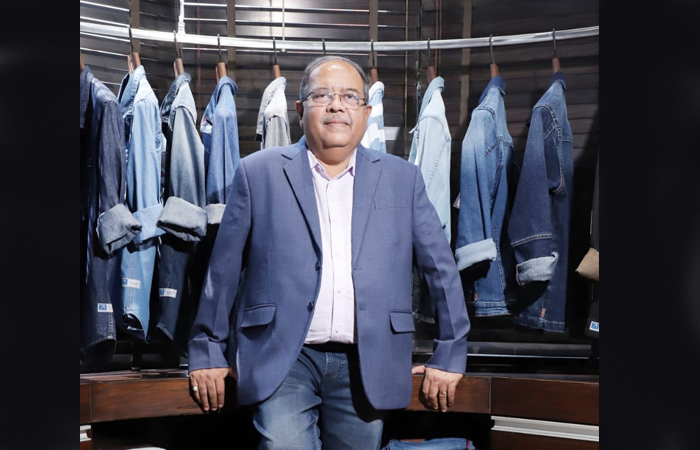
India’s textile sector is navigating a period of shifting global trade dynamics, rising sustainability expectations, and evolving market opportunities. With recent US tariffs reshaping export strategies worldwide, Indian manufacturers are under increasing pressure to diversify markets, strengthen value chains, and accelerate innovation. In this context, Suketu Shah, CEO, Vishal Fabrics, has been proactively expanding its global footprint, enhancing operational efficiency, and investing in sustainable manufacturing. In this interview, Shah shares his perspective on the impact of global trade disruptions, the importance of market and product diversification, the role of technology in building resilience, and the policy support needed to strengthen India’s export competitiveness.
How have the recent US tariffs impacted the industry, and what key takeaways can the Indian textile sector draw from this? In your opinion, how important is it for Indian exporters to diversify their markets?
The recent US tariffs have disrupted global textile trade, but their direct impact on Vishal Fabrics has been limited, as the company’s exports are not heavily dependent on the US market. However, the broader industry has faced challenges such as lower export demand, delayed payments, and financial strain, especially among MSMEs. The situation highlights the importance of diversifying export destinations and building resilience through stronger value chains. Vishal Fabrics, and Europe. Such diversification helps safeguard against policy-driven disruptions and supports steady, long-term growth.
What kind of product diversification strategies can Indian exporters adopt to remain competitive in emerging markets?
To remain competitive in emerging markets, Indian textile exporters must focus on strategic product diversification that aligns with global demand shifts. Moving beyond traditional cotton-based products, the industry should expand into man-made fibre (MMF) textiles, technical textiles, athleisure, and sustainable or organic fabrics, segments witnessing high growth internationally. Tailoring products to suit regional preferences in markets like Africa, Latin America, and Southeast Asia, through localised designs, sizing, and packaging, can further strengthen market penetration. Exporters should also leverage India’s trade agreements and explore opportunities in duty-free or low-tariff markets to reduce overdependence on the US and EU. Additionally, strengthening domestic value chains, ensuring quality certifications, and investing in eco-friendly production practices can help Indian products command higher value. Building global recognition through branding, digital marketing, and e-commerce platforms will also be crucial to reach new consumer bases efficiently. Overall, a mix of innovation, sustainability, and market diversification will enable Indian exporters to remain resilient against global trade disruptions and sustain long-term growth.
How can Indian textile manufacturers leverage technology and innovation to enhance supply chain resilience and reduce reliance on traditional markets like the US?
Indian textile manufacturers can significantly enhance supply-chain resilience and reduce reliance on traditional markets like the US by embracing technology and innovation. Technologies such as Artificial Intelligence (AI), Internet of Things (IoT) and Blockchain enable real-time tracking of raw materials and finished goods, improving visibility and responsiveness across the value chain. With such digital systems, manufacturers can forecast demand better, optimise inventory, spot and act on disruptions promptly, and become more agile. Additionally, investing in automation, smart textiles, and sustainable manufacturing processes helps to strengthen domestic capabilities and reduce dependence on imports or vulnerable external supply-chains. These steps also support the move into emerging markets and higher-value segments by offering differentiated products with faster delivery and better traceability, an edge when competing globally and lessening exposure to concentrated reliance on the US market.
From a policy perspective, what trade facilitation measures or industry support mechanisms do you believe could accelerate diversification and boost India’s export competitiveness?
From a policy perspective, several trade-facilitation measures and industry support mechanisms could significantly accelerate diversification and boost India’s export competitiveness in the textile sector. First, extending and expanding schemes such as the Remission of Duties and Taxes on Exported Products (RoDTEP) and the Production‑Linked Incentive Scheme (PLI) for Textiles helps offset embedded taxes and incentivise high-value textile production. Second, negotiating and utilising free trade agreements (FTAs) more aggressively and simplifying certification and compliance processes will open up duty-free or lowerâ€tariff access to emerging markets beyond the US. Third, supporting infrastructure development (like mega textile parks under the PM MITRA Parks Scheme) and providing financial support especially for MSMEs, through working-capital subventions, technology upgradation grants and export credits, will build resilience and diversify supply chains. Altogether, consistent policy support in these areas will help Indian textile exporters reduce their heavy dependence on traditional markets, build global reach, and improve cost-competitiveness.
In your view, how can India’s trade and export policies evolve to better align with changing global demand trends and sustainability priorities?
India’s trade and export policies should shift from short-term incentives to a long-term, market- and sustainability-led strategy. Export support must be linked to environmental and social standards, tying incentives such as RoDTEP/PLI and park benefits to energy efficiency, low-carbon manufacturing, and recognised sustainability certifications to meet rising EU and UK buyer requirements. Trade diplomacy and targeted outreach, including trade missions and FTAs, should focus on diversifying beyond the US and tapping high-growth regions like Africa, Latin America, and the Gulf.
Vishal Fabrics (VFL) is already moving in this direction. The company has adopted sustainable manufacturing practices across its operations, with investments in cleaner production, efficient resource utilisation, and eco-friendly processing. It is also expanding its export footprint beyond traditional markets, currently supplying to Sri Lanka, Panama and Bangladesh, while exploring new opportunities across Latin America, and Europe.
Further, India must invest in green infrastructure, digital trade facilitation, MSME technology upgrades, and R&D in circular textiles and low-carbon inputs. These measures, coupled with proactive industry efforts like those by VFL, can make Indian textiles more resilient, sustainable, and globally competitive.