


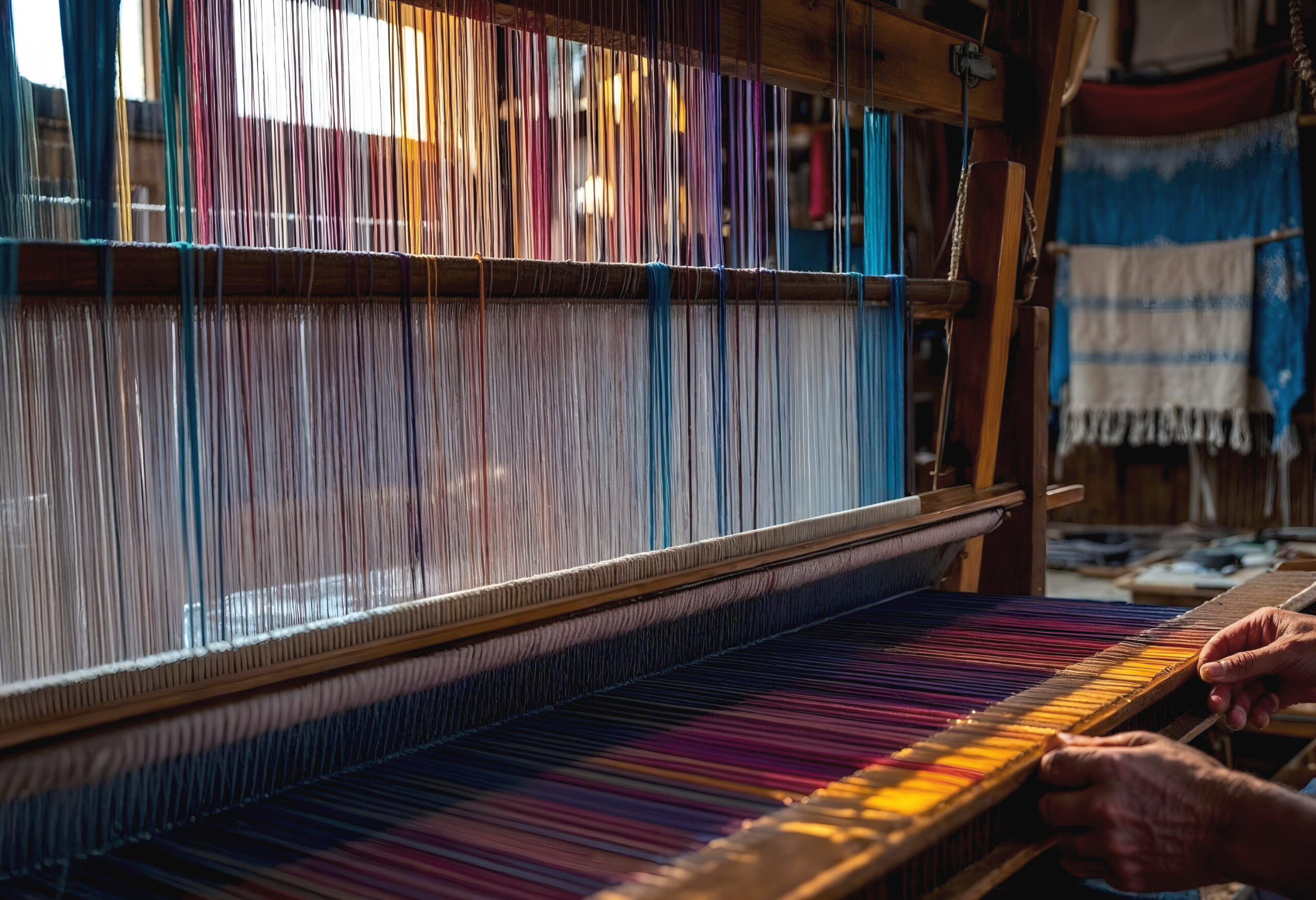
Why IIT Delhi’s centre of excellence for handloom technology may matter, says Rony Banerjee.
I have always believed that handloom in India does not suffer from lack of emotion. Emotion is there!
In fact, sometimes too much of it. What it suffers from is lack of serious systems.
Handloom does not need pity. It needs precision. It needs better tools, better markets, better data, better dignity and better business models.
That is why the inauguration of the Centre of Excellence for Handloom Technology at IIT Delhi on 3 August 2026 by Union Textile Minister Giriraj Singh deserves attention beyond the usual ceremonial language. The Ministry has positioned the Centre as a national hub for handloom research, innovation, digital technologies and capacity building, with the objective of improving competitiveness, sustainability and global outreach. Backed by a Government of India investment of Rs 110.99 million, the Centre has launched five flagship initiatives — Handloom 4.0, Handloom e-Vidya, HandloomX, Kalagriha Handloom Studio and Threads of Valour.
Now, all this sounds good. Very good, actually. But India has seen enough centres, schemes, portals, workshops and workshops after workshops. So, the real question is not whether another institution has been inaugurated. The real question is simpler, and slightly uncomfortable: will this Centre reach the loom, the yarn, the weaver’s body, the buyer, the market and the money flow?
Because we love handloom in a very Indian way. We celebrate it, photograph it, wear it on special days, speak about heritage, write beautiful captions and then quietly allow the weaver to return to the same old uncertainty. This has been going on for years, but how long can emotion alone carry an economy?
The official statement reminds us that India’s handloom sector supports more than 35 lakh weavers and allied workers, with women forming nearly 70 per cent of the workforce. That one figure should immediately change the lens. Handloom is not merely culture. It is employment. It is women’s economy. It is rural production. It is household finance. It is regional identity. It is also, in many clusters, daily drudgery with uncertain returns.
This is where the matter becomes serious.
The Centre’s stated focus areas, loom modernisation and ergonomics, artificial intelligence, sustainability, functional innovation, digital knowledge systems and entrepreneurship, are encouraging. Over five years, it is expected to create a national digital repository of handloom knowledge, develop AI-enabled tools, improve loom technologies, facilitate patents and research, incubate startups and train weavers, faculty members and handloom professionals across the country.
But the Centre must resist the temptation of becoming another design appreciation platform. Design is important. No doubt. But the crisis of handloom is deeper than design. It is about low productivity, physical strain, weak working capital, poor costing, inconsistent quality, ageing looms, poor market intelligence, absence of authentication and a painful disconnect between what the weaver produces and what the market repeatedly buys.
The five flagship initiatives are therefore worth watching carefully. Handloom 4.0 can become meaningful if it genuinely becomes a digital companion for the loom, not just a dashboard for officials. Handloom e-Vidya will matter if it solves real weaver problems, not only uploads curated content. HandloomX can work if startups are taken to clusters and not kept inside pitch rooms. Kalagriha can help if GenZ engagement leads to real demand and not only social media visibility. Threads of Valour is interesting because it brings circularity into handloom through recycled defence textiles.
This is a good mix. But implementation will decide whether it becomes transformation or presentation. The ideas must travel to clusters. They must be tested in Varanasi, Bhagalpur, Nadia, Sambalpur, Chanderi, Kutch, Salem, Bargarh, and the many smaller weaving pockets that never enter glossy discussions. The loom in a village does not need vocabulary. It needs workable solutions.
The Centre should also think beyond traditional products. Sarees, stoles, dupattas and furnishing fabrics will remain important. They carry memory and market both. But they cannot be the only road ahead. Handloom must also explore functional materials, acoustic panels, agro-textiles, filtration cloth, recycled-fibre products, smart authentication, technical craft surfaces and low-volume specialised textiles.
That is where IIT Delhi can make a real difference. It can bring science without killing the soul. It can bring AI without replacing the artisan. It can bring ergonomics without industrialising the handloom into anonymity. It can bring data without insulting tradition. It can help improve the loom without removing the hand. If this Centre can bring these elements together, then this inauguration will not remain just another ribbon-cutting moment. It may become the beginning of a new grammar for the handloom economy, Indian in soul, technical in method, and global in ambition.
The loom has waited long enough. Now let technology sit beside it, quietly, respectfully and usefully.
About the author
Rony Banerjee is a strategy and policy advisor working at the intersection of textiles, MSMEs, sustainability, livelihoods and public policy. With over 25 years of experience across government programmes, industrial competitiveness, cluster development, implementation support and institutional advisory, he brings a field-rooted yet strategic perspective to emerging economic issues. His current work focuses on non-mainstream textiles, circular economy, technical textile applications, MSME-led manufacturing and future-facing livelihood models. Originally from Bihar, based in New Delhi, he writes with a practitioner’s eye on how policy, technology and markets can create real value for traditional sectors and forgotten production communities.