


KLD Membrane Bioreactor, LEED, lakshmi Energy and Environment Designs
Water reuse has become a critical component of sustainable industrial operations, particularly in regions where freshwater resources are under increasing pressure. However, converting organic-contaminated surface water into high-quality process water requires a carefully engineered treatment system capable of handling fluctuating contaminant loads while delivering consistent long-term performance.
This case study highlights a 500 KLD Membrane Bioreactor (MBR)-based treatment plant designed, commissioned, and operated by LEED – Lakshmi Energy and Environment Designs. The facility treats water drawn from a nearby reservoir affected by organic contamination and supplies treated water for internal process use.
More than seven years after commissioning, the plant continues to operate with exceptional reliability, consistently producing treated water with organic parameters at or below detectable limits while maintaining membrane performance remarkably close to original commissioning conditions.
Raw water challenges
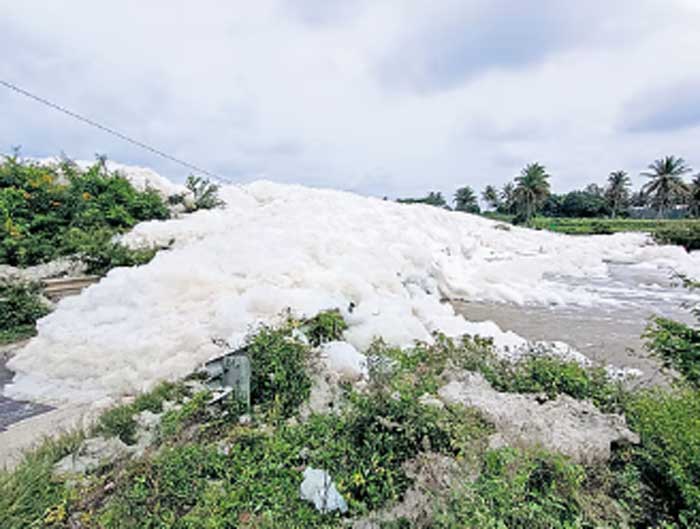
Raw water
The raw water source is a reservoir receiving organic
contamination from surrounding areas, resulting in significant fluctuations in water quality.
Typical peak contaminant levels include:
- COD up to 600 mg/L
- BOD up to 300 mg/L
- Nutrient load up to 40 mg/L
Such water quality presents a considerable treatment challenge. Conventional treatment systems often struggle to maintain stable performance under these conditions, leading to process upsets, increased maintenance requirements, and inconsistent effluent quality.
To ensure reliable treatment and water reuse, the plant was designed with a process configuration capable of handling variable influent conditions while maintaining superior effluent quality.
Treatment process
LEED implemented an advanced treatment scheme comprising:
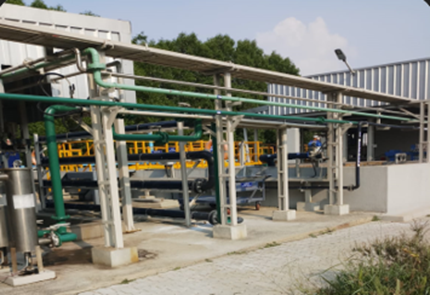
MBR plant
- Anoxic Biological Treatment
- Membrane Bioreactor (MBR)
- Ozonation
The plant operates through a fully automated control system, minimising operator intervention and ensuring stable process performance.
The MBR system was designed to achieve:
- COD < 5 mg/L
- BOD < 5 mg/L
To meet the client’s stringent internal process water requirements, ozonation was incorporated as a final polishing stage. Beyond disinfection, ozonation provides additional oxidation of residual organic compounds, enabling the production of exceptionally high-quality treated water suitable for reuse within the facility.
BDL water quality
While the guaranteed design performance at the MBR outlet was COD and BOD below 5 mg/L, actual plant performance has exceeded expectations.
Throughout the majority of its operating life, the final treated water after ozonation has recorded both COD and BOD as Below Detectable Limits (BDL). Detectable values are observed only on rare occasions and remain significantly below both design limits and process water quality requirements.
This exceptional treatment performance has remained consistent despite fluctuations in raw water quality and seasonal variations in contaminant loading.
The ability to repeatedly achieve BDL levels demonstrates the effectiveness of the integrated Anoxic-MBR-Ozonation process and highlights the importance of proper process engineering, automation, and operational control.
The treated water is reused within the facility for internal process applications, reducing dependence on freshwater resources and contributing significantly to sustainable water management practices.
Exceptional membrane longevity
Membrane life is one of the most critical factors influencing the long-term success and economics of an MBR installation.
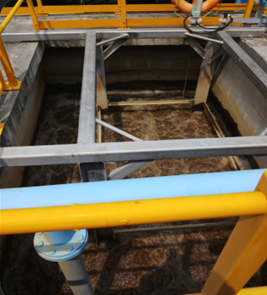
MBR tank
This project has demonstrated outstanding membrane durability and operational stability.
Even after more than seven years of continuous operation:
- The plant has experienced virtually zero unplanned downtime.
- Membrane recovery cleaning requirements have been negligible.
- Transmembrane Pressure (TMP) has increased only marginally from initial commissioning values.
- Membrane permeability and flux remain stable.
- Overall membrane performance continues to resemble that of a new installation.
Such performance is rarely achieved without a combination of proper process design, optimised operating conditions, effective automation, and disciplined maintenance practices.
The sustained membrane health has not only ensured consistent treatment efficiency but has also significantly reduced maintenance costs and extended asset life.
Long-term operational excellence
Technology alone does not guarantee long-term success. Consistent performance requires experienced operation and maintenance supported by continuous process monitoring and optimisation.
Since the day of commissioning, LEED has been responsible for the complete operation and maintenance of the facility.
For over seven years, LEED’s O&M team has managed plant operations, preventive maintenance, process optimisation, membrane performance monitoring, and automation systems. This proactive approach has enabled the plant to maintain stable treatment performance despite variations in influent quality.
The combination of sound engineering and dedicated O&M support has been instrumental in preserving membrane integrity, minimising downtime, and consistently achieving superior treated water quality.
This 500 KLD installation demonstrates how advanced MBR technology, combined with effective process integration and sustained operational excellence, can reliably transform heavily organic-contaminated water into premium-quality reusable process water.
More than seven years after commissioning, the plant continues to consistently achieve BDL treated water quality after ozonation, Membrane performance remains comparable to original commissioning conditions. Supported by LEED’s continuous operation and maintenance services, the facility stands as a proven example of long-term reliability, exceptional membrane longevity, and sustainable water reuse in practice.
About LEED
LEED is a specialised provider of integrated Water, Wastewater, and Solid Waste Management solutions.
With more than 200 installations across 30+ countries and over 50 MLD+ treatment capacity delivered worldwide, LEED serves industries and institutions with comprehensive environmental engineering solutions. The company’s portfolio includes Water Treatment Plants (WTP), Sewage Treatment Plants (STP), Effluent Treatment Plants (ETP), Reverse Osmosis (RO), Zero Liquid Discharge (ZLD), Multiple Effect Evaporators (MEE), Agitated Thin Film Dryers (ATFD), Biogas Plants, Organic Waste Management Systems, and associated services. LEED continues to help industries achieve reliable, sustainable, and cost-effective water management solutions. For discussions on your Water, Wastewater, and Solid Waste Management requirements, please contact:
(Communication provided by the management of the company)
LEED – Lakshmi Energy and Environment Designs Pvt. Ltd.
Email: leedsales@lrt.co.in