


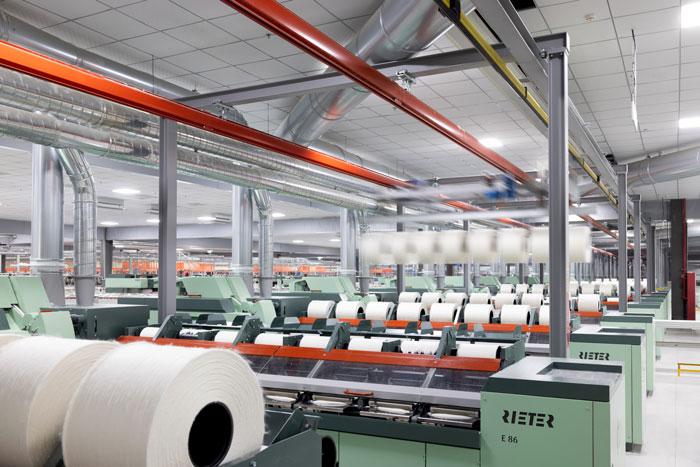
This system is the driving force behind the recent transformation of Anhui Fuchun.
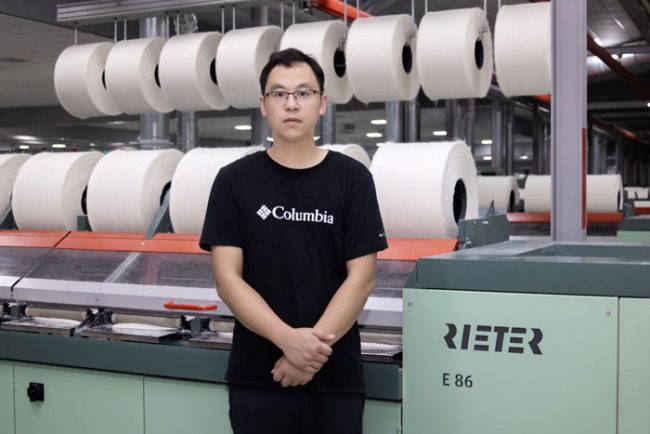
Figure 2: Lu Hong, Head of Production at Fuchun Textile, attests to the system’s impact, stating: “The Rieter automated combing system reduces the manual workload, and at the same time improves the efficiency of the whole combing process
Rieter’s automated combing system represents a significant advance for textile manufacturing. It improves the processes in spinning mills by reducing labour requirements and increasing production efficiency. This system is the driving force behind the recent transformation of Anhui Fuchun. With their 40 combers E 86, the mill reaches a daily production capacity of 60 tonne of high-quality combed sliver.
Anhui Fuchun Textile Co, has committed to innovation with a strategic investment in Rieter technology. The integration of 40 Rieter combers E 86, six combing preparation systems OMEGAlap E 36, and two fully automated lap transport systems SERVOlap E 26, has taken the company to new heights.
Higher efficiency through automation
The SERVOlap E 26 efficiently moves eight laps from the combing preparation machine to the comber. Simultaneously, it automates the return of empty tubes to the combing preparation machine E 36, establishing a seamless material flow. The combers E 86 are equipped with ROBOlap which enables the autonomous operation of the combing plant and significantly reduces the need for skilled operators.
ROBOlap’s piecing operation, consistently delivers superior piecing quality compared to manual methods. The result is a more uniform combed sliver.
Reducing strenuous work
Prior to implementing the fully automated combing system, Fuchun Textile required three operators for the combing preparation process per shift, and four operators for the combing process. Each operator manually handled 12 tonne of laps and conducted 320 lap changes and piecings. These are demanding tasks requiring a particularly intense workload and a high level of skill. The introduction of the automated combing system has successfully replaced manual lap transportation, changing, and piecing. Presently, the system has reduced the combing preparation team by one person per shift and the combing process team by two persons per shift. Operators now focus primarily on monitoring and cleaning which translated to a substantial reduction in their workload.
Enhancing profitability with the comber E 86
Fuchun Textile’s production efficiency has reached new heights through Rieter’s comber E 86. The 40 machines boosted daily production capacity to an impressive 60 tons of high-quality combed sliver. This capability empowers strategic production scheduling during off-peak electricity tariff periods, resulting in cost optimisation. An outstanding feature of Rieter’s comber E 86 is its exceptional fiber utilisation, maintaining required quality even at a 13.5 per cent noil rate. This achievement translates into a 2 per cent reduction in noil, significantly lowering conversion costs and enhancing spinning profitability.