

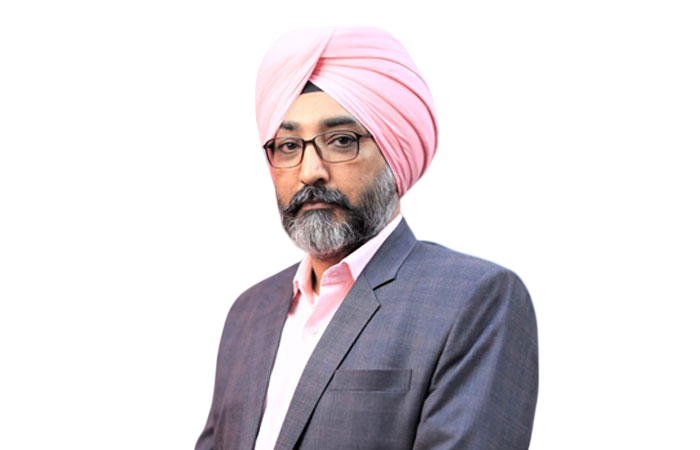
Manmohan Singh: We are viewed not as niche solutions, but as reliable, future-ready materials
Against the backdrop of rising demand for sustainable and circular textile solutions, the man-made cellulosic fibre segment is witnessing rapid transformation driven by innovation, responsible sourcing, and evolving consumer preferences. Birla Cellulose, the pulp and fibre business of Aditya Birla Group and a subsidiary of Grasim Industries, continues to strengthen its position in this space through advancements in circular materials, next-generation fibres, and strategic collaborations across the value chain. In this conversation, Diya Shetty speaks with Manmohan Singh, Chief Marketing Officer, Birla Cellulose, to discuss the company’s market positioning, sustainability milestones, growth segments, and long-term strategy for innovation and capacity expansion in both apparel and non-apparel categories.
Could you briefly outline Birla Cellulose’s positioning in the man-made cellulosic fibre space and the key apparel and non-apparel categories the brand currently serves?
Birla Cellulose recorded three major sustainability milestones that underscore its leadership in responsible fibre innovation. First, the company earned the Dark Green Shirt rating in Canopy’s Hot Button Report for the sixth consecutive year, reflecting long-standing commitment to forest conservation and responsible sourcing.
Second, Birla Cellulose significantly strengthened its circularity portfolio through Liva Reviva, expanding beyond chemically recycled fibres with the launch of Liva Reviva M, which incorporates mechanically recycled post-consumer textile waste. This was further reinforced through a strategic partnership with Circ, bringing advanced textile-to-textile recycling capabilities into the ecosystem.
Third, progress continued on capacity expansion for next-generation fibres, with the 110 TPA Lyocell project at Harihar under development. Phase 1 (55 TPA) is expected to be operational by mid-2027. Produced through a closed-loop process, Lyocell represents a critical step forward in sustainable fibre manufacturing and long-term growth.
Among the categories Birla Cellulose operates in, which segments are witnessing the strongest growth, and what factors are driving this demand?
Birla Cellulose is seeing strong and sustained growth across Indian ethnic wear, particularly sarees, as well as contemporary Indian wear. This growth is being driven by a rising preference for fabrics that combine comfort, fluidity, and sustainability. As consumer awareness around responsible fashion increases, brands are increasingly choosing man-made cellulosic fibres for their ability to deliver premium aesthetics while meeting sustainability expectations.
In parallel, denim continues to be a key growth segment, especially in the context of circular materials. This is where Liva Reviva M plays a critical role. Its ability to integrate mechanically recycled post-consumer textile waste at the fibre stage makes it especially well suited for denim applications, where durability, consistency, and scalability are essential. Together, these segments reflect a broader shift toward materials that support both performance and circularity across apparel categories.
Which Birla Cellulose fibres or fabric variants are seeing the highest traction in the market today, and how are evolving consumer preferences influencing material demand?
One of Birla Cellulose’s biggest strengths is the versatility of its fibre portfolio and its ability to adapt seamlessly across multiple textile formats, end uses, and seasons. Demand for specific fibres may fluctuate seasonally or category-wise, but the overall portfolio continues to grow year on year, supported by its wide application potential across sarees, ethnic wear, denim, home textiles, and beyond.
This adaptability allows brands and mills to respond quickly to changing consumer preferences, whether for breathable summer fabrics, fluid festive wear, or durable everyday textiles, without compromising on sustainability or performance. As a result, Birla Cellulose fibres are increasingly viewed not as niche solutions, but as reliable, future-ready materials across the textile value chain.
How is Birla Cellulose strengthening its initiatives around circular materials, responsible sourcing, and end-to-end traceability?
Innovation is central to Birla Cellulose’s circularity strategy. With solutions such as Liva Reviva and Liva Reviva M, the company is advancing both chemical and mechanical recycling pathways, addressing different types of textile waste and expanding the scope of textile-to-textile recycling.
At the same time, Birla Cellulose continues to strengthen its traceability and responsible sourcing initiatives through platforms like GreenTrack and the Livaeco range, ensuring transparency from forest to fibre. These innovation-led efforts help customers confidently meet evolving regulatory requirements while accelerating the transition toward a more circular, transparent, and future-ready textile ecosystem.
Are there any new product developments, collaborations, or ventures in the pipeline that will further expand Birla Cellulose’s application areas or market reach?
Innovation and collaboration remain central to Birla Cellulose’s growth strategy. Recent developments such as Liva Reviva M and the partnership with Circ reflect a broader, open-innovation approach—one that brings together fibre producers, recyclers, technology providers, and brands to accelerate textile-to-textile circularity.
Going forward, Birla Cellulose is focused on expanding the application potential of its fibres across both apparel and non-apparel categories, including denim, home textiles, workwear, and select technical textile segments. The emphasis is on developing fibre solutions that combine sustainability, performance, and scalability, enabling customers to meet evolving regulatory and consumer expectations.
In parallel, Birla Cellulose continues to explore collaborations that strengthen recycling infrastructure, improve feedstock availability, and support the commercialization of next-generation fibres—ensuring that innovation translates into real-world adoption across global markets.
Looking ahead, what are Birla Cellulose’s key strategic priorities in terms of innovation, sustainability, capacity expansion, and long-term growth?
From an innovation standpoint, the focus is on advancing circular fibre solutions, spanning both chemical and mechanical recycling, as well as expanding the role of Lyocell and specialty fibres that deliver sustainability alongside performance. The ongoing Lyocell project at Harihar is a key milestone in this journey, supporting future-ready fibre demand through closed-loop manufacturing processes.
Sustainability remains deeply embedded in LIVA’s growth plans, with continued emphasis on responsible sourcing, biodegradability, reduced resource intensity, and end-to-end traceability through platforms such as GreenTrack.
Finally, Birla Cellulose is committed to working closely with brands, mills, NGOs, and industry bodies to scale impact across the value chain. By aligning capacity growth with responsible innovation and strong partnerships, Birla Cellulose aims to drive long-term, resilient growth while helping shape a more circular and transparent textile industry.
