


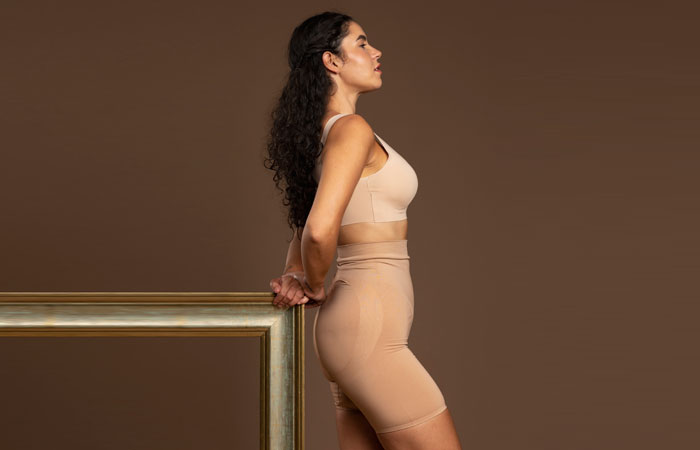
The next phase of India’s shapewear growth will be less about expanding the audience and more about deepening usage within the existing one, says Yash Goyal.
India’s shapewear category has moved well beyond its awareness phase. The curiosity barrier has largely been broken. Consumers today understand what shapewear does, how it works, and where it fits within their wardrobe. What was once an unfamiliar, occasionally misunderstood product is now increasingly seen as a legitimate apparel sub-category within innerwear.
Increasing consumer insights have showcased that while the top funnel of buyers have grown over the years, a surprising purchase journey can also be recognised in repeat purchases where customers want to own shapewears of different colours, styles, solving different areas of utility. This behavioural shift signals something more structural: shapewear is transitioning from an occasional problem-solving garment to a foundational wardrobe essential.
For years, both in India and globally, shapewear was positioned as an “event product”, something worn under a cocktail dress for galas, under sarees at a wedding, beneath a bodycon dress for formal events, or for a specific social moment. It was functional, but not habitual.
That positioning inevitably capped growth

As wardrobes become more versatile, blending western wear, workwear, ethnic silhouettes, and travel-friendly outfits, foundational garments are expected to adapt accordingly.
Today, however, the narrative is shifting. Consumers are beginning to prioritise comfort, breathability, and seamless layering in their daily lives. As wardrobes become more versatile, blending western wear, workwear, ethnic silhouettes, and travel-friendly outfits, foundational garments are expected to adapt accordingly.
Shapewear is now seen as an everyday utility like a bra or an underwear.
The brands that understand this are designing for climate suitability, all-day comfort, and invisibility under varied Indian and western silhouettes. When shapewear becomes something you can wear to work, travel in, or sit through long days without adjusting, it stops being a one-time purchase and starts becoming a repeat category.
In most emerging apparel categories, the first purchase is the hardest. Fit uncertainty, sizing anxiety, and comfort concerns create friction. But once trust is built, especially in fit-based products, behaviour changes quickly.
Shapewear follows the same pattern.
The biggest friction for new customers is uncertainty:
Will it be comfortable?
Will it roll down?
Will it feel restrictive in Indian weather?
Will it suffocate me and restrict my enjoyment?
However, once a consumer finds a product that fits well and feels breathable, the relationship shifts from experimentation to reliance.
At that stage, growth begins to multiply not through customer expansion alone, but through increased frequency and category depth. They start exploring:
- Light compression variants for daily wear
- Mid-level shaping for structured outfits
- Different lengths for sarees versus western silhouettes
- Seasonal replenishment due to regular usage
- Shade variations for wardrobe matching
In other words, lifetime value expands organically.
Unlike Western markets, where climate control and seasonal dressing patterns differ, India demands higher adaptability from base-layer garments. Heat, humidity, long commute hours, and extended workdays mean that comfort is non-negotiable. This is where retention becomes the true growth lever.
If a product survives an Indian summer day without causing irritation, rolling, or discomfort, it earns trust. And trust converts to repeat wear. Repeat wear builds brand stickiness.
Importantly, consumers are not looking for dramatic transformation. They are looking for subtle support that integrates seamlessly into their everyday dressing. The shapewear that feels invisible once worn is the shapewear that gets worn again.
Early-stage category growth is driven by awareness campaigns, influencer education and trial-led discounts. But mature growth is driven by integration into daily habits
As India’s innerwear ecosystem evolves, the focus is shifting from pushing first trials to strengthening post-purchase experience. Brands are investing more in:
- Fit education and transparent communication
- Size guidance tools
- Product clarity: Clear differentiation between compression levels
- Fabric innovation suited for Indian climate
- Community-led storytelling around comfort, rather than compression
The objective is no longer just to introduce shapewear into wardrobes. It is to keep it there.
What this means for the category
The next phase of India’s shapewear growth will be less about expanding the audience and more about deepening usage within the existing one. From an industry perspective, this signals a shift from penetration-led metrics to retention-led metrics. And this is not just limited to metros, a drastic change can be seen with Tier 2 and Tier 3 cities where the intent to try shapewear is way higher and the current social media exposure has given ways to multiple demographic avenues.
This shift is also reflected in broader market momentum. India’s innerwear market, valued at over $12 billion in 2023, is projected to grow at a steady high-single-digit CAGR through 2030. Within this, shapewear is expanding at an equal or faster pace, indicating that the category is moving beyond niche and occasional demand. As growth accelerates, the real differentiator will not just be new customer acquisition, but sustained repeat consumption within an already expanding base. (Source)
Growth will be measured not only in new buyers, but also in:
- Repeat purchase rates
- Multi-product adoption within the same brand
- Average purchase frequency
- Replenishment cycles
- Cross-category expansion
The brands that win will be those that design for India’s routines, not just India’s aspirations.
Because when shapewear becomes part of everyday dressing rather than occasional dressing, growth stops being episodic. It becomes compounding.
And in India’s evolving comfort-first versatility-driven wardrobe era, that compounding effect is where the real opportunity lies.
About the author:

Yash Goyal is the Co-founder and CEO of Krvvy, where he leads strategy, operations, finance, and supply chain, with a focus on building a scalable, function-first/ comfort-first innerwear brand for Indian women. His work centres on translating consumer insight into reliable execution, with an emphasis on inclusivity and products designed for Indian lifestyles and daily wear.