


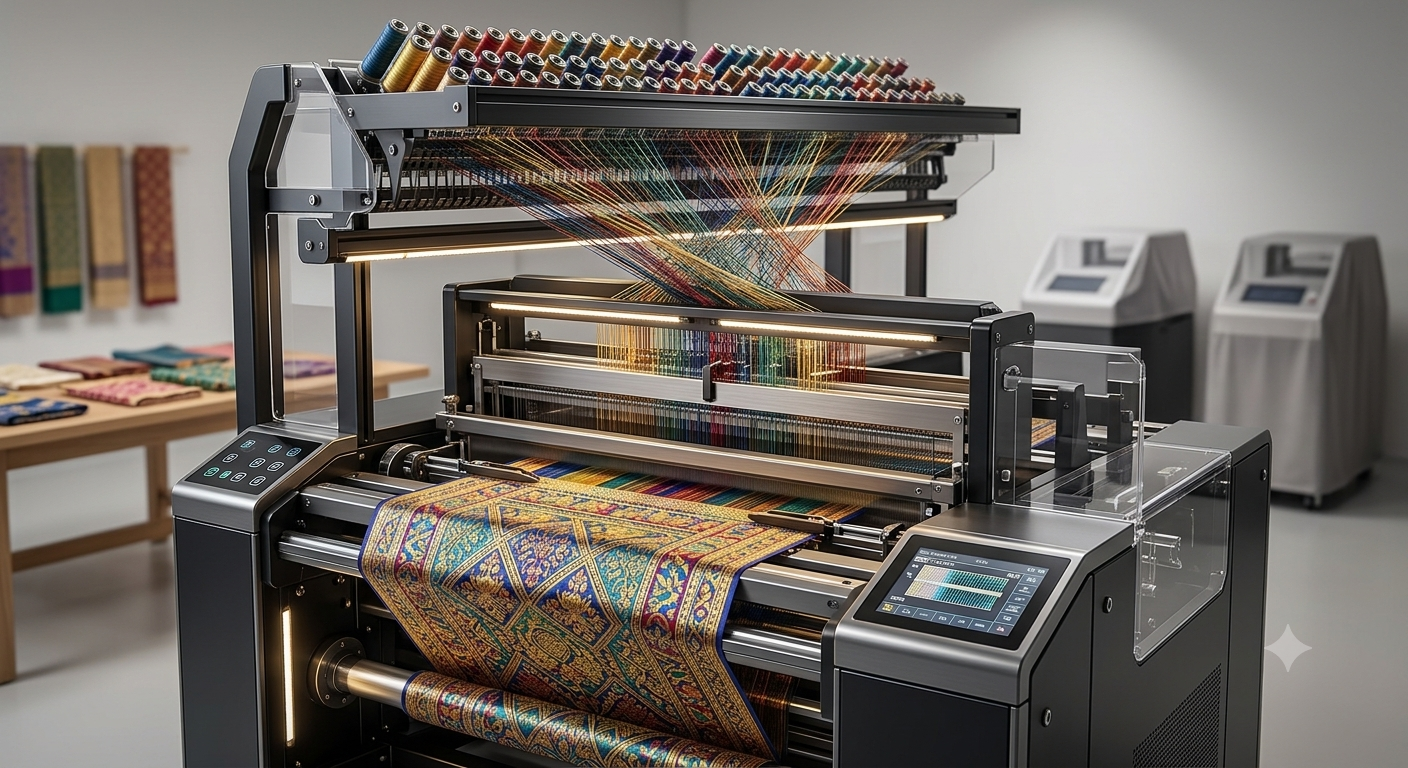
India’s textile machinery sector is moving beyond cost competitiveness, but gaps in high-speed weaving and advanced processing remain. Divya Shetty explores how stronger R&D, technological capabilities and policy support can drive domestic manufacturing and global competitiveness.
India stands at a pivotal crossroads in its industrial trajectory. As one of the world’s largest producers of raw textile fibres and a dominant force in traditional spinning, the nation’s textile sector is undergoing a profound structural evolution. For decades, the narrative surrounding Indian manufacturing was defined primarily by cost competitiveness and volume production. Today, however, industry leaders, technologists, and policymakers are orchestrating a strategic pivot toward advanced metallurgy, precision engineering, digital automation, and sustainable manufacturing practices designed to rival the established gold standards of Europe and East Asia.
This industrial metamorphosis is reshaping the domestic manufacturing ecosystem. From high-wear spinning accessories operating at micro-tolerances to the integration of Industry 4.0 frameworks, the sector is shedding its historical reliance on low-cost positioning. Yet, significant challenges remain, particularly in high-speed weaving and advanced chemical processing. Navigating this transition requires a rigorous alignment of technical capabilities, institutional R&D frameworks, and targeted policy interventions to ensure Indian machinery not only dominates domestic installations but captures significant global market share.
Elevating metallurgy, precision, and component excellence
The foundation of any advanced machinery ecosystem rests upon the reliability and precision of its constituent components. In the spinning sector, where microscopic variations dictate yarn quality and energy efficiency, Indian component manufacturers have made monumental strides over the past three decades.
Addressing the evolution of component metallurgy, J M Balaji, Vice President, Lakshmi Ring Travellers, highlighted how domestic manufacturing has advanced beyond basic cost arbitrage, “Today, India is not looked at as merely a low-cost manufacturing destination. So, we have the capability to manufacture components that can compete with the best of the world, European products, in quality, performance, and service life.”
Even micro-components wield disproportionate influence over industrial output. Balaji elaborated on the exacting tolerances required in ring traveler manufacturing, “Although it’s a very, very small component, it has a significant influence on the yarn quality, productivity, energy consumption, and the efficiency of the spinning wheel… We make approximately around 4,500 million pieces. And, we are much better than the Six Sigma levels.”
Maintaining this level of performance across millions of units demands rigorous metallurgical control, heat treatment precision, and advanced surface finishing to withstand friction temperatures reaching up to 300 degrees Celsius dissipated in milliseconds. Despite these capabilities, Balaji pointed out that achieving consistency at scale remains the definitive operational hurdle, “The real challenge is consistency at scale. That is extremely important… producing one excellent component is not enough, okay? We must ensure that every batch, consistently across machines, operating conditions, across customer locations, our product is able to perform.”
While spinning has achieved world-class parity, other segments of the textile value chain exhibit distinct structural imbalances. ND Mhatre, Director General (Tech), Indian Textile Accessories and Machinery Manufacturers Association, provided a comprehensive assessment of India’s competitive strengths and critical technical gaps, “Indian Textile Machinery and Accessory Manufacturers hold a commanding, competitive edge in spinning technology, component engineering, and cost-effective value retention. Conversely, they are most critical technical gap lies in advanced high-speed processing, electronic weaving, shutterless loom, and automated AI-driven garmenting system.”
Mhatre emphasised that while India’s engineering strength is exceptionally robust in the initial and mid-stages of the textile value chain—exemplified by global leaders like LMW matching European precision at a fraction of the cost—advanced processing, continuous dyeing ranges, and high-speed automated apparel systems remain heavily dependent on foreign technology.
This dichotomy is acutely visible in the weaving sector. Ketan Sanghvi, Director, Laxmi Shuttleless Looms and Chairman, ITME Society & Independent Director, captured the core structural dilemma facing domestic loom manufacturers with blunt candor, “India seems to have modernised its consumption of weaving technology faster than its creation of it. And closing that gap, I think, is the real challenge, for, you know, kind of the competitiveness of the industry.”
Sanghvi noted that while shuttle-less weaving has gained traction in denim, home textiles, and technical textiles, the majority of high-speed installations rely on imported machinery, predominantly from China (see Figure 1) and established European and Japanese brands. Indian OEMs have carved out a credible position in rapier looms—particularly for slow and medium-speed applications and specialty fabrics—but domestic commercial-scale air-jet or water-jet looms trail in warp insertion rates, energy efficiency, and advanced electronic controls such as electronic let-off, dobby, and jacquard integration.
Sachin Kumar Arora, Executive Director, TMMA, informed how we have increased our import dependency from China (see Figure 2). “Last year, as compared to the previous year, the weaving loom import doubled up from 45 billion to 100 billion… Out of 60,000 looms imported, approximately, the total share of these three prominent brands was hardly 2,000 machines, or rather 3,000 machines, which constitute around 5 to 6 billion only. So, an import bill of 100 billion, remaining 94 billion is going coming from only China… While Ministry of Textile is promoting that we should have the high-end machineries, but our own textile industry is only buying machines from China
The processing and finishing sector faces similar hurdles, where physical engineering must seamlessly integrate with chemical application. Prashant Mangukia, Director, Yamuna Machine Works and Chairman, TMMA, explained that the primary barrier is not the mechanical ability to build a machine, but the discipline of execution, “The real gap is really not the ability to build the machine. The real gap is to guarantee the consistency of performance in terms of fabric quality and production levels, etc.”
Mangukia elaborated that while Indian engineering talent and cost structures are formidable, the broader manufacturing ecosystem lacks the standardised quality culture found in mature sectors like automotive, “The discipline in which it should be implemented is missing, the vendors or the ancillary industries for a textile processing OEM are not so organised, or are not having that standard manufacturing practice like an automotive industry ecosystem. So, all these marginal differences at every stage reflects on the end product quality.”
Driving innovation, automation, and smart manufacturing
As global manufacturing enters the paradigm of Industry 4.0, the integration of digital intelligence into traditional mechanical systems has ceased to be a futuristic luxury and become an operational necessity. Component and machinery builders are actively embedding IoT sensors, real-time analytics, and predictive maintenance frameworks to optimise shop-floor productivity.
Balaji detailed how smart monitoring is transforming component life cycles in the spinning sector: “Today, we are all talking about IoT, smart monitoring, predictive maintenance, these are not just jargons today. It is very, very important in every industry, and more so in the Textile industry, being from the accessories field, we have a lot of components, for example, ring travelers, spindles, bearings, cots and aprons, etc., so the wear directly affects the productivity.”
Because embedding electronic sensors directly into micro-components is commercially unviable, modern engineering relies on indirect machine telemetry—monitoring vibration, spindle behavior, and thermal dissipation. Balaji explained the shift toward condition-based replacement models, “Gone are the days that I change once in 6 days, 10 days, 12 days, you fix it, irrespective of whether it is summer, winter, or it is rainy season. Now, we know that this predictive analytics is getting more and more and more prevalent, going ahead with the AI coming in.”
By mapping variables such as spindle speed, yarn counts, fiber characteristics, and breakage rates through advanced data models, manufacturers can predict optimal replacement intervals with unprecedented accuracy, transforming physical hardware into predictive performance packages.
To accelerate this technological leap across MSMEs and transition the industry from low-cost volume production to high-end innovation, robust institutional frameworks are required. Mhatre outlined the necessity of revitalising industry-academia partnerships through structured collaboration, “To transition Indian Textile Engineering in MSMEs from low-cost volume producer to tech innovators, a hub and spoke innovation to commercialisation… what I feel that idea to commercialisation is very important, and should be powered with TRAs, and the institutes like IIT, UDCT [ICT], VJTI colleges, who can come together and do this job.”
Mhatre stressed that R&D must not remain isolated within corporate laboratories but should leverage existing government infrastructure—such as the Scheme for Integrated Textile Parks (SITP), PowerTex India, and Technology Research Associations (TRAs) like BTRA, MANTRA, SITRA, and TIRA—paired with research grants under the National Technical Textile Mission (NTTM) to establish open-access micro-plant lines and collaborative student-faculty problem-solving initiatives.
Building upon these digital imperatives, Sanghvi emphasised that Industry 4.0 in weaving must focus relentlessly on measurable economic returns for the mill owner, “Industry 4.0 isn’t just about fancy technology, it’s about giving the mill owner fewer stoppages, fewer fabric defects, and ultimately a lower cost per meter. That is what is going to matter in the long run.”
Sanghvi outlined the essential digital baseline required for modern machinery, including connected looms reporting speed, efficiency, warp/weft breaks, and energy consumption, coupled with intuitive live dashboards and mobile alerts that empower management to track production metrics seamlessly from anywhere in the world.
Global expansion and strategic policy roadmap
Achieving long-term global leadership requires harmonising domestic manufacturing capabilities with aggressive export strategies, rigorous intellectual property frameworks, and supportive governmental policies. While initiatives such as PM MITRA parks and the NTTM provide vital capital modernisation frameworks, industry leaders agree that structural transformation must be driven from within the engineering core.
This underscores a clear consensus: Indian textile engineering has successfully conquered the foundational challenges of spinning and basic component fabrication. The immediate frontier lies in mastering high-speed weaving, advanced continuous chemical processing, and AI-driven automation. By bridging the gap between mechanical precision and digital intelligence, fostering deep academic-industrial synergies, and committing to uncompromising quality standardisation, Indian OEMs are well-positioned to transition from regional cost leaders to definitive global architects of the textile machinery sector.
The evolution of India’s textile machinery and component manufacturing sector reflects a maturation from volume-driven output to sophisticated engineering excellence. By confronting structural gaps in high-speed weaving and processing head-on, embracing predictive digital technologies, and institutionalising rigorous quality control, the industry is laying a robust foundation for sustainable global dominance.
Quotes to be highlighted:
- Despite India’s strengths in raw materials and spinning, critical technology gaps persist in high-speed processing, shuttleless weaving and AI-driven garmenting systems.
ND Mhatre, Director General (Tech), Indian Textile Accessories and Machinery Manufacturers Association
- High-speed shuttleless weaving has gained traction in denim, home textiles, technical textiles and export-oriented fabrics, but production largely relies on imported machines.
Ketan Sanghvi, Director, Laxmi Shuttleless Looms and Chairman, ITME Society & Independent Director
- While the Ministry of Textiles promotes high-end machinery, Indian textile manufacturers continue to rely on imports from China and neighbouring regions.
Sachin Kumar Arora, Executive Director, TMMA
- India is progressing in textile processing machinery but must address key gaps to match European manufacturers.
Prashant Mangukia, Director, Yamuna Machine Works and Chairman, TMMA
- The future belongs to component manufacturers who combine metallurgical excellence with digital intelligence to deliver predictable performance at lower costs..
J M Balaji, Vice President, Lakshmi Ring Travellers
Infographics
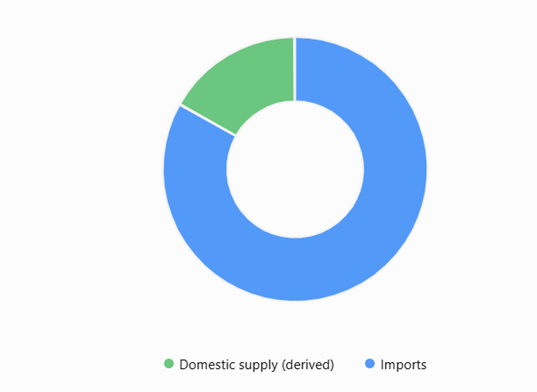
Figure 1: Imports dominating India’s machinery market
Source: TMMA’s September 2026 AGM report
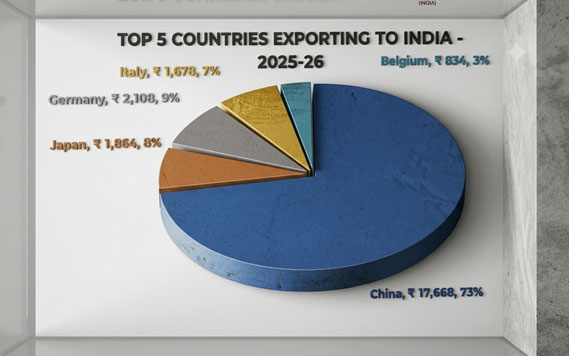
Figure 2: Top 5 countries exporting to India Source: TMMA’s September 2026 AGM report