Close Menu
Indian Textile Journal
  • Home
  • Market and Economy
    • Apparels & Garments
    • Fibres & Raw Materials
    • Home Textiles
    • Industry Update
  • Textile Machinery
    • Allied Equipment and Accessories
    • Automation
    • Dyeing, Processing & Finishing
    • Knitting
    • Printing
    • Spinning
    • Weaving
  • Tech Textiles
  • Sustainability
  • Resources
    • Trade Fair
    • Events
    • Videos
  • Interview & Opinion
  • Subscribe Now
  • Advertise
  • Digital
Facebook X (Twitter) YouTube LinkedIn
Indian Textile Journal
Epson
  • Home
  • Market and Economy
    • Apparels & Garments
    • Fibres & Raw Materials
    • Home Textiles
    • Industry Update
  • Textile Machinery
    • Allied Equipment and Accessories
    • Automation
    • Dyeing, Processing & Finishing
    • Knitting
    • Printing
    • Spinning
    • Weaving
  • Tech Textiles
  • Sustainability
  • Resources
    • Trade Fair
    • Events
    • Videos
  • Interview & Opinion
  • Subscribe Now
  • Advertise
  • Digital
Indian Textile Journal
Home » Sustainability – Prime Focus for the US Cotton Industry
Industry Update

Sustainability – Prime Focus for the US Cotton Industry

By January 20, 20211 Min Read
Share Facebook Twitter LinkedIn WhatsApp Copy Link

Since
Covid-19, it has been observed globally that sustainability has been one of the
topics that has gained attention among the brands, retailers and consumers. On
one hand, there has been a shift in consumers’ choices for more sustainable
products, and on the other hand brands and retailers are choosing sustainable
practices throughout their supply chains.

The
US cotton industry has always had a sustainability-focused approach and has one
of the most comprehensive systems for monitoring and measuring the key metrics
to reduce environmental impact. The 16,000 cotton farms in the United States
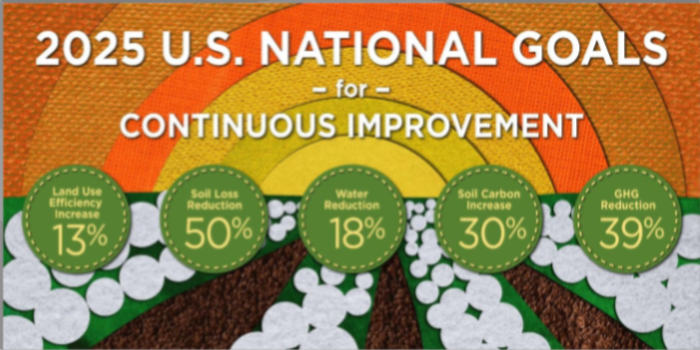
have been committed to continuous improvement for decades. For the past 35
years, US cotton production used less water per bale, reduced greenhouse gas
emissions, reduced energy consumption, all while reducing land use per bale.
Minimal tillage, GPS and sensor-driven precision agriculture and the growing of
winter cover crops are the practices adopted for improved soil health, reducing
loss and erosion and increasing soil carbon levels.

Previous ArticleRieter’s G37 meets all needs for efficient production
Next Article Datacolor launches benchtop spectrophotometer series

Related Posts

India eyes larger UK textile share after FTA

June 27, 2026

Textiles Ministry eyes $100 billion exports

June 27, 2026

N D Mhatre honoured with Certificate of International Excellence

June 25, 2026
Recent Posts
  • India eyes larger UK textile share after FTA
  • Textiles Ministry eyes $100 billion exports
  • Indian heritage to shine at 19th HGH India as traditional crafts connect with the industry
  • ITMA 2027 gains momentum as emerging innovators take the global stage
  • VIRGIO bets on made-on-demand fashion to build a global demand-led brand
  • HKRITA signs MoU with Jeanologia and Looptworks to establish green machine circular textile ecosystem
  • Underneat strengthens its position among India’s fastest-growing D2C brands
  • Karl Mayer: The fastest path from yarn to champion shoe
Facebook X (Twitter) YouTube LinkedIn
  • About us
  • Contact us
  • Privacy Policy
  • Terms and Conditions

SISTER PUBLICATIONS

Construction World Equipment India Industrial Product Finder Infrastructure Today

© 2026 Indian Textile Journal. All Rights Reserved.

Type above and press Enter to search. Press Esc to cancel.