Close Menu
Indian Textile Journal
  • Home
  • Market and Economy
    • Apparels & Garments
    • Fibres & Raw Materials
    • Home Textiles
    • Industry Update
  • Textile Machinery
    • Allied Equipment and Accessories
    • Automation
    • Dyeing, Processing & Finishing
    • Knitting
    • Printing
    • Spinning
    • Weaving
  • Tech Textiles
  • Sustainability
  • Resources
    • Trade Fair
    • Events
    • Videos
  • Interview & Opinion
  • Subscribe Now
  • Advertise
  • Digital
Facebook X (Twitter) YouTube LinkedIn
Indian Textile Journal
Epson
  • Home
  • Market and Economy
    • Apparels & Garments
    • Fibres & Raw Materials
    • Home Textiles
    • Industry Update
  • Textile Machinery
    • Allied Equipment and Accessories
    • Automation
    • Dyeing, Processing & Finishing
    • Knitting
    • Printing
    • Spinning
    • Weaving
  • Tech Textiles
  • Sustainability
  • Resources
    • Trade Fair
    • Events
    • Videos
  • Interview & Opinion
  • Subscribe Now
  • Advertise
  • Digital
Indian Textile Journal
Home » Peacock inspires textile coloration process
Industry Update

Peacock inspires textile coloration process

By March 20, 20171 Min Read
Share Facebook Twitter LinkedIn WhatsApp Copy Link

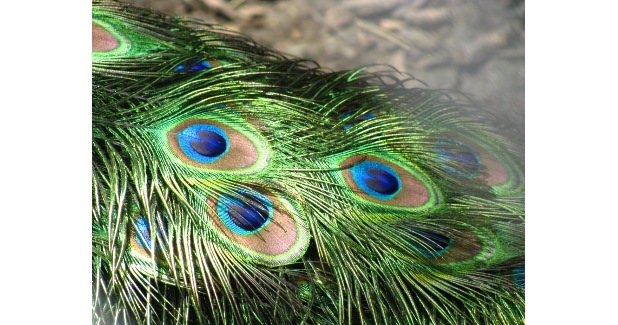
Peacock, which is the national bird of India, has inspired designers for many generations. Recently, a team of researchers from Dalian University of Technology, China has borrowed inspiration from the patterned structure of peacock feathers to derive structural colours in textiles, to make the coloration process more environmentally friendly.

Deviating from the concept of chemical colours, the scientists have developed 3-D colloidal crystals and have transfer printed on to voile fabrics to create structural colors.

The coloration formulation consists of polystyrene nanoparticles, polyacrylate, carbon black and water. The nano polystyrene is responsible for the 3-D colloidal crystal formation, which modulates the light to develop the structural colour patterns. Polyacrylate is needed for mechanical stability of the colloidal structures on the fabric.

According to the researchers, colloidal crystals are promising alternates to organic dyes and pigments. Transfer printing of colloidal particles resulted in good wash resistant multicolored patterns similar to those in peacock feathers. The work has appeared in a recent issue of ACS Applied Materials & Interfaces.
By: Seshadri Ramkumar, Texas Tech University, USA

Previous ArticleSangeeta Sachdev is MD of SPGPrints America
Next Article Cotton situation stable

Related Posts

India eyes larger UK textile share after FTA

June 27, 2026

Textiles Ministry eyes $100 billion exports

June 27, 2026

N D Mhatre honoured with Certificate of International Excellence

June 25, 2026
Recent Posts
  • India eyes larger UK textile share after FTA
  • Textiles Ministry eyes $100 billion exports
  • Indian heritage to shine at 19th HGH India as traditional crafts connect with the industry
  • ITMA 2027 gains momentum as emerging innovators take the global stage
  • VIRGIO bets on made-on-demand fashion to build a global demand-led brand
  • HKRITA signs MoU with Jeanologia and Looptworks to establish green machine circular textile ecosystem
  • Underneat strengthens its position among India’s fastest-growing D2C brands
  • Karl Mayer: The fastest path from yarn to champion shoe
Facebook X (Twitter) YouTube LinkedIn
  • About us
  • Contact us
  • Privacy Policy
  • Terms and Conditions

SISTER PUBLICATIONS

Construction World Equipment India Industrial Product Finder Infrastructure Today

© 2026 Indian Textile Journal. All Rights Reserved.

Type above and press Enter to search. Press Esc to cancel.