Close Menu
Indian Textile Journal
  • Home
  • Market and Economy
    • Apparels & Garments
    • Fibres & Raw Materials
    • Home Textiles
    • Industry Update
  • Textile Machinery
    • Allied Equipment and Accessories
    • Automation
    • Dyeing, Processing & Finishing
    • Knitting
    • Printing
    • Spinning
    • Weaving
  • Tech Textiles
  • Sustainability
  • Resources
    • Trade Fair
    • Events
    • Videos
  • Interview & Opinion
  • Subscribe Now
  • Advertise
  • Digital
Facebook X (Twitter) YouTube LinkedIn
Indian Textile Journal
Epson
  • Home
  • Market and Economy
    • Apparels & Garments
    • Fibres & Raw Materials
    • Home Textiles
    • Industry Update
  • Textile Machinery
    • Allied Equipment and Accessories
    • Automation
    • Dyeing, Processing & Finishing
    • Knitting
    • Printing
    • Spinning
    • Weaving
  • Tech Textiles
  • Sustainability
  • Resources
    • Trade Fair
    • Events
    • Videos
  • Interview & Opinion
  • Subscribe Now
  • Advertise
  • Digital
Indian Textile Journal
Home » Peacock inspires textile coloration process
Industry Update

Peacock inspires textile coloration process

By March 20, 20171 Min Read
Share Facebook Twitter LinkedIn WhatsApp Copy Link

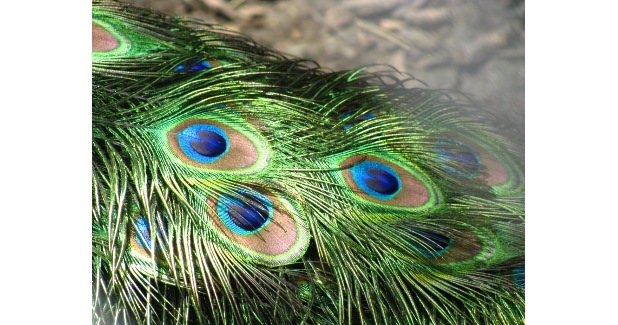
Peacock, which is the national bird of India, has inspired designers for many generations. Recently, a team of researchers from Dalian University of Technology, China has borrowed inspiration from the patterned structure of peacock feathers to derive structural colours in textiles, to make the coloration process more environmentally friendly.

Deviating from the concept of chemical colours, the scientists have developed 3-D colloidal crystals and have transfer printed on to voile fabrics to create structural colors.

The coloration formulation consists of polystyrene nanoparticles, polyacrylate, carbon black and water. The nano polystyrene is responsible for the 3-D colloidal crystal formation, which modulates the light to develop the structural colour patterns. Polyacrylate is needed for mechanical stability of the colloidal structures on the fabric.

According to the researchers, colloidal crystals are promising alternates to organic dyes and pigments. Transfer printing of colloidal particles resulted in good wash resistant multicolored patterns similar to those in peacock feathers. The work has appeared in a recent issue of ACS Applied Materials & Interfaces.
By: Seshadri Ramkumar, Texas Tech University, USA

Previous ArticleSangeeta Sachdev is MD of SPGPrints America
Next Article Cotton situation stable

Related Posts

PDS earns Great Place to Work recognition in 10 countries

June 2, 2026

Turkmenistan sees focus on high-tech Italian textile machinery

May 29, 2026

RIICO begins plot allotment at Rupaheri Textile Park in Bhilwara

May 18, 2026
Recent Posts
  • CMAI launches used clothes upcycling drive
  • Trützschler IDF 3 unlocks short fibre processing potential
  • World Environment Day 2026 – 5 wardrobe choices combining style and sustainability
  • MiRooh unveils cosmic candy bedroom collection
  • CMAI hosts AI Masterclass to guide clothing businesses into the digital era
  • PDS earns Great Place to Work recognition in 10 countries
  • NITMA welcomes cotton import duty waiver
  • Cotton imports exempted from customs duty
Facebook X (Twitter) YouTube LinkedIn
  • About us
  • Contact us
  • Privacy Policy
  • Terms and Conditions

SISTER PUBLICATIONS

Construction World Equipment India Industrial Product Finder Infrastructure Today

© 2026 Indian Textile Journal. All Rights Reserved.

Type above and press Enter to search. Press Esc to cancel.