Close Menu
Indian Textile Journal
  • Home
  • Textile Machinery
    • Allied Equipment and Accessories
    • Automation
    • Dyeing, Processing & Finishing
    • Knitting
    • Printing
    • Spinning
    • Weaving
  • Tech Textiles
  • Sustainability
  • Resources
    • Trade Fair
    • Events
    • Videos
  • Interview & Opinion
  • Subscribe Now
  • Advertise
  • Digital
  • Apparels & Garments
  • Fibres & Raw Materials
  • Home Textiles
  • Industry Update
Facebook X (Twitter) YouTube LinkedIn
Indian Textile Journal
Epson
  • Home
  • Textile Machinery
    • Allied Equipment and Accessories
    • Automation
    • Dyeing, Processing & Finishing
    • Knitting
    • Printing
    • Spinning
    • Weaving
  • Tech Textiles
  • Sustainability
  • Resources
    • Trade Fair
    • Events
    • Videos
  • Interview & Opinion
  • Subscribe Now
  • Advertise
  • Digital
  • Apparels & Garments
  • Fibres & Raw Materials
  • Home Textiles
  • Industry Update
Indian Textile Journal
Home » Cotton is superior in destabilising coronavirus
Spinning

Cotton is superior in destabilising coronavirus

By November 1, 20202 Mins Read
Share Facebook Twitter LinkedIn WhatsApp Copy Link

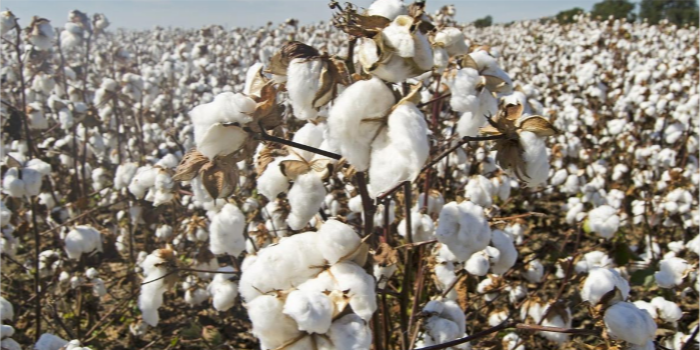
Porous cotton substrates are better in destabilizing the SARS-CoV-2 virus. With global COVID-19 cases over 37 million and deaths crossing one million, medical and nonmedical countermeasures such as masks are critically needed.

Recent study by Australian scientists show that material characteristics and temperature play important roles in the survival of the coronavirus. The work focused on the survival rate of SARS-CoV-2 virus on surfaces like paper notes, stainless steel, glass, vinyl material and cotton cloth. The viral studies were performed in high containment (Biosafety Level 4) at the Australian Center for Disease Preparedness.

At 20 degree Celsius, for nonporous materials like stainless steel, glass, the virus persisted beyond 28 days post infection. In the case of cotton, virus was not recovered past 14 days after inoculation. As the temperature was raised, recovery of the virus was reduced. At 40 degree Celsius, SARS-CoV-2 was not recoverable after 24 hours for cotton, while virus was not recovered beyond 48 hours for nonporous surfaces studied. In addition, humidity also influences the survival rate of the virus.

“It has been known for some time that the infectious virus could survive on inanimate objects for some time depending on its structure and characteristics,” stated Dr Manickavasagam Sundaram, Lakeridge Health, Oshawa, Canada. As a practicing physician, Dr Sundaram emphasised the importance of face coverings, social distancing, hand hygiene and disinfecting frequently used surfaces.

The latest study supports the use of face coverings made using cotton. Also, it indicates the influence of structural characteristics such as porosity. Nonwoven fabrics have higher surface area, which may be helpful in developing face coverings with filters. I have advocated the use of filter enhanced cotton face coverings, “FISORS,” which may be an efficient viral barrier.

Results of the Australian study have appeared recently in the Virology Journal.

By: Seshadri Ramkumar, Professor, Texas Tech University, USA

Previous ArticleComez high speed circular knitting machine
Next Article LAPF Studio conducts buyer-seller meet at Tiruppur

Related Posts

Cotton research attracting high achieving undergraduates

July 10, 2026

Seven years of proven performance: Consistent effluent quality, stable flux & permeability, and exceptional operational reliability

June 25, 2026

FiberTect wipe as a standby in FIFA world cup football games

June 25, 2026
Recent Posts
  • Cotton research attracting high achieving undergraduates
  • Yamuna Machine and MANTRA to develop indigenous geo-grid coating line
  • VIRGIO names Hansa Nigam as Chief Marketing Officer
  • Global trade and technical collaboration in textile sector                
  • Expanding the horizons of premium stretch warp knitting with KARL MAYER’s HKS 2-SE
  • Italian textile machinery leads sector revival through innovation and sustainability
  • Weave The Future launches national innovation challenge to tackle textile waste
  • Indian cotton sector in play
Facebook X (Twitter) YouTube LinkedIn
  • About us
  • Contact us
  • Privacy Policy
  • Terms and Conditions

SISTER PUBLICATIONS

Construction World Equipment India Industrial Product Finder Infrastructure Today

© 2026 Indian Textile Journal. All Rights Reserved.

Type above and press Enter to search. Press Esc to cancel.