Close Menu
Indian Textile Journal
  • Home
  • Market and Economy
    • Apparels & Garments
    • Fibres & Raw Materials
    • Home Textiles
    • Industry Update
  • Textile Machinery
    • Allied Equipment and Accessories
    • Automation
    • Dyeing, Processing & Finishing
    • Knitting
    • Printing
    • Spinning
    • Weaving
  • Tech Textiles
  • Sustainability
  • Resources
    • Trade Fair
    • Events
    • Videos
  • Interview & Opinion
  • Subscribe Now
  • Advertise
  • Digital
Facebook X (Twitter) YouTube LinkedIn
Indian Textile Journal
Epson
  • Home
  • Market and Economy
    • Apparels & Garments
    • Fibres & Raw Materials
    • Home Textiles
    • Industry Update
  • Textile Machinery
    • Allied Equipment and Accessories
    • Automation
    • Dyeing, Processing & Finishing
    • Knitting
    • Printing
    • Spinning
    • Weaving
  • Tech Textiles
  • Sustainability
  • Resources
    • Trade Fair
    • Events
    • Videos
  • Interview & Opinion
  • Subscribe Now
  • Advertise
  • Digital
Indian Textile Journal
Home » Inadequate feeder services may result in cotton shortage in Bangladesh
Fibres & Raw Materials

Inadequate feeder services may result in cotton shortage in Bangladesh

By January 24, 20222 Mins Read
Share Facebook Twitter LinkedIn WhatsApp Copy Link

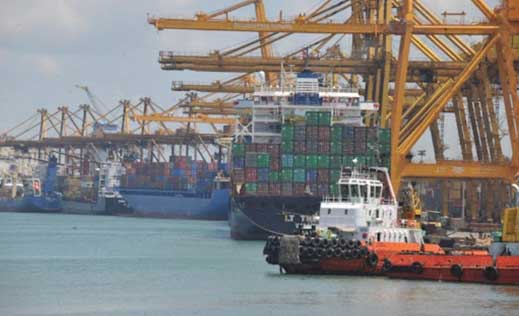
Bangladeshi textile millers fear a massive shortage of cotton in the coming months, as shipping lines seem ‘unwilling’ to carry Chittagong-bound cargo owing to a shortage of feeder vessels.

Bangladeshi textile millers fear a massive shortage of cotton in the coming months, as shipping lines seem ‘unwilling’ to carry Chittagong-bound cargo owing to a shortage of feeder vessels.

Mother vessels wait in transhipment ports, but feeder services are inadequate and fail to reach them in time, as per said Mohammad Ali Khokon, president of the Bangladesh Textile Mills Association (BTMA). With no deep-sea port, Bangladeshi textile exports and imports are dependent on feeder vessels carrying containers to and from Singapore, Port Klang, Colombo ports and the Bangladeshi ports of Chittagong and Mongla.

Khokon said that, while container handling at Chittagong had seen significant growth in the past two years, the number of feeder vessels had not increased by the same ratio. Cotton imports come from India, the US, Uzbekistan, Pakistan, Syria, Australia and some African countries. There are around 85 feeder vessels to carry containers between Bangladeshi seaports and regional transhipment hubs. Khokon fears the local textile and apparel industries might face an acute shortage of raw materials.

In a meeting with the civil aviation authority, Bangladesh Garment Manufacturers and Exporters Association president Faruque Hassan has asked for better facilities at airports to facilitate the successful delivery of apparel orders. He urged the civil aviation authority to adopt more modern equipment to improve cargo handling processes at the airport and the BGMEA called for a reduction in scanning charges, an increase in cargo handling staff and more equipment and machinery.

Hassan, at a meeting with railways minister Nurul Islam Sujan last week, demanded more rail tracks, upgrading the single line to a double track and to convert the rail lines into dual gauge. He also urged the minister for to speed-up the development of the inland rail container depot in Gazipur district, a Dhaka suburb.

Source: The Loadstar

Image Source: Google Images

Also Read:

https://www.automotiveproductsfinder.com/news/auto-component-maker-zf-launches-cv-solutions/135187
https://www.automotiveproductsfinder.com/news/honda-to-start-ev-battery-swapping-for-3-wheelers-in-bengaluru/135188

Bangladesh

Previous ArticleFashion for Good’s project may shift textile processing from wet to dry
Next Article Govt of India releases guidelines for PM-MITRA parks scheme

Related Posts

Grasim Industries to invest Rs 30.94 billion to boost lyocell capacity

June 9, 2026

Trützschler IDF 3 unlocks short fibre processing potential

June 5, 2026

NITMA welcomes cotton import duty waiver

June 2, 2026
Recent Posts
  • India’s textile sector posts 2.1% growth in FY25-26
  • RSWM retains IND A rating as outlook turns stable
  • Mumbai welcomes back HGH India 2026
  • Vipul Organics teams up with OMYA for European pigment distribution
  • ITM Istanbul 2026: ColorJet’s visibility extends across the entire exhibition
  • CMAI kidswear fair sees record participation 
  • Clean energy shift may save Tamil Nadu textiles Rs 32.50 billion
  • Spykar plans pan-India offline expansion with 100 new stores in two years
Facebook X (Twitter) YouTube LinkedIn
  • About us
  • Contact us
  • Privacy Policy
  • Terms and Conditions

SISTER PUBLICATIONS

Construction World Equipment India Industrial Product Finder Infrastructure Today

© 2026 Indian Textile Journal. All Rights Reserved.

Type above and press Enter to search. Press Esc to cancel.