


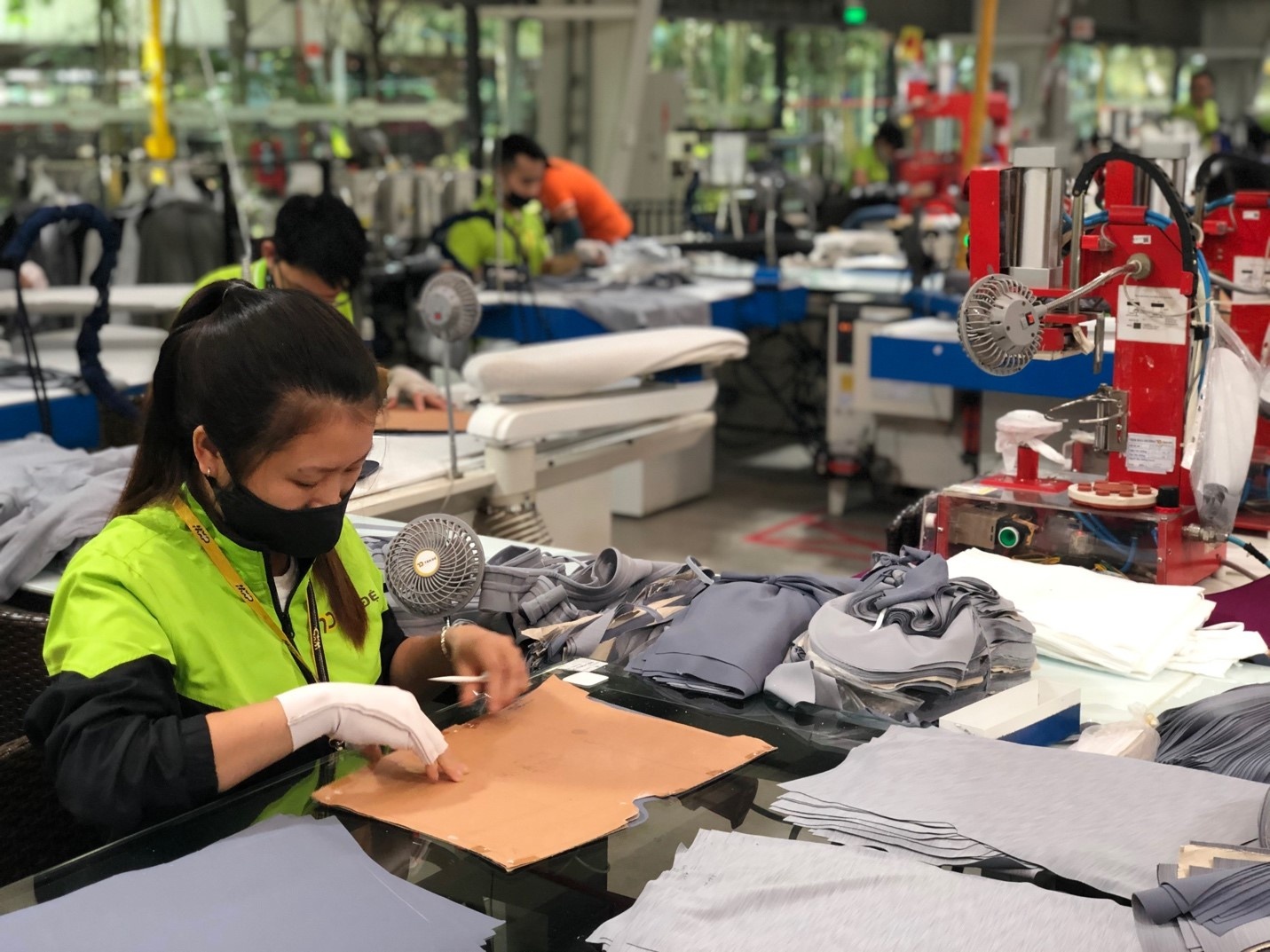
The Deutsche Gesellschaft für Internationale Zusammenarbeit (GIZ) GmbH and Decathlon have launched a joint initiative to improve the environmental performance of the garment and textile supply chain in Viet Nam.
Within a memorandum of understanding recently signed, two GIZ projects – ‘Climate Protection through Sustainable Bioenergy Markets in Viet Nam’ (BEM) and ‘Fostering and Advancing Sustainable Business and Responsible Industrial Practices in the Clothing Industry in Asia’ (FABRIC) – will partner with Decathlon Viet Nam to strengthen the company’s suppliers in terms of climate action, water use, energy efficiency and chemical management this year.
The global textile supply chain contributes to climate change through greenhouse gas emissions during garment production, but the industry itself is also impacted by climate change. Current impacts and future risks include disruption of supply chain production and transportation, as well as higher input costs from rising energy and water prices, while at the same time customer- and corporate-demand for climate-friendly products is growing.
Moreover, global commitments and European legislation, among others the German Due Diligence Act that will enter into force in 2023 are increasing the pressure, as they require multinational companies to identify, prevent, mitigate, and account for environmental and social risks along supply chains. As a result, leading brands and manufacturers have set climate and environmental protection targets.
To tackle textile industry challenges in Viet Nam’s supply chain, together with Decathlon, GIZ will provide training to factories. Specifically, the GIZ FABRIC project will offer free e-learning courses, such as Climate Action Training and Chemical Management Training (e-REMC), via the platform www.atingi.org. The FABRIC training tools are a combination of capacity building measures and advisory services to train its brands and suppliers.
The Climate Action Training provides basic knowledge on climate change, greenhouse gas accounting and reduction solutions in the area of energy efficiency and renewable energy, which has been developed in a collaboration with the UN Fashion Industry Charter for Climate Action​ and 13 brands, among others Decathlon. ​The Chemical Management Training will support factories to improve and implement sustainable chemical management systems. The distinctive e-learning courses tutored by experts fit well with the learning needs of the factory staff, especially in the time of COVID-19 and result in a cost-effective implementation.
Meanwhile, the GIZ BEM project will join forces with Decathlon to replace coal consumption with sustainable biomass at the latter’s suppliers in Viet Nam. BEM will provide Decathlon with technical guidance towards improving factory boiler efficiency, identify sustainable solutions for biomass supply, open access to biomass markets for factories and map out a practical supply of biomass resources.
Marc Beckmann, Program Director of GIZ FABRIC, underlined that, “Tackling climate change requires collaboration with international brands to jointly improving the conditions on the suppliers’ side where most of the emissions and environmental impacts happen. This is why our collaboration is important and urgent!â€
He added, ‘These innovative approaches for training will support suppliers to advancing their environmental performance. Thereby, they can position themselves as competitive actors in international supply chains. The learnings from this collaboration will also benefit the sector regionally and globally. GIZ FABRIC will share the learnings with relevant decision makers, support the expansion to other countries, while the digital trainings are already available on Atingi and free to use for everyone.â€
Nathan Moore, Director of GIZ’s BEM Project, said, “Our project aims to improve the preconditions for a sustainable use of biomass for electricity and heat generation in Viet Nam. Since 2019, the BEM project has worked with Decathlon Viet Nam to organise a series of activities raising awareness and supporting the green energy transition. Therefore, formalisation of this joint initiative by BEM, FABRIC and Decathlon will serve as a springboard for increasing commitments to maximize biomass energy in Viet Nam, contributing to the nation’s sustainable development and climate goals.â€
Decathlon in return will provide its suppliers’ factories with the training to increase the use of bioenergy and other renewable energy sources, and support studies on biomass supply chain. With more than 100 suppliers’ factories covering garment, textile, footwear and accessories in Viet Nam, Decathlon will later disseminate the lessons learnt from this partnership with GIZ, especially the company’s experience driving sustainability in its supply chain, to other national and global brands at related forums to multiply the impact.
Image Source: Google Images