


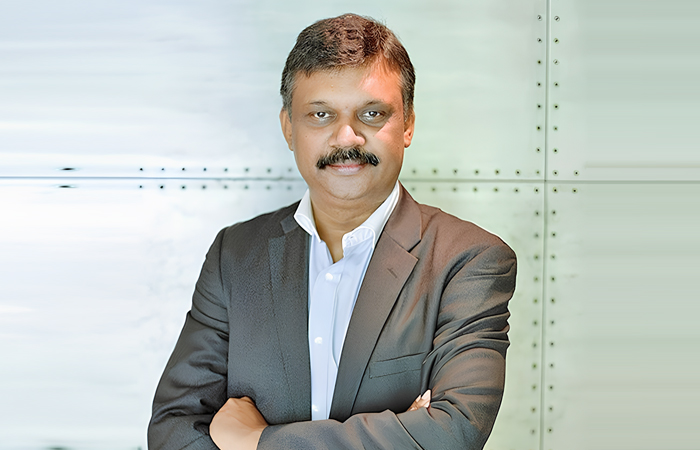
The Indian home textiles sector is often regarded as a silver lining amid the dynamic landscape of the Indian textiles industry. Ashish Kumar, CEO and Wholetime Director, Sutlej Textiles and Industries Limited (K K Birla Group), in this interview with Divya Shetty, discusses the current state of the Indian home textiles market and outlines the steps needed to stay competitive in the global arena.
What are your thoughts on the current scenario of the Indian home textile sector?
Overall, we believe that there are still many areas within the Indian home textile industry where needs remain unfulfilled. That’s the segment we are targeting. Broadly speaking, if you look at the current scenario—whether in fashion apparel or elsewhere—both ends of the market spectrum are performing very well. The bottom of the pyramid, particularly in value retail, is doing exceptionally well, and there’s also a significant and thriving segment on the luxury side. The same trend applies to home textiles. What we are now trying to explore is how we can position ourselves in that luxury space and effectively meet the evolving needs of consumers.
What are the current trends shaping the home textile industry in India and globally?
Home textiles are not isolated from the broader trends seen in the apparel or textile industry. There’s a growing awareness around sustainability and a sense of responsibility regarding how textiles are being manufactured. While people are becoming more conscious of these issues, they are still often reluctant to pay a premium for sustainability.
At the same time, there’s a clear trend toward customization. Consumers increasingly want products that are unique—what they have, others shouldn’t—and they are willing to pay more for that exclusivity, as long as they perceive real value in it.
Our overarching theme is about “featuring you”—understanding how individuals see things and exploring how we can collaborate or co-create with them for their entire living space. So, key elements such as sustainability, co-creation, customization, and the perceived value offered will play an important role going forward. And the same applies to the home textile sector.
What key issues are manufacturers and exporters dealing with at present?
At the global level, there are obviously a lot of uncertainties—tariffs, for instance, and how they will eventually play out remains to be seen. So, there is definitely a sense of unpredictability that all exporters are grappling with, especially since the brands themselves are dealing with these issues as well.
Now, as far as the Indian market is concerned, I believe we are in a comparatively better position than our competitors. Countries like China and Bangladesh are facing saturation due to high geographical concentration of production. As a result, global brands are actively looking to de-risk their sourcing geographies, which places India in a favourable spot.
However, the key challenge for India is achieving scale—how do we build or replicate the scale we have in upstream textiles across the entire value chain? Ultimately, customers are focused on the finished product—the end apparel. While India is a strong hub for upstream textile manufacturing, brands today are seeking comprehensive solutions. So the question is: how can India evolve from being a tactical product supplier to becoming a full-service solution provider? That’s the journey we need to undertake. And if we do, there is significant potential and ample market opportunity that India is well-positioned to serve.
What impact is the India-UK FTA expected to have on the Indian home textiles industry?
Whether you look at the UK FTA, the ongoing discussions with the EU, or even the anticipated developments in India-US trade talks, the outlook—both in terms of tariffs and the potential for integrated supply chains—is quite favourable. What we make of these opportunities, however, is entirely up to us.
For a long time, there has been talk about a shift from “China to the West,” but it hasn’t fully materialized yet. What we need now is product innovation and a strong focus on our core strengths—what India can uniquely offer to the market. We can’t rely solely on low labour costs or compete just on price. The real differentiator will be how we package and present our complete value proposition to global brands.
Innovation and sustainability will be key. More importantly, becoming a full-solution provider—rather than just a part of the global supply chain—is what will set India apart. That’s the path that will ultimately help us scale and grow our volumes effectively.
What global opportunities do you see for the Indian home textile industry?
In India, if you observe, the industry is heavily cotton-focused. The entire textile ecosystem here is predominantly centred around cotton. However, when you look at the global market, cotton-based apparel products make up only a small fraction of the overall textile universe. This clearly indicates that a significant portion of global opportunities lies in non-cotton products.
Tapping into those opportunities will require innovation starting at the fibre level—particularly in polyesters, nylons, and tri-blends. While India is recognized for its innovation, it has largely been limited to the cotton segment. To move beyond this, we need to explore emerging categories like athleisure, performance wear, and even technical textiles, including protective gear.
These segments hold immense growth potential—much higher than traditional cotton-based categories—provided we take the necessary steps to establish and strengthen the required supply chain infrastructure.