


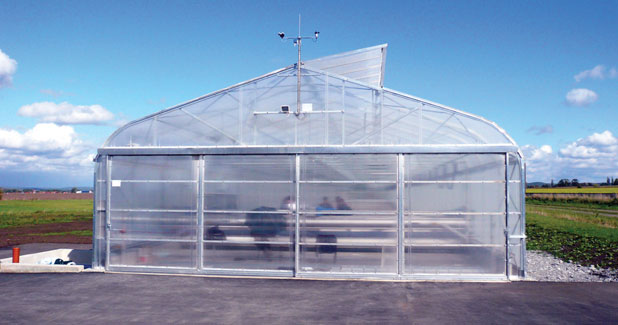
With a record of more than 10 years of running installations, solar sludge drying with the use of the HUBER SRT system has become the first choice of customers worldwide. It has partnered with the A.T.E. Group in India.
Around 15 years back, India embarked on its journey towards Zero Liquid Discharge (ZLD) for industrial units. Though ZLD units seemed far-fetched in the early days, today India has set an example for the world by successfully implementing ZLD projects in many States.
While ZLD units by definition have no liquid waste, the disposal of solid waste (usually referred to as sludge in technical literature) is another important factor. Today, technology has moved from physio-chemical treatment to biological treatment, thereby cutting down the sludge production substantially. But the quantity of sludge generated is still huge, and it is mandatory to send the dry sludge to government certified landfill sites.
The cost for sludge disposal has increased multi-fold from Rs 1 per kg to Rs 8 per kg in the past 7-8 years, and in some regions it is as high as Rs 16 per kg. This upward trend is bound to continue in the coming years as well. This makes it all the more important for the industry to produce as little sludge as possible. The sludge produced in Effluent Treatment Plants or ETPs usually comprises of 20 per cent solids + 80 per cent water. Thus, the industry has to also pay for the safe disposal of the water present in the sludge. In view of this, it is also important to achieve maximum dryness of sludge to reduce the weight of the sludge and thus reduce the disposal cost. With conventional techniques, achieving more than 20 per cent dryness itself is a task, and things only go from bad to worse in the monsoons. Around 10 years ago, HUBER launched its range of products to address comprehensively all sludge handling issues, and one of the products created then is the HUBER SRT system.
HUBER SRT system
Since the middle of the past century, solar energy was used to dry and dewater sewage sludge in sludge drying beds. These sludge drying beds are sometimes covered with glass or transparent polythene sheets so that they can be used in the rains. Sometimes, at regular intervals, the sludge is manually turned/mixed on the sludge drying beds to improve drying performance. All this is very cumbersome and does not help in effectively drying the sludge below a water content of 40-45 per cent round the year. In addition, the sludge drying beds emit a bad odour, attract flies, and are often unhygienic.
It is against this background that we have to gauge the HUBER SRT system, which can dry sludge to a solid with only 10 to 15 per cent water. The HUBER SRT system is constructed inside a greenhouse. It utilises the greenhouse effect to amplify natural solar heating. It provides for very efficient turning and aeration of sludge on a continuous basis, thus preventing odour emission and also ensuring consistent drying of the sludge. As the sludge turning happens inside the greenhouse, the SRT system is suitable for year-round operation.
The turning system spreads and turns the sludge and also transports it within the warm greenhouse.
The climate inside the greenhouse is controlled using an automated ventilation system which is actuated based on the greenhouse humidity and temperature.
The Sludge Turner
The sludge turner is the heart of the active solar drying system. The turner operates continuously to ensure regular sludge feeding and removal. The unique sludge turning and transporting method ensures the sludge is completely restacked, mixed, and aerated.
A loose wave-like sludge bed with a huge evaporation surface is produced. Efficient sludge aeration further keeps the sludge in an aerobic condition so that the odour emitting processes are eliminated. Another advantage of the SRT system is the ability of the turner to take up sludge in its shovels and transport the sludge to any place within the drying hall or greenhouse.
This opens up new ways of application: for example, sludge feeding and removal can be selected to take place at the same side of the drying hall, making it unnecessary to build a road or a transport way. Constant sludge transport allows for the continuous addition of sludge, which significantly loses volume during the drying process. Dry sludge granulate is bulk material that is easy to store and transport. The sludge turning unit with shovels is a typical Huber quality product: sturdy stainless steel design with various features such as a forced-guided chain for even ganging, and long-life electric motors. Furthermore, the system is available in different sizes, which allows the utilisation of different hall widths.
Aeration
Depending on the prevailing temperature, the water absorption capacity of the air varies. To prevent a stagnant vapour layer formation just over the sludge surface, the air inside the greenhouse is regularly circulated by the ventilation system. When the indoor air is sufficiently saturated air exchange with ambient air takes place either via a discharge system or a ridge flap to ensure dry air is available again. Plant control is managed by measurement of the absolute humidity and the absorption potential of the air. Both the drying process and energy consumption are controlled and coordinated. The optimally adjusted ventilation system includes condensation control to prevent water condensation on the greenhouse film.
Benefits of solar sludge drying:
- Sustainable, eco-friendly process
- Best mixing and aeration of the complete sludge bed
- Minimised odour development and dust formation due to effective back mixing
- Optimised evaporation efficiency with low energy consumption
- Simple process as the required evaporation energy is provided for free by the sun
- Low operating cost
- Increased profitability
- Dried sludge can be used as fuel supplement if it is completely organic
Summary
With a record of more than 10 years of running installations, solar sludge drying with the use of the HUBER SRT system has become the first choice of customers worldwide. HUBER’s partner in India, A.T.E., offers not only these machines that meet the highest quality standards, but also brings to customer projects its extensive experience in building complete plants and in providing excellent service support.