


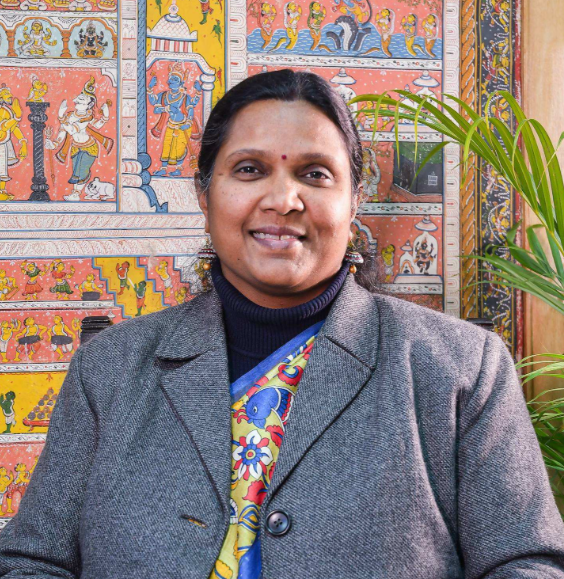
As India’s textile sector sharpens its focus on sustainability, traceability and global competitiveness, handlooms are emerging as a vital bridge between traditional knowledge and future-ready practices. Rakesh Rao speaks with Dr M Beena, Development Commissioner (Handlooms), on regenerative textiles, artisan entrepreneurship, technology adoption, export opportunities and the role of handlooms in strengthening India’s ambition to build a $300 billion textile industry by 2030.
As regenerative textiles gain momentum in India, what changes are needed across the textile ecosystem from valuing indigenous fibres and traditional knowledge to rethinking design, production and consumption to make regenerative practices a lasting part of the sector?
We’ve actually had the foundation for regenerative textiles all along, in our indigenous fibres, our handloom traditions, our community-based knowledge systems. What’s changing now is that we’re starting to see these as solutions for the future, not just as heritage to be preserved. That means backing them with real research and innovation, building stronger market linkages so artisans aren’t left out of the value they create, and designing with local materials instead of around them. None of this holds without consumers understanding what’s actually embedded in these textiles – the environmental and social value that a lot of fast fashion simply doesn’t carry. Regenerative practices will only last if we build sustainability into the whole value chain, from sourcing right through to what happens at a garment’s end of life.
Weave The Future has evolved over the years to explore repair, reuse, upcycling and recycling, and now regenerative textiles. How does this evolution reflect the changing priorities of India’s handloom and textile ecosystem, and what role can the platform play in shaping the next phase of this transition?
This evolution really mirrors how our own thinking about sustainability has shifted. Repair, reuse, upcycling, recycling – all of that still matters, but we’re now asking a more fundamental question: how can materials do good from the very beginning, for ecosystems, for communities, for livelihoods? That’s what regenerative textiles push us toward. Weave The Future’s role is to bring artisans, designers, innovators and consumers into that conversation together. Going forward, the platform can continue to encourage experimentation, along with demonstrating how heritage practices can inform contemporary solutions for a more resilient textile ecosystem.
India’s handloom sector has a strong advantage in authenticity, craftsmanship and natural materials. How can India convert this heritage into a competitive advantage as global brands increasingly seek sustainable and traceable textiles?
Authenticity and craftsmanship have always been our strength, and now the world is catching up to what makes them valuable. Global brands today want textiles they can trust. Which means that they are made responsibly, sourced transparently, and rooted in real skill rather than mass production. To convert this into a true competitive edge, we need to back it with proof: traceability tools, GI protection, and consistent quality standards that allow buyers to understand and verify what they are purchasing. Equally important is visibility in getting Indian handlooms in front of the brands actively looking for these qualities, through trade platforms, buyer engagements and design collaborations. Heritage becomes a competitive advantage when it is not only preserved, but understood, documented and recognised for the value it carries. The story of Indian handloom is already powerful; our task is to make sure the world can see its value
What initiatives is the Ministry undertaking to transform handloom artisans from largely livelihood-based producers into resilient, market-oriented enterprises with stronger incomes and wider market access?
The shift we’re driving is from artisans making cloth to survive to artisans having the knowledge, resources and market access to build resilient enterprises. Schemes such as the Weaver MUDRA Scheme under the National Handloom Development Programme provide support for areas including finance, raw materials and infrastructure. Alongside this, strengthening skills in pricing, costing and business management, providing design inputs, and expanding digital and other market channels can help artisans respond more confidently to changing demand. Cluster-based approaches can also help smaller groups pool resources, respond to larger opportunities and strengthen their collective market presence. The larger objective is to give artisans not only better tools, but greater agency in the decisions that shape their businesses and livelihoods. Ultimately, resilience comes from building an ecosystem in which craft, enterprise and market opportunity can grow together.
Handlooms are often perceived as premium, niche or heritage products. What interventions are needed to make the sector more commercially competitive and relevant to younger, mainstream consumers?
The value of handloom lies precisely in the time, skill and human effort that goes into making it. The challenge is to help a new generation understand that value and see handloom as something that is part of our life, not only in the category of heritage or occasion wear. That means product lines built for daily use and marketing that speaks to today’s consumers. Design collaborations are key too, reimagining traditional weaves as contemporary clothing, accessories and home products that fit modern lifestyles. This is also where platforms such as Weave The Future can play a role. By bringing brands and practitioners working with handloom and regenerative materials into a public-facing space, the platform allows these products to be experienced beyond the traditional perception of handloom as something niche or ceremonial. Its larger aim is to help mainstream sustainability by making responsible materials, craft and design visible and relevant to a wider audience.”
What role can technologies such as digital design, e-commerce, traceability, AI and modern production tools play in strengthening the handloom ecosystem while preserving its craft-led character?
Technology’s role here is to support the craft, not replace it. Digital design tools help weavers and designers experiment with patterns and colours before a single thread is woven, saving time and material. E-commerce gives weavers direct access to buyers, cutting out layers of middlemen. Traceability technology lets a buyer verify exactly who made a product and what it’s made of, building trust without changing how it’s made. AI can help with things like demand forecasting or matching artisans to buyer requirements, taking on the guesswork rather than the weaving itself. Used this way, technology strengthens the business side of handlooms better market fit, transparency and reach while leaving the actual craft, done entirely by hand, completely untouched.
Where do you see the strongest export opportunities for Indian handloom products today? Has the government set any specific handloom export ambitions or targets for FY27 and FY28?
North America, Europe and parts of the Middle East continue to show strong demand for handmade, sustainable textiles, and categories like home furnishings, natural-fibre apparel and lifestyle accessories travel particularly well internationally. On specific targets, the Ministry continues to work towards steady, sustained growth in handloom exports as part of the broader push to strengthen India’s textile export footprint over the coming yearsTrade fairs, buyer-seller meets and digital export platforms remain key channels for reaching international buyers, alongside quality certification support to help products meet global standards. The focus is on building sustained relationships and ensuring that Indian handloom products can meet the expectations of international markets.
India aims to build a $300 billion textile industry by 2030. What contribution can the handloom sector realistically make towards this goal, and what are the key priorities required to unlock that potential?
Handloom’s contribution to the $300 billion target won’t come primarily from volume. Its value lies in what it brings to India’s textile story globally, including authenticity, sustainability and craftsmanship that are difficult to replicate through mass manufacturing. To unlock its full potential within that larger vision, the sector needs to focus on three priorities: scale without compromising quality, through cluster-based production and stronger supply chains; wider market access, through retail, e-commerce and export partnerships; and continued investment in artisan livelihoods, so that the skills and communities behind this craft continue to thrive.
If these priorities are addressed, handloom can contribute far beyond its share of overall production, not only through export and domestic market value, but by strengthening India’s position as a source of distinctive, sustainable and craft-led textiles in global markets.