


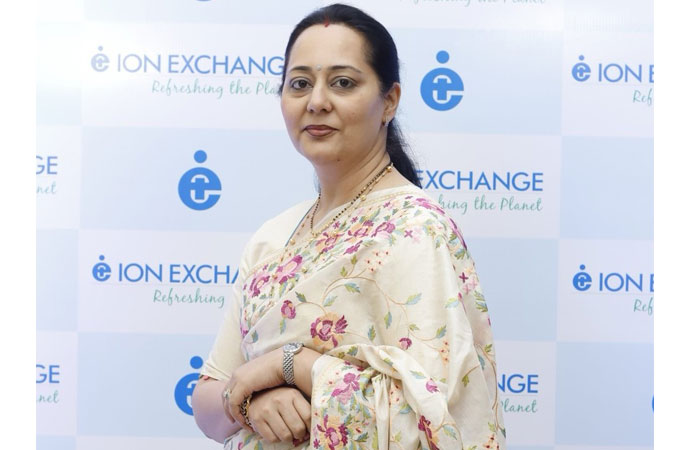
As global environmental regulations tighten and freshwater resources dwindle, the textile industry faces mounting pressure to balance high production demands with eco-friendly practices. Deepa Joshi Sharma, Chief Customer & Marketing Officer, Ion Exchange (India), in this exclusive interview, with Divya Shetty, discusses the complex challenges of textile wastewater, the transformative impact of Zero Liquid Discharge and advanced technologies, and practical steps manufacturers can take right now to boost efficiency. Discover how cutting-edge innovation and digital intelligence are redefining water management as a strategic business advantage for the future.
What are the biggest water and wastewater management challenges facing the textile industry today?
The textile industry is at the intersection of two important priorities—meeting growing production demands while significantly reducing its environmental footprint. Water is central to textile processing, yet freshwater availability is becoming increasingly constrained in many manufacturing regions. At the same time, environmental regulations are becoming more stringent and global brands are placing greater emphasis on sustainable sourcing and responsible water stewardship.
One of the biggest challenges is managing complex wastewater streams that contain colour dyes, salts, chemicals, Heavy Metals (in some processes) and organic contaminants. Textile manufacturers are therefore looking for solutions that not only ensure regulatory compliance but also enable them to optimise water use, recover valuable resources, reduce operating costs and build long-term resilience.
At Ion Exchange, we are seeing a clear shift in customer expectations—from standalone treatment plants to integrated water management solutions that combine process optimisation, water recycling, digital monitoring and lifecycle support. Increasingly, industries are recognising that effective water management is not just an environmental responsibility but a strategic business advantage.
How are technologies such as water recycling, reuse and Zero Liquid Discharge (ZLD) helping textile manufacturers improve sustainability and reduce water consumption?
Water recycling, reuse and Zero Liquid Discharge (ZLD) are enabling textile manufacturers to fundamentally transform the way they manage water. Instead of relying heavily on freshwater sources, manufacturers can recover and reuse treated wastewater for various process applications, significantly reducing overall water consumption.
Moreover, Zero Liquid Discharge (ZLD) has become an essential solution for the textile industry, particularly in water-stressed regions where environmental regulations are becoming increasingly stringent. It has emerged as a key approach not only for standalone textile manufacturing facilities but also for many Common Effluent Treatment Plants (CETPs) in Indian textile clusters. By enabling maximum water recovery and reuse while eliminating liquid effluent discharge, ZLD helps minimise environmental pollution, conserve valuable water resources and support sustainable textile manufacturing. Ion Exchange’s INDION® Zero Liquid Discharge Systems integrate advanced treatment, membrane separation and energy-efficient evaporation technologies to maximise water recovery while delivering reliable, sustainable and compliant wastewater management solutions for the textile industry.
State-of-the-Art Biological Systems, Advanced membrane technologies, high-performance ion exchange systems and energy-efficient evaporation processes have made these solutions more reliable, efficient and commercially viable than ever before. At Ion Exchange, our integrated solutions leverage Hydramem® membrane technologies, INDION® ion exchange resins and advanced process engineering to maximise water recovery while ensuring consistent treatment performance. These solutions are complemented by IonSite®, our digital solutions platform, which enables real-time monitoring, predictive maintenance and performance optimisation of water and wastewater treatment systems.
By combining advanced technologies with digital intelligence and comprehensive operations and maintenance services, we help textile manufacturers improve water security, optimise lifecycle costs, comply with evolving regulations and strengthen their sustainability performance.
What is one practical step textile manufacturers can take today to improve water efficiency without making major changes to their operations?
A good starting point is to understand exactly how water is being used across the plant. Conducting a detailed water audit often reveals opportunities to reduce consumption through better process control, optimised rinsing operations, leak detection, condensate recovery and reuse of treated water in suitable applications.
Many of these improvements require relatively modest investments but can deliver substantial savings in water consumption, energy and operating costs. Equally important is continuous monitoring of water use and treatment system performance. Digital platforms such as IonSite® provide valuable operational insights through real-time data analytics, enabling manufacturers to identify inefficiencies early, optimise plant performance and make informed decisions that improve overall water efficiency.
Improving water efficiency is not always about large capital projects; often it begins with better visibility, measurement and operational discipline.
How do you see water management in the textile industry evolving over the next five years and what role will innovation play?
Water management will increasingly become a strategic differentiator for textile manufacturers. As sustainability expectations continue to rise across the global textile value chain, companies that invest in responsible water management will be better positioned to meet customer expectations, regulatory requirements and ESG commitments.
Over the next five years, we expect to see wider adoption of circular water management practices, where water is continuously recovered, treated and reused within manufacturing facilities. The convergence of advanced membrane technologies, high-performance treatment materials, digitalisation, automation and AI-driven analytics will significantly improve water recovery, reduce energy consumption and optimise operating costs.
Innovation will play a critical role—not only in developing more efficient treatment technologies but also in making treatment systems smarter and more predictive. At Ion Exchange, we continue to invest in innovations across our Hydramem® membrane portfolio, INDION® ion exchange technologies and IonSite® digital platform, enabling customers to move towards intelligent, connected and sustainable water management systems.
As the textile industry embraces circular manufacturing and resource efficiency, the future will belong to organisations that view water not merely as a utility, but as a valuable resource to be conserved, recovered and managed responsibly. At Ion Exchange, our focus remains on partnering with customers to achieve this transition through integrated Total Water and Environment Management Solutions.