


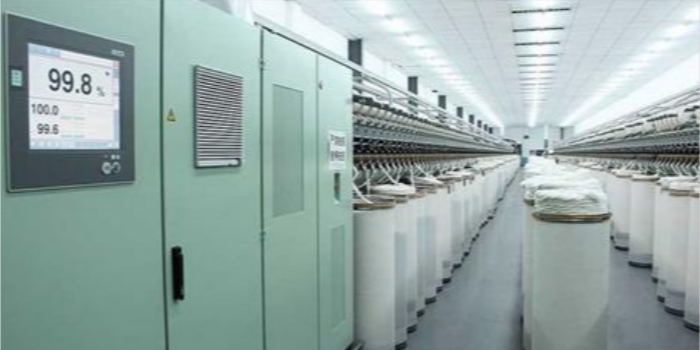
With barely 1 per cent of garments being recycled and three quarters of the world’s clothing ending up in landfill, the textile industry is actively seeking ways to make production patterns more sustainable and pay more attention to the entire life cycle of items of clothing. Rieter is offering solutions for the integration of recycled raw material into yarn production to help close the textile loop. The results of our latest study show that it is possible to spin not only rotor, but also ring yarns of different quality with a considerable amount of recycled raw material on a Rieter system.
In recent years, better use of raw materials has become very important in the textile sector due to growing environmental awareness, legal requirements for more sustainability, and the cost of raw materials. As a result, more research and development is being carried out in the various areas of textile recycling.
Coordination and cooperation between the different industrial sectors, from the procurement of raw materials through to the new final product, will be vital. Only then will it be possible to expand and optimize the entire recycling process to help it grow into a larger market. In the next few years, the realistic market potential for the staple fibre industry for recycled raw materials amounts to around 7.6 million tonnes annually if the current trend continues.
Classify the raw material
To help spinners in the area of recycled fibres, Rieter has established a classification system for the typical recycled raw material quality available on the market (Fig. 1). The Rieter Recycling Classification makes it easier for spinners to estimate what targets can be reached depending on the material. The short-fibre content, the mean fibre length and the 5 per cent fibre length are important parameters after the tearing process because they help to determine which subsequent spinning process (ring or rotor) should be used and which quality (uniformity) and maximum spinning fineness (yarn count) can be achieved.
Fig. 1: The Rieter Recycling Classification allows a very good estimation of processability and yarn quality of the used material.

Defining the optimal spinning process for recycled materials
A very interesting recycling example is the re-spinning of used cotton clothes, e.g. T-shirts. Typically, the recycled raw material is blended with virgin cotton. This application was also used in the Rieter trial to determine the optimum spinning process. Both the requirements for raw-material preparation and the best machine configur