


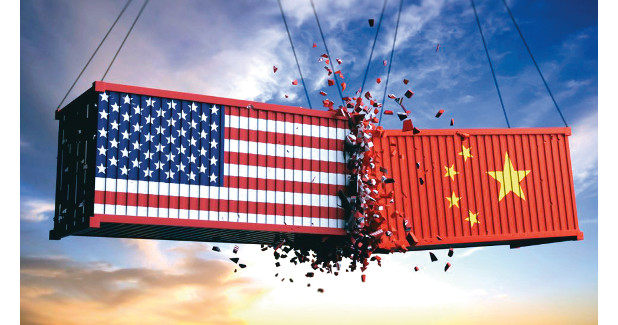
Politics has become even more unpredictable and so no one is entirely certain about the outcome the G20 Summit – especially concerning US-China trade relations. However, there were sparks of a possible easing – a truce (at least temporarily) – of the highly publicised, and until recently, escalating, tensions between the two nations.
The US will hold off on raising tariffs (from
10 per cent to 25 per cent) on $200 billion worth of Chinese imports. China agreed to buy a very substantial (but unspecified) amount of US goods.
The 90-day truce period will give both sides a
window for negotiating a longer-term agreement. Key issues include forced technology transfer (from the US to China), intellectual property rights protection, non-tariff barriers, cyber-intrusion, services, and agriculture.
It is unlikely that we will see tariffs on apparel imports to the US. China’s agreement to immediately start buying US agricultural products will enable mills
to import US cotton. Sourcing in China will remain
stable. This will have a ripple effect on sourcing in
other Asian nations.
China and the US have agreed to immediately start negotiations (which will continue during the 90-day truce). Both sides realize that the trade war has caused losses for both nations. Early reports about the G20 Summit from the Chinese media reported that “the US has positively addressed what China felt were unresolved issues by Washington.†At the moment, it looks like
both sides are actively searching for a way out of this standoff – without losing face.
The US will hold off on raising tariffs (from
10 per cent to 25 per cent) on $200 billion worth of Chinese imports. China agreed to buy a very substantial (but unspecified) amount of US goods.
The 90-day truce period will give both sides a
window for negotiating a longer-term agreement. Key issues include forced technology transfer (from the US to China), intellectual property rights protection, non-tariff barriers, cyber-intrusion, services, and agriculture.
It is unlikely that we will see tariffs on apparel imports to the US. China’s agreement to immediately start buying US agricultural products will enable mills
to import US cotton. Sourcing in China will remain
stable. This will have a ripple effect on sourcing in
other Asian nations.
China and the US have agreed to immediately start negotiations (which will continue during the 90-day truce). Both sides realize that the trade war has caused losses for both nations. Early reports about the G20 Summit from the Chinese media reported that “the US has positively addressed what China felt were unresolved issues by Washington.†At the moment, it looks like
both sides are actively searching for a way out of this standoff – without losing face.