Close Menu
Indian Textile Journal
  • Home
  • Textile Machinery
    • Allied Equipment and Accessories
    • Automation
    • Dyeing, Processing & Finishing
    • Knitting
    • Printing
    • Spinning
    • Weaving
  • Tech Textiles
  • Sustainability
  • Resources
    • Trade Fair
    • Events
    • Videos
  • Interview & Opinion
  • Subscribe Now
  • Advertise
  • Digital
  • Apparels & Garments
  • Fibres & Raw Materials
  • Home Textiles
  • Industry Update
Facebook X (Twitter) YouTube LinkedIn
Indian Textile Journal
Epson
  • Home
  • Textile Machinery
    • Allied Equipment and Accessories
    • Automation
    • Dyeing, Processing & Finishing
    • Knitting
    • Printing
    • Spinning
    • Weaving
  • Tech Textiles
  • Sustainability
  • Resources
    • Trade Fair
    • Events
    • Videos
  • Interview & Opinion
  • Subscribe Now
  • Advertise
  • Digital
  • Apparels & Garments
  • Fibres & Raw Materials
  • Home Textiles
  • Industry Update
Indian Textile Journal
Home » Vietnam eyes $200 bn textile exports by 2035
Industry Update

Vietnam eyes $200 bn textile exports by 2035

By May 30, 20181 Min Read
Share Facebook Twitter LinkedIn WhatsApp Copy Link

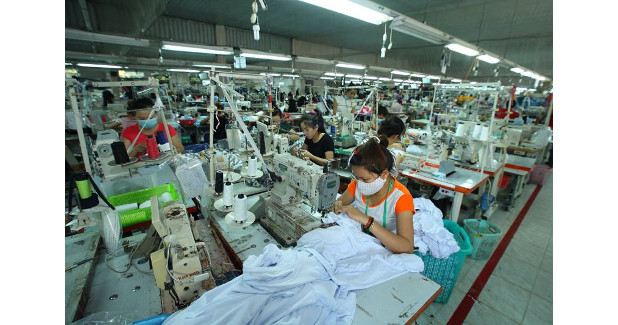
Vietnam’s textile and garment industry is expecting exports to reach up to $200 billion by 2035 thanks to investment in new technology and automation, and a shift in production methods. In 2017, Vietnam exported $31.2 billion worth of textiles and garments – an increase of 10.2 per cent on the prior year – with the figure expected to reach $34.5 billion in 2018 as the country looks to invest more in technology to increase productivity and shorten delivery times, and increase its focus on markets such as Australia and Russia.

Vu Duc Giang, Chairman of the Vietnam National Textile and Garment Group, says that new spinning mills in the country’s textile industry are equipped with modern equipment and high automation, requiring fewer workers.

The apparel industry, however, is more difficult to automate than the yarn industry. Giang says but some new plants are equipped with automation. In particular, garment enterprises ar not looking to expand their scale but shift production from Cut-Make-Thin (CMT) to Free on Board (FOB) and original design manufacturing to increase value.

Previous ArticleNew-gen KERN-LIEBERS Relanit Sinkers
Next Article Elgi Equipments nets Rs 76.9 cr profit

Related Posts

The road to scale insights from ITMAconnect on textile circularity

July 28, 2026

Italian textile machinery orders rebound 25% in Q2 2026

July 28, 2026

Bombay Dyeing curbs counterfeit sales in Hyderabad to safeguard consumers

July 21, 2026
Recent Posts
  • Groz-Beckert set to present latest textile innovations at CINTE Techtextil China 2026
  • CAI raises cotton pressing estimate to 337 lakh bales
  • The road to scale insights from ITMAconnect on textile circularity
  • Why easy-care clothing is a monsoon essential
  • TechnoSport unveils FeatherLite™ at Punit Balan Group Satara Half Hill Marathon
  • Italian textile machinery orders rebound 25% in Q2 2026
  • The missing pavilion at Bharat Tex 2026
  • Cotton Brazil strengthens ties with Indian textile industry
Facebook X (Twitter) YouTube LinkedIn
  • About us
  • Contact us
  • Privacy Policy
  • Terms and Conditions

SISTER PUBLICATIONS

Construction World Equipment India Industrial Product Finder Infrastructure Today

© 2026 Indian Textile Journal. All Rights Reserved.

Type above and press Enter to search. Press Esc to cancel.