Close Menu
Indian Textile Journal
  • Home
  • Market and Economy
    • Apparels & Garments
    • Fibres & Raw Materials
    • Home Textiles
    • Industry Update
  • Textile Machinery
    • Allied Equipment and Accessories
    • Automation
    • Dyeing, Processing & Finishing
    • Knitting
    • Printing
    • Spinning
    • Weaving
  • Tech Textiles
  • Sustainability
  • Resources
    • Trade Fair
    • Events
    • Videos
  • Interview & Opinion
  • Subscribe Now
  • Advertise
  • Digital
Facebook X (Twitter) YouTube LinkedIn
Indian Textile Journal
Epson
  • Home
  • Market and Economy
    • Apparels & Garments
    • Fibres & Raw Materials
    • Home Textiles
    • Industry Update
  • Textile Machinery
    • Allied Equipment and Accessories
    • Automation
    • Dyeing, Processing & Finishing
    • Knitting
    • Printing
    • Spinning
    • Weaving
  • Tech Textiles
  • Sustainability
  • Resources
    • Trade Fair
    • Events
    • Videos
  • Interview & Opinion
  • Subscribe Now
  • Advertise
  • Digital
Indian Textile Journal
Home » Textile units blamed for polluting Luni River
Industry Update

Textile units blamed for polluting Luni River

By April 16, 20212 Mins Read
Share Facebook Twitter LinkedIn WhatsApp Copy Link

Barmer, Rajasthan

A major
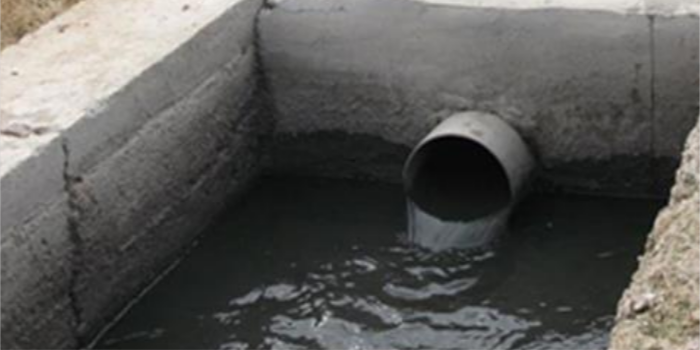
problem for Rajasthan’s Barmer District is the continuous pollution of
groundwater and the adjoining Luni River at Bhituja Industrial Area.
A joint
committee formed by the National Green Tribunal (NGT) has reported this problem
(made public on April 12, 2021) to be caused by the textile units in the area,
said a report by
DownToEarth.

The
committee learned that the
Bhituja’s Common
Effluent
Treatment Plant
(CETP) was unfit for treating bleaching unit effluents. With a connection of
around 191 textile units, the CETP fails to follow the prescribed discharge
standards notified by the Union Ministry of Environment, Foresta and Climate
Change (MoEF&CC) in 2016.

A committee
formed by members from MoEF&CC, Central Pollution Control Board (CPCB) and Rajasthan
State Pollution Control Board (RSPCB) initiated an investigation.

What was found by the RSPCB?

 The biological oxygen demand (BOD) and chemical oxygen demand were much higher than the prescribed standards of 30 and 250 milligrams per litre, respectively.

  • Treatment unavailability to decrease the total dissolved solids (TDS) to the prescribed standards.
  • Pre-effluent treatment (settling tanks) given by each unit was incapable of controlling the total suspended solids (TSS).
  • Increase in CETP’s TSS load, due to muck from tanks being pumped and flown into it. This results in a deposition of solid nature in the waste stabilisation ponds of the plant.
  • At the site, all three Solar Evaporation Ponds (SEPs) were found to be completely filled and the stagnant effluent was leaking into the Luni River, which lies to the plant’s south.
  •  Treated effluents from the bleaching units were not being recycled by the CETP, increasing the hydraulic load on SEPs.

A CETP
official in a statement to DownToEarth stated that the upgrade will assist in
settling the suspended solids efficiently at the clariflocculator unit. The
committee also suggested that to prevent further damage, no relaxation should
be permitted to
textile
industries
concerning the prescribed standards
for the total or fixed dissolved solids.

Source:
DownToEarth

Also Read:

Textile industry takes measures to
remove child labour

Ring and rotor spinning of recycled
fibres

Meet on water & wastewater reuse for
textile industry

Garware polyester becomes a carbon
negative company


Previous ArticlePHDCCI: Lower import duty on textile inputs
Next Article Indian apparel exporters want exemption from lockdown

Related Posts

PDS earns Great Place to Work recognition in 10 countries

June 2, 2026

Turkmenistan sees focus on high-tech Italian textile machinery

May 29, 2026

RIICO begins plot allotment at Rupaheri Textile Park in Bhilwara

May 18, 2026
Recent Posts
  • Trützschler IDF 3 unlocks short fibre processing potential
  • World Environment Day 2026 – 5 wardrobe choices combining style and sustainability
  • MiRooh unveils cosmic candy bedroom collection
  • CMAI hosts AI Masterclass to guide clothing businesses into the digital era
  • PDS earns Great Place to Work recognition in 10 countries
  • NITMA welcomes cotton import duty waiver
  • Cotton imports exempted from customs duty
  • Trident Group and ICAR-NINFET explore tie-up for natural fibre home textiles
Facebook X (Twitter) YouTube LinkedIn
  • About us
  • Contact us
  • Privacy Policy
  • Terms and Conditions

SISTER PUBLICATIONS

Construction World Equipment India Industrial Product Finder Infrastructure Today

© 2026 Indian Textile Journal. All Rights Reserved.

Type above and press Enter to search. Press Esc to cancel.