


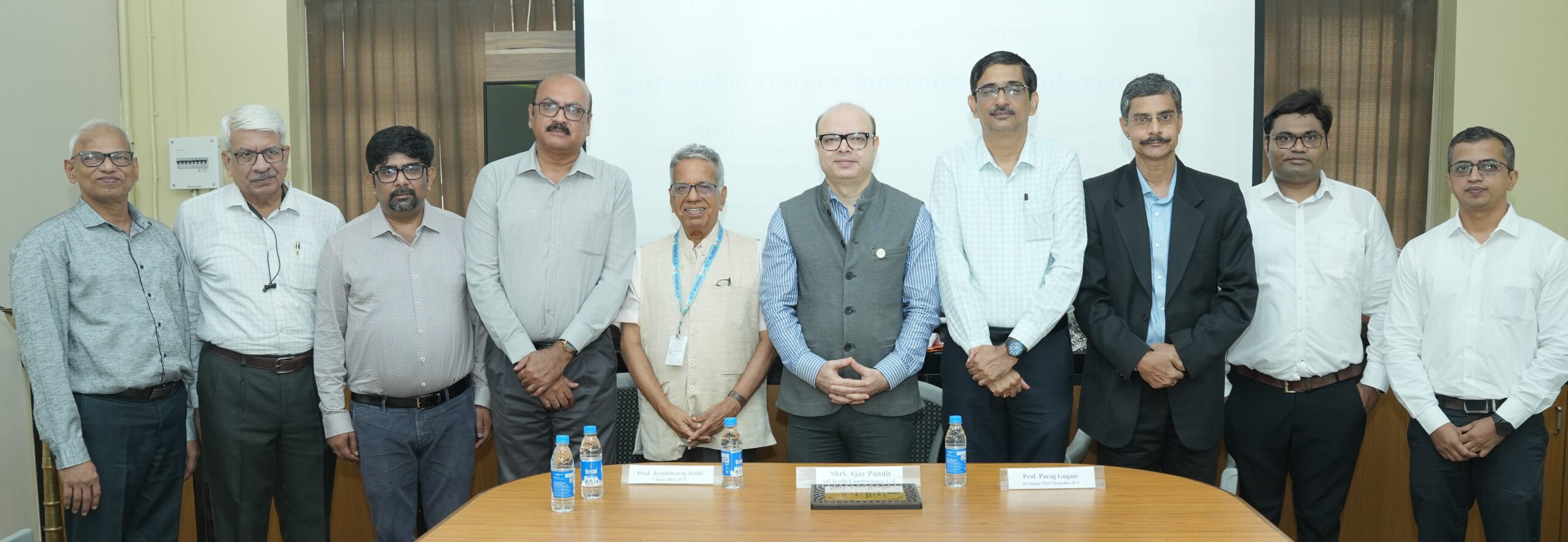
The conference provided a common platform to academicians, researchers, industry experts, and students to deliberate on recent developments in sustainable and technical textile applications.
The Department of Fibres and Textile Processing Technology, Institute of Chemical Technology (ICT), Mumbai, successfully organised the second edition of Texference 2026, an Inter-Institute Technical Conference on the theme “Sustainable Textiles: Innovation to Implementation” on 11th July 2026.
The conference provided a common platform to academicians, researchers, industry experts, and students to deliberate on recent developments in sustainable and technical textile applications. Building on the success of the inaugural edition in 2025, Texference 2026 focused on promoting knowledge exchange, fostering collaborative research, and strengthening the interface among academia, research organisations, industry, and government.
The programme commenced with the lighting of the ceremonial lamp and the ICT-Vidyapeeth Geet. The inaugural session began with a welcome address by Prof Ashok Athalye, Head of the Department of Fibres and Textile Processing Technology, who emphasised the department’s commitment to advancing research and innovation in textile science and technology.
Prof Parag Gogate, in-charge Vice Chancellor and Dean Academic Programmes, ICT highlighted the institute’s vision of translating scientific research into technologies that contribute to national development. The conference was formally inaugurated by the Chief Guest, Ajay Pandit, Additional Textile Commissioner, Ministry of Textiles, Government of India, who spoke about the importance of sustainable manufacturing, indigenous technologies, and stronger collaboration between academia and industry to enhance the global competitiveness of the Indian textile sector.
The keynote address was delivered by Padma Bhushan Prof Jyeshtharaj Joshi, Chancellor of ICT, who inspired participants to pursue impactful research that addresses industrial and societal challenges through scientific excellence and interdisciplinary collaboration.
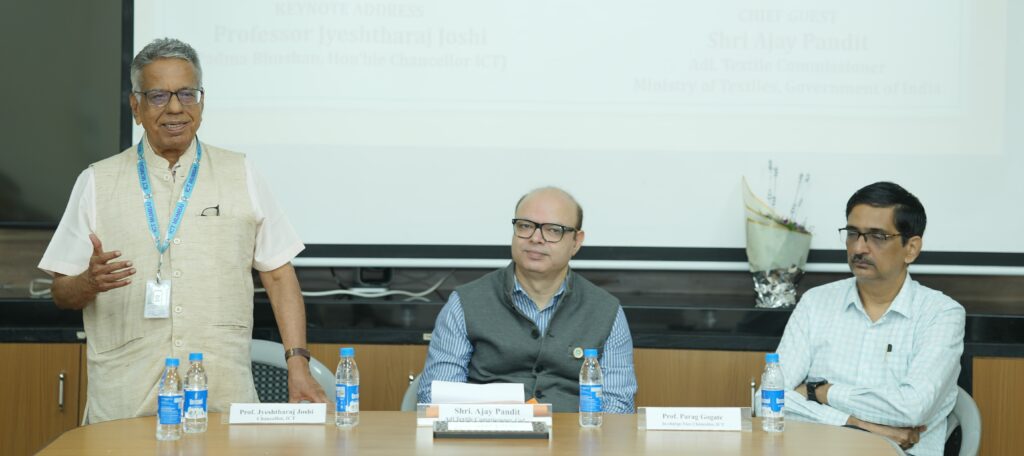
The conference overview was presented by Dr Santosh Biranje, Convener of Texference 2026, who outlined the conference’s objectives and highlighted the need for collective efforts to develop sustainable textile technologies.
The conference featured two technical sessions, each comprising presentations from distinguished experts from leading academic and research institutions. The first technical session included presentations by Dr Vishaka Karnad from the College of Home Science, Nirmala Niketan, Mumbai, on research opportunities in textiles and fashion; Dr G Krishna Prasad from ICAR-CIRCOT Mumbai presented high-performance protective gloves developed from recycled para-aramid fibre blends; and Ravi Singh from SASMIRA Mumbai narrated innovative technical textile solutions for ground improvement.
The second technical session focused on emerging sustainable materials and advanced textile technologies. Dr Surajit Some from the Department of Speciality Chemicals Technology discussed the translation of chemically tailored, sustainable nanomaterials from laboratory research to industrial applications. Dr Suranjana Gangopadhyay from VJTI, Mumbai, presented a field study on innovative sustainable agro-textile products. Karishma Hemani from BTRA Mumbai showcased eco-friendly encapsulation of biogenic oils for sustainable aroma-finished cotton fabrics. Vaibhav Vankundre from WRA, Thane, presented the use of coarse wool as a sustainable thermal insulation material for buildings and Dr Sandeep More from ICT Mumbai delivered the final technical presentationon novel approaches to functionalizing textile materials.
Each presentation generated enthusiastic participation from delegates, with engaging discussions on sustainable materials, recycling, nanotechnology, agro-textiles, functional finishes, technical textiles, and commercialization of research outcomes. The interactive question-and-answer sessions provided an excellent opportunity to exchange ideas among researchers, faculty members, students, and industry representatives.
The conference attracted more than 80 delegates, including faculty members, scientists, researchers, postgraduate and undergraduate students, and representatives from academia, research organisations, and industry. The event successfully brought together experts from ICT Mumbai, ICAR-CIRCOT, BTRA, SASMIRA, VJTI, WRA, and the College of Home Science, Nirmala Niketan, providing a valuable platform for interdisciplinary interaction and future collaborations.
The event received generous financial support from various segments of the textile value chain, including Arvind Advanced Materials, Pulcra Chemicals, Colortex, Meghmani Dyes, Zydex, and SF Dyes. This reflects the strong partnership between industry and academia in promoting sustainable innovations in the textile sector. The event concluded with a Vote of Thanks delivered by Dr Saptarshi Maiti, followed by the Rashtra Gaan.
Texference 2026 successfully fulfilled its objective of promoting dialogue on sustainable textile technologies and strengthening collaboration among academia, research institutions, industry, and government. The conference reaffirmed ICT Mumbai’s commitment to advancing research excellence and supporting the sustainable growth of the Indian textile sector through knowledge sharing and collaborative innovation.