


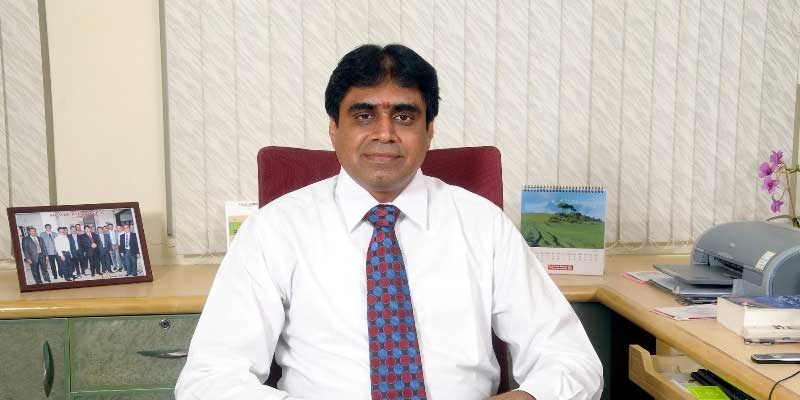
Raja Shanmugham  suggests replacing the Export Promotion Council (EPCs) by the relevant boards at the happening centres.
India’s exports of textiles and clothing reached a new high of $ 44.4 billion in the fiscal year 2021–2022. The total exports, which also includes handicrafts, show a considerable improvement of 41% and 26% above equivalent statistics in FY21 and FY20, respectively. The United States accounted for (27%) of the country’s textile and apparel exports, followed by the European Union (18%), Bangladesh (12%), and the United Arab Emirates (UAE) (6%). However, we must examine the current situation of the Indian textile sector and a number of other factors in order to increase exports and maintain growth over the long term.
Present state of the Indian textile industry
The current status of Indian Textile industry is sluggish due to multiple reasons internal and external. Internal reasons are steep hike in price of all inputs has made the industries particularly MSMEs into great challenge for its existence. Now the global factors like Ukraine war and looming economic recession further challenge this industry.
Brands are not interested in purchasing larger quantities anywhere in the world, even from India. The buyers are not been able to confirm the order because they expect that another 10 days down the line, the price will go down. With that expectation, they will hammer out the wanted price. This kind of recession is now also becoming a threat for this industry.
Challenges to achieve $100 billion target
India is supplying to the entire global market and also envisages to cross $100 billion for which we have all possibilities but need to be worked out collectively. We need to revisit our existing strategies and attempt to modify it. For eg, the so called EPCs had proved wrong in promoting exports as desired or to attain to our best potentials, the reason being the so called EPCs now functions like a lobbying platforms to promote individuals interest rather than Country’s Exports Promotion.
Here replacing the EPCs by the relevant boards at the happening centres for eg., knitwear board at Tiruppur; Home textiles board at Karur etc, would help to build the bridge between policy making bodies and the ground realities. All the nitty-gritty issues do get resolved quickly by the dynamic interventions through the boards. This would certainly help to grow the industries on an accelerated mode.
Government policies or schemes boosting the textile industry
Yes the recently announced PLI scheme, MITRA PARK concepts are going to be more supportive to grow this trade. Further the Government need to give more cluster supportive schemes like special Labour Housing scheme, creation of R&D Platforms and logistics supportive measures are to be done.
Suggestions to boost Indian exports
A FTA with the European Union, United Kingdom, and Canada are all looming over us and need to be addressed as soon as possible. The RoSCTL contract has been approved for this industry. There is now a need to implement these welcome steps and long anticipated FTAs. We will then be on an even playing field with our competitors once that has been accomplished. Thus, that would contribute to the rapid growth of this industry.
About the author:
Raja Shanmugham is currently the President of The Tiruppur Exporters Association and is in the executive committee of the Apparel Export Promotion Council (AEPC).