


Chinas challenges may be Indias gain if the industry can capitalise on low cotton prices, leading spinners told at the USTER® Quality University.
For Indias textile industry, the future is bright. It is likely that India may ultimately become the worlds biggest cotton producer, but quality and value issues remain if the whole sector is to reach its full potential in the competitive global marketplace. These were the hot topics highlighted by industry experts and leading figures from Indian textiles, at the recent USTER® Quality University in Goa.
Indian cotton prices are currently among the lowest in the world-lower priced than those of China-so yarn and fabric producers might reasonably be expecting an export bonanza. The drawback, however, is that many Indian cotton growers lack the necessary expertise to deliver the raw material quality that spinning mills need. Harvesting, storage and transportation practices all need to be improved, through appropriate education and training.
Attendees at the USTER® Quality University heard that the Technology Mission for Cotton (TMC) had a programme of actions designed to tackle these challenges. For example, spinning mills wanted to create a fund to educate and train growers in proper transportation and storage of cotton, to minimise contamination.
Spinners and experts from Andhra Pradesh have been calling for improvements in ginning techniques, to produce cottons with lower levels of short fibre, trash and polypropylene contamination. Even gins certified by TMC are said to have been supplying cottons with high short fibre content, caused by unsatisfactory handling in material transfer. The optimised use of pneumatic conveyors at ginning is also being mooted, as a means of reducing nep content.
These issues were cited as further evidence of the need for a spinner-supported education fund to improve knowledge and practices in ginning.
Expert views
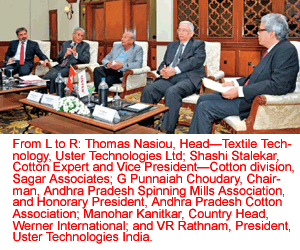
A special feature of the USTER® Quality University was a panel discussion, with leading experts from the cotton sector, organised by Uster Technologies, Switzerland and the Indian office of this quality measurement and classification instruments manufacturer. The panel comprised: Shashi Stalekar, cotton expert and vice-president of the cotton division of Ahmedabad-based Sagar Associates; Manohar Kanitkar, country head at US-based Werner International; G Punnaiah Choudary, chairman of Andhra Pradesh Spinning Mills Association and Honorary President Andhra Pradesh Cotton Association; and Thomas Nasiou, head of textile technology at Uster Technologies.
Panel members agreed that the future was generally bright for Indian textiles, a key factor in this being the difficulties currently being faced by competitors in China. The Chinese governments policies were hampering textile business, both locally and internationally, with the high price of cotton making it hard for Chinas spinners to be competitive. And there was no indication when, or if, this situation would change. In the meantime, producers in India, Pakistan and other Asian countries were taking advantage by exporting coarse- and medium-count yarns to China at prices, which were affordable to customers there but also still profitable for the spinners.
Panel member Manohar Kanitkar stressed that the best course for the Indian textile sector would be to focus on added-value exports such as yarn, fabric and clothing, rather than raw cotton. This was despite his view that India was "set to become the biggest producer of cotton in the world." To foster the required change of emphasis, he suggested that subsidies should be adjusted to target the appropriate segments of the textile value chain.
Total growth along the entire Indian value chain from cotton to finished goods was also forecast by Choudary. He predicted that India would "take pole position in the w