


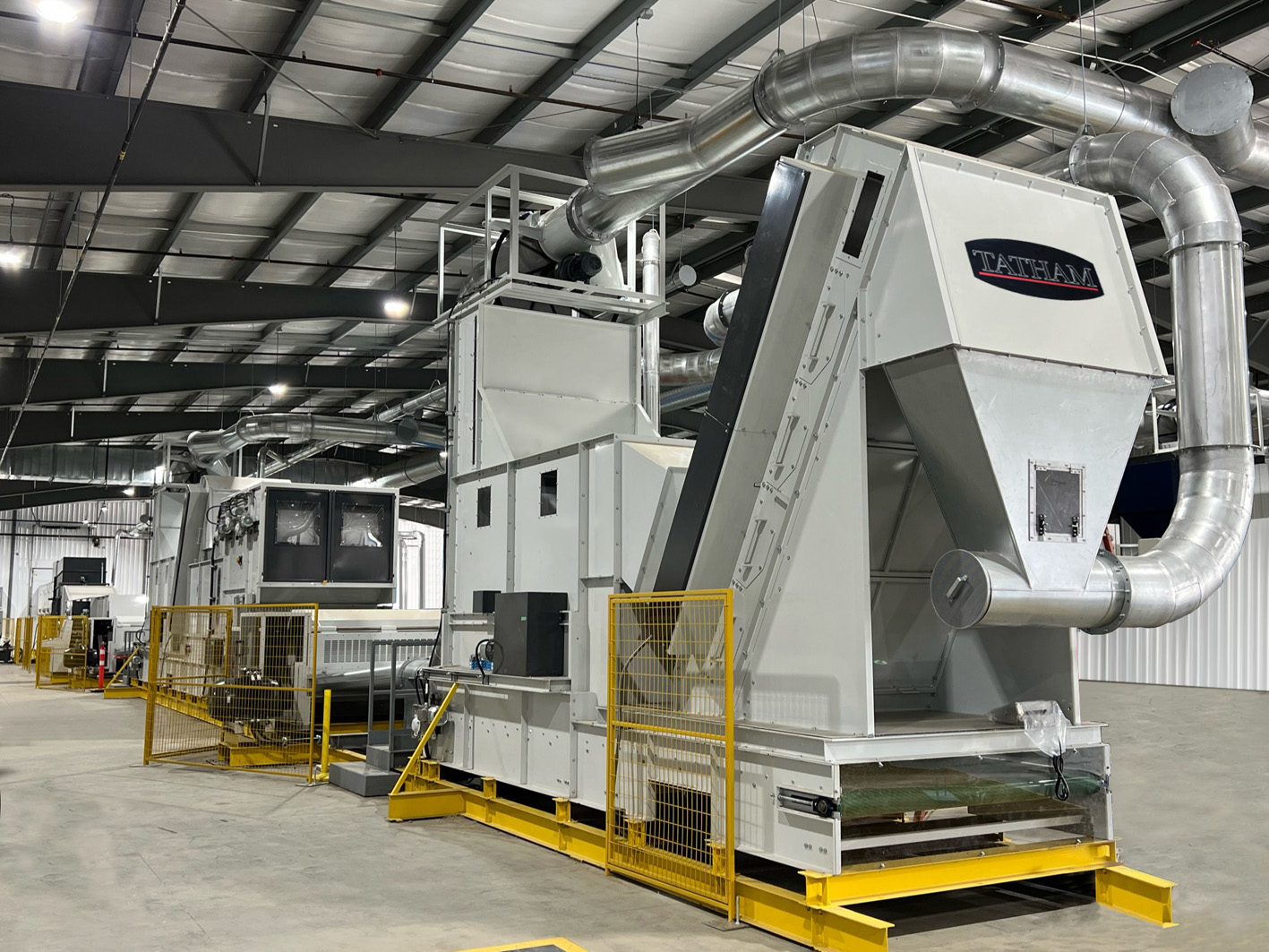
Hemp is a very versatile fibre with a wide range of end uses.
BTMA member Tatham has just delivered an advanced industrial hemp processing line to a major customer in Turkey and had many fruitful discussions about its machinery for the processing of natural staple fibres at the recent ITMA 2023 held in Milan from June 8-14.
The Bradford, UK-based Company continues to equip mills around the world with staple fibre spinning and nonwoven technologies for manufacturing a wide range of products, while its TS system for drives and controls is suitable for retrofitting to all OEM textile machines, to provide user-friendly control systems with complete synchronisation and significant energy savings.
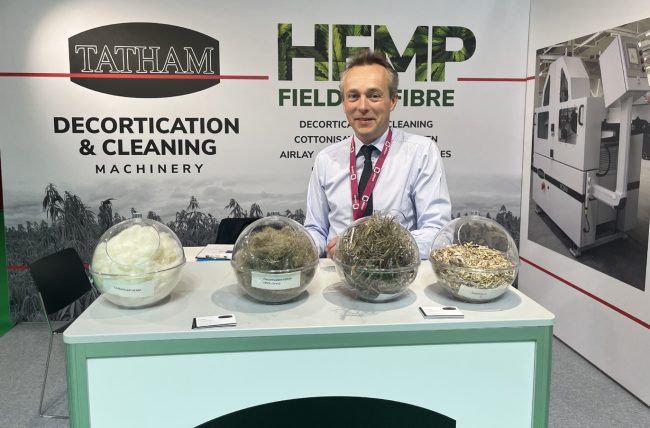
“We are currently fielding a lot of enquiries for technologies for the decortication, fibre opening and fabric forming of hemp,†said Tim Porritt, Director, Tatham. “This is being driven by the sustainability of the fibre and concerns over climate change as brands seek solutions to meet their sustainability goals. As a result, there has been an explosion in the interest in hemp production, from farmers through to fibre production, and a wide range of new potential end-uses are being explored.â€
Hemp is a very versatile fibre with a wide range of end uses, he added.
“These include construction and insulation materials, paper and packaging and composites, while some of our customers are modifying the fibre properties so the hemp can directly replace synthetic fibres in existing processing lines, such as spunlace for wipes, for example.â€
Tatham offers a complete ‘Field to Fibre’ service for industrial hemp fibre production and its decortication and cleaning process has a gentle opening action to maintain the fibre length, to make it suitable for subsequent processing.
“In the UK we have two of the most efficient hemp decortication lines operating in the world, with efficiency measured in machine utilisation, low maintenance costs and machine operatives,†said Porritt. “The main challenge facing hemp processors is in the harvesting/retting process which is critical to producing a good quality fibre, but hemp production also provides significant benefit in agriculture, improving soil health amd enabling nutrient cycling via crop rotation. It also sequesters carbon dioxide from the atmosphere for carbon negative production.
Tatham decortication lines take care of both the shiv and the fibre and for each 1,000kg of stalk there is a maximum potential yield of 300kg of fibre and 600kg of shiv.
“We discussed many options with companies either looking to enter this field or expand their existing capabilities in Milan,†Porritt concluded.
“An extensive range of technologies and services from the UK was on display at ITMA 2023, with over 30 members of the British Textile Machinery Association in attendance,†added BTMA CEO Jason Kent. “It was a really fantastic exhibition. Sustainability, circularity and Industry 4.0 have been the primary themes coming from the market for some time now and our members have responded with innovations spanning the entire supply chain – from fibres to finishing – and with a specific emphasis in many cases on improved software and digitised control solutions.â€