


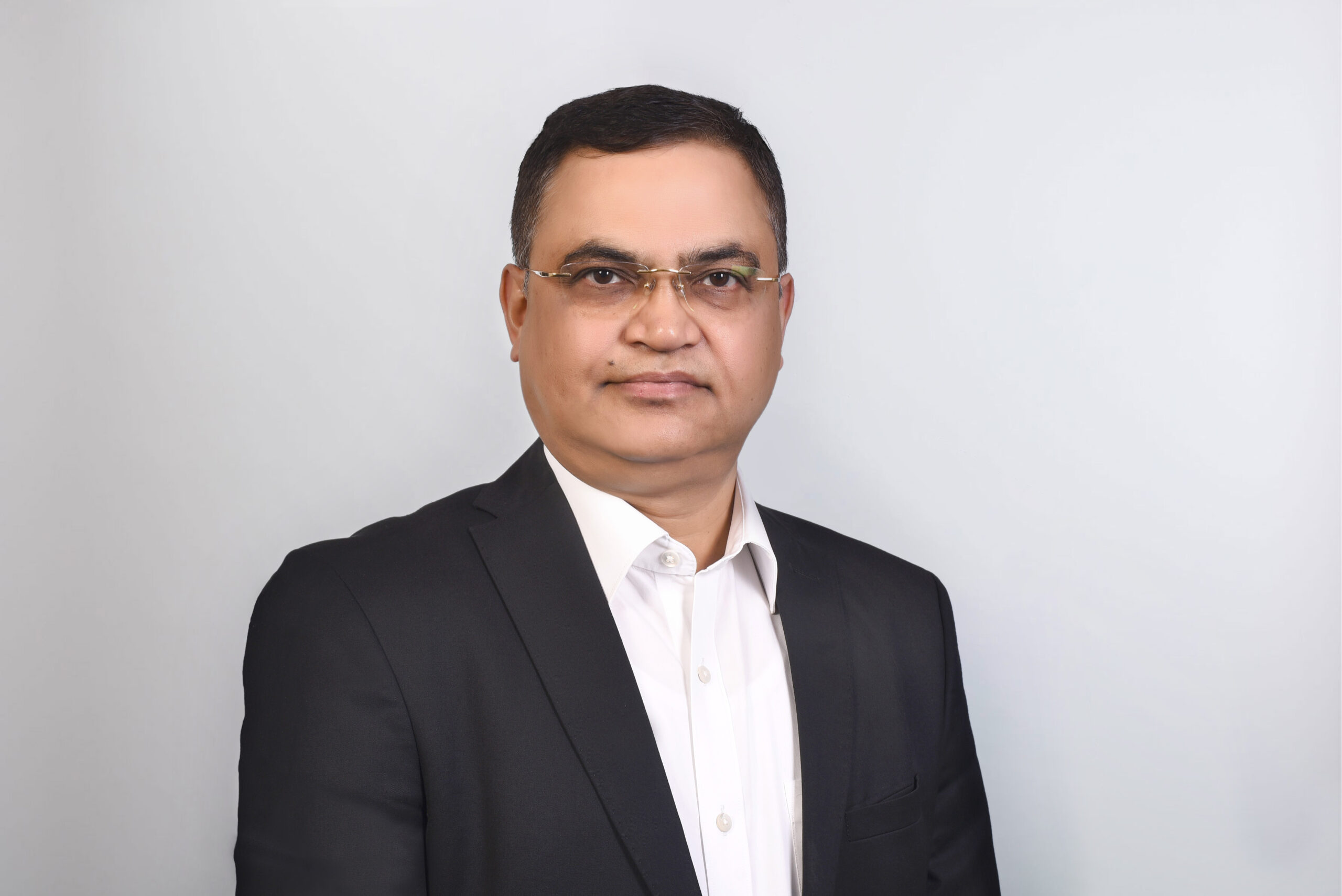
Rieter is the world’s leading supplier of systems for manufacturing yarn from staple fibres in spinning mills. Based in Winterthur (Switzerland), the company develops and manufactures machinery, systems and components used to convert natural and man-made fibres and their blends into yarns in the most cost-efficient manner. Cutting-edge spinning technology from Rieter contributes to sustainability in the textile value chain by minimising the use of resources. Prasanta Deka, Managing Director, Rieter India, shares insights into the latest initiatives undertaken by Rieter India to make manufacturing processes smarter and more efficient.
How have smart manufacturing practices been integrated into your customer’s production processes?
In this highly cyclical industry, automation and digitisation are key for spinning mills to remain competitive. With over 230 years of innovation, Rieter is shaping the next generation of automated, digital and resource-efficient yarn production – ensuring spinning mills worldwide remain competitive, profitable and future-ready.
Rieter customers from east to west trust in ROBOspin, the industry’s first fully automated piecing robot for ring and compact-spinning machines. ROBOspin significantly reduces personnel requirements, ensures consistently high machine performance and rapidly repairs ends down while the machine is running or during doffing. Each week in spinning mills across the globe, ROBOspin pieces more than 1 000 000 yarn breaks, resulting in a reduction of about 2 000 working hours for operators.
Spinning mills also rely on ESSENTIAL, Rieter’s mill management system, which provides a solid data foundation for decision-making at all levels – from management to machine operation (Figure 1). It is the foundation for high performance, fully automated yarn production. In real time, ESSENTIAL shows how efficiently the spinning mill is running and how much yarn is currently being produced. Whether production, efficiency, energy consumption, or quality – all relevant key figures are always in sight. If deviations from the target value occur, the system immediately provides specific recommendations for action. This information helps to identify potential for optimisation during the current shift and enables immediate implementation. This is how ESSENTIAL makes spinning mills fit for the future.
In addition, Rieter provides a suite of tailored solutions including cutting-edge automatic lap transport system SERVOlap, automatic lap change and batt piecing system ROBOlap for combers, automatic roving bobbin transport system SERVOtrail, and advanced automatic doffing solutions for end spinning.
What measurable benefits have your customers observed from adopting automation – such as improvements in productivity, quality, cost efficiency, energy management, or delivery timelines?
As already highlighted, ROBOspin is a game-changer for spinning mills. By installing ROBOspin, spinning mills around the world reduce their manpower requirements by up to 50 per cent as the robot reliably reaches up to 95 per cent piecing efficiency. ROBOspin significantly reduces the average time for yarn piecing thanks to the Individual Spindle Monitoring system (ISM), which efficiently detects the affected spinning position. The robot travels directly to this position and pieces the yarn break. This results in a significant increase in production output. Minimal contact with cops means no damage to the outer yarn layer and therefore no contamination of the yarn. As fewer staff are required, the remaining employees benefit from more enriching jobs.
Another strong example of measurable benefits comes from Autoconer X6. India’s MIKAS Textile Pvt. mill invested in Rieter’s Autoconer X6, type V Multilink system, where two ring spinning machines are connected to one Autoconer with 52 winding unis. Compared to direct single-links with 26 winding units, the Multilink version results in around 25 per cent lower energy costs, making the production highly profitable.
How has automation helped your customers respond to challenges such as labor availability, quality consistency, and sustainability requirements?
Automation is a strategic response to the industry-wide shortage of skilled labor. By reducing manual tasks and standardising workflows, Rieter systems enable mills to operate efficiently with a leaner workforce while maintaining consistent quality.
Digitally supported processes further enhance reproducibility, which is essential for meeting the increasingly stringent quality expectations of global yarn markets. Automation ensures that every step in the production chain follows precisely defined parameters, reducing variability and improving reliability.
From a sustainability standpoint, automation supports more energy‑efficient operation and optimised raw material use. Automated systems make processes more controlled, more transparent, and ultimately more resource‑conscious – helping mills meet both regulatory requirements and their own sustainability ambitions.
What new technologies or process upgrades are your customers currently implementing or planning to implement to further enhance smart manufacturing capabilities?
At last year’s ITMA + CITME in Singapore, Rieter showcased new automation solutions that pave the way step-by-step to fully automated production. With the following portfolio, customers can already make their processes more productive today:
- Efficient bale transport by means of a driverless transport system,
- Flexible transport of the corresponding size cans between machines by means of a driverless transport system, and
- Packaging solutions, including steaming, palletising, and
Can transport is a significant improvement, as it takes over physically demanding tasks and thus noticeably reduces the strain on operating personnel (Figure 2). At the same time, it increases process reliability and efficiency throughout the entire production process. The automated packaging line, from packing the yarn packages to palletising and labeling, is also raising the bar. It replaces numerous manual tasks with high-precision, fully automated processes. These new automation solutions make it possible to start using full automation and to boost its acceptance in spinning mills. At the same time, they provide valuable experience for further changes.
Looking ahead, how do you see automation shaping your customers growth strategy and competitiveness over the next 3–5 years?
Automation is central to Rieter’s long term strategy. As global spinning mills face mounting pressure from rising labour costs, sustainability requirements and volatile energy prices, the demand for fully integrated, highly automated systems is accelerating. Therefore, in 2027 Rieter will present a spinning mill solution where just three skilled workers for every 10 000 spindles and shift produce 1.9 tons of yarn (Figure 3). This corresponds to automation of around 85 percent of the activities that were previously performed manually. It increases efficiency massively but also makes yarn production as a whole competitive again.