


Since the demand for technical textile is increasing at a breakneck speed, the government has realised its potential and has allotted Rs 450 crore to the National Technical Textiles Mission (NTTM) this year as compared to Rs 37 crore in 2022-23, explains Divya Shetty.
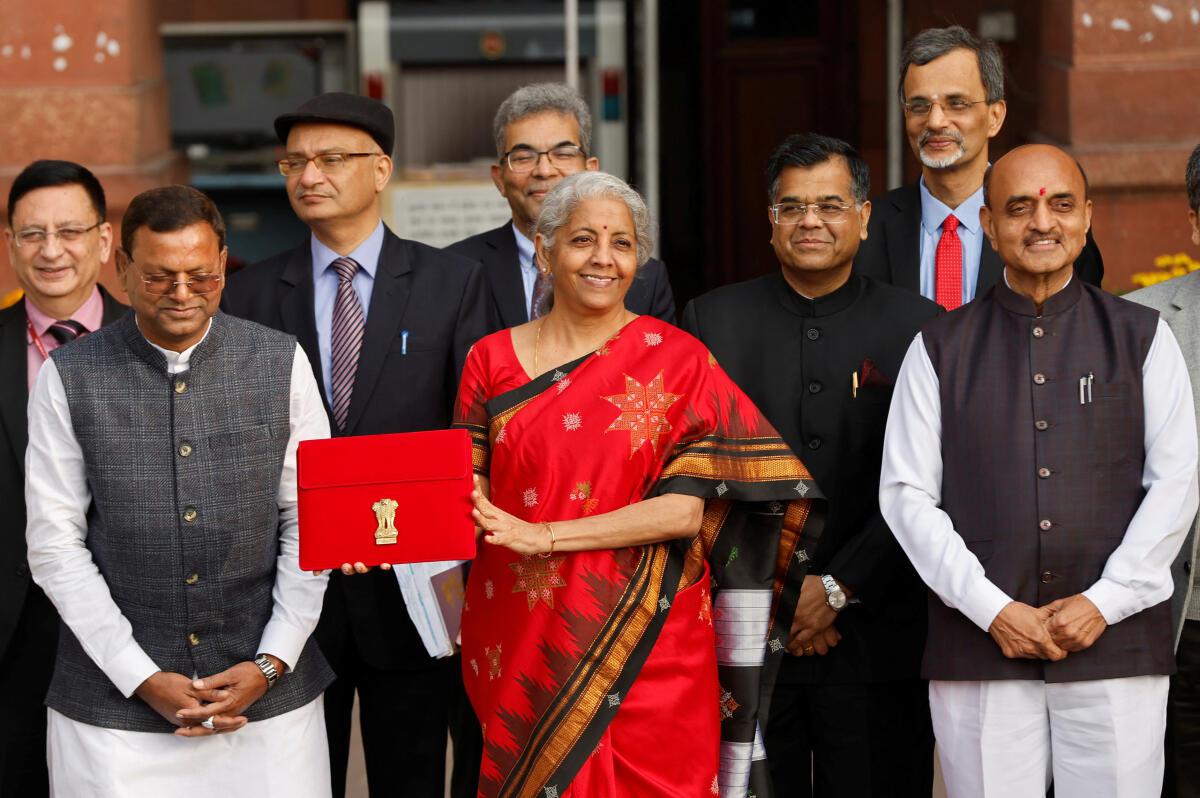
Nirmala Sitharaman, Finance Minister, on February 1, presented the Union budget 2023- 24 in the parliament. The government allotted a total budget of 4389.34 crore to the Ministry of Textiles.
The government laid a special focus on enhancing productivity of extra-long staple (ELS) cotton. Cluster based value chain approach facilitating collaboration between farmers, state and industry for input supplies, extension services, and market linkages. Five new HS Codes for further classification of cotton as per staple length will also be introduced. This will assist in improving policy support for the sectors that depend on imports or require additional incentives.
By implementing a cluster-based and value chain approach through public private partnerships (PPP), the finance minister has indicated that the government is focusing on increasing the productivity of ELS cotton. PPPs entail cooperation between farmers, the state, and industry for input supplies, extension services, and market links. The textile sector is now keenly awaiting more information about the policy in this area.
According to Budget papers, the amount allocated for the RoDTEP scheme has increased from 13 699 billion to 15 069 billion in 2023 and 2024. From 7,641 crore to 8,405 crore is added to the RoSCTL scheme’s budget for 2023–2024. The budget for the Amended Technology Upgradation Fund Scheme (ATUFS) is also enhanced, going from 650 crore in 2022–2023 to 900 crore in 2023–2024. The customs charge on naphtha has been raised from 1% to 2.5 per cent.
To promote indigenous production, the government has increased the import duty on textile machines to 7.5 per cent. Yet, as imports account for approximately 60% of the industry’s machinery needs, this could have an adverse immediate impact. The sector will thus require more investment.
The government revised the Credit Guarantee plan under the Credit Guarantee Fund Trust for Micro and Small Businesses (CGTMSE) with the investment of Rs 9,000 crore in the corpus, beginning April 1, 2023. The revision will provide extra collateral-free lending of Rs 2 lakh crore to MSMEs while the cost of borrowing will be cut by 1 per cent.
Since the demand for technical textile is increasing at a breakneck speed, the government has realised its potential and has allotted Rs 450 crore to the National Technical Textiles Mission (NTTM) this year as compared to Rs 37 crore in 2022-23. In addition, the Central Silk Board received the lion’s share of the allotment, with Rs 900 crore allocated as opposed to Rs 875 crore last year.
The reduction in the personal income tax slab and the elimination of deductions will contribute to increased spending and marginally higher dispensable incomes.
Efforts are also being made to develop green infrastructure, which will reduce our carbon footprints while also making apparel facilities more sustainable. Through Pradhan, this effort is being made to promote sustainability in the textile industry as well as technology such as Industry 4/0 courses such as coding, AI, and robotics. Mantri Kaushal Vikas Yojana 4.0 shows great promise in quickly creating a credible workforce capable of current manufacturing jobs and skilling the country’s youth for international opportunities via Skill India Centres.
In conclusion, the government in this budget has tried to tap recent trends of sustainability, digitalisation and technical textiles. It has also prioritised the MSME sector as 70 per cent of the industry belongs from this segment. If the industry learns how to apply for these schemes and get their benefit, nothing can stop India to become the global textile leader.
In conclusion, the government attempted to capitalise on recent trends in sustainability, digitalisation, and technical textiles in this budget. It has also prioritised the MSME sector, which accounts for 70% of the industry. Nothing can stop India from becoming the global textile leader if the industry learns how to apply for these schemes and reap their benefits.