Close Menu
Indian Textile Journal
  • Home
  • Market and Economy
    • Apparels & Garments
    • Fibres & Raw Materials
    • Home Textiles
    • Industry Update
  • Textile Machinery
    • Allied Equipment and Accessories
    • Automation
    • Dyeing, Processing & Finishing
    • Knitting
    • Printing
    • Spinning
    • Weaving
  • Tech Textiles
  • Sustainability
  • Resources
    • Trade Fair
    • Events
    • Videos
  • Interview & Opinion
  • Subscribe Now
  • Advertise
  • Digital
Facebook X (Twitter) YouTube LinkedIn
Indian Textile Journal
Epson
  • Home
  • Market and Economy
    • Apparels & Garments
    • Fibres & Raw Materials
    • Home Textiles
    • Industry Update
  • Textile Machinery
    • Allied Equipment and Accessories
    • Automation
    • Dyeing, Processing & Finishing
    • Knitting
    • Printing
    • Spinning
    • Weaving
  • Tech Textiles
  • Sustainability
  • Resources
    • Trade Fair
    • Events
    • Videos
  • Interview & Opinion
  • Subscribe Now
  • Advertise
  • Digital
Indian Textile Journal
Home » Trichy’s waste management technology appreciated by DST
Industry Update

Trichy’s waste management technology appreciated by DST

By September 6, 20212 Mins Read
Share Facebook Twitter LinkedIn WhatsApp Copy Link

Trichy

A Trichy-based college professor has come
up with a low-cost waste management model. The same has earned the appreciation
of DST.

The central department of science and
technology has featured the professor’s work on its official website. As per
this model, the toxic sludge generated in textile dyeing units is converted
into environment-friendly compost in 90 days. To make this conversion adapted
bacteria, earthworm, and cow dung are used.

According to S Senthil Kumar, Assistant
Professor, Department of Botany, the sludge generated by the effluent treatment
plant in textile dyeing units was left as it is. This sludge is believed to be
the by-product of biological effluent treatment and it has both salt and
chemical toxic.

The professor analysed that this sludge was
stagnant for years. So he studied about the same and found out that the
bacteria naming Lysinibacillus sphaericus has adapted to the textile effluent.
This bacterium is later moved to a fresh sludge for treatment for 30 days and
later cow dung and earthworms are released in this sludge for the next 60 days.
By doing this, the industrial sludge becomes compost.

Kumar also said that the advantage of this
study is that it can be conducted on the site and it needs no major investment.
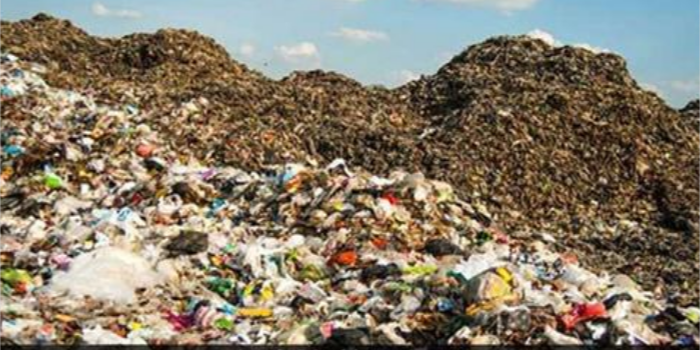
The compost produced can be used to grow plants or can also be used as an environment-friendly landfill.  

Source – The Times Of India

Image Source: istockphoto

Also Read:

https://indiantextilejournal.com/latest-textile-industry-news/reliance-industries-to-set-up-recycled-psf-unit-in-ap-

https://indiantextilejournal.com/latest-textile-industry-news/weaver-in-tamil-nadu-creates-fibre-from-agri-waste


Previous ArticleOEKO-TEX certifies Evonik’s P84 HT
Next Article Texel Industries to open geosynthetics plant in Gujarat

Related Posts

PDS earns Great Place to Work recognition in 10 countries

June 2, 2026

Turkmenistan sees focus on high-tech Italian textile machinery

May 29, 2026

RIICO begins plot allotment at Rupaheri Textile Park in Bhilwara

May 18, 2026
Recent Posts
  • PDS earns Great Place to Work recognition in 10 countries
  • NITMA welcomes cotton import duty waiver
  • Cotton imports exempted from customs duty
  • Trident Group and ICAR-NINFET explore tie-up for natural fibre home textiles
  • Bharat Tex 2026 mobile app launched
  • Atlas Copco RePower Centre boosts compressor lifecycle solutions
  • Arrow launches summer wedding campaign celebrating brotherhood and timeless style
  • Keyur Parekh appointed Whole-Time Director at Welspun
Facebook X (Twitter) YouTube LinkedIn
  • About us
  • Contact us
  • Privacy Policy
  • Terms and Conditions

SISTER PUBLICATIONS

Construction World Equipment India Industrial Product Finder Infrastructure Today

© 2026 Indian Textile Journal. All Rights Reserved.

Type above and press Enter to search. Press Esc to cancel.