


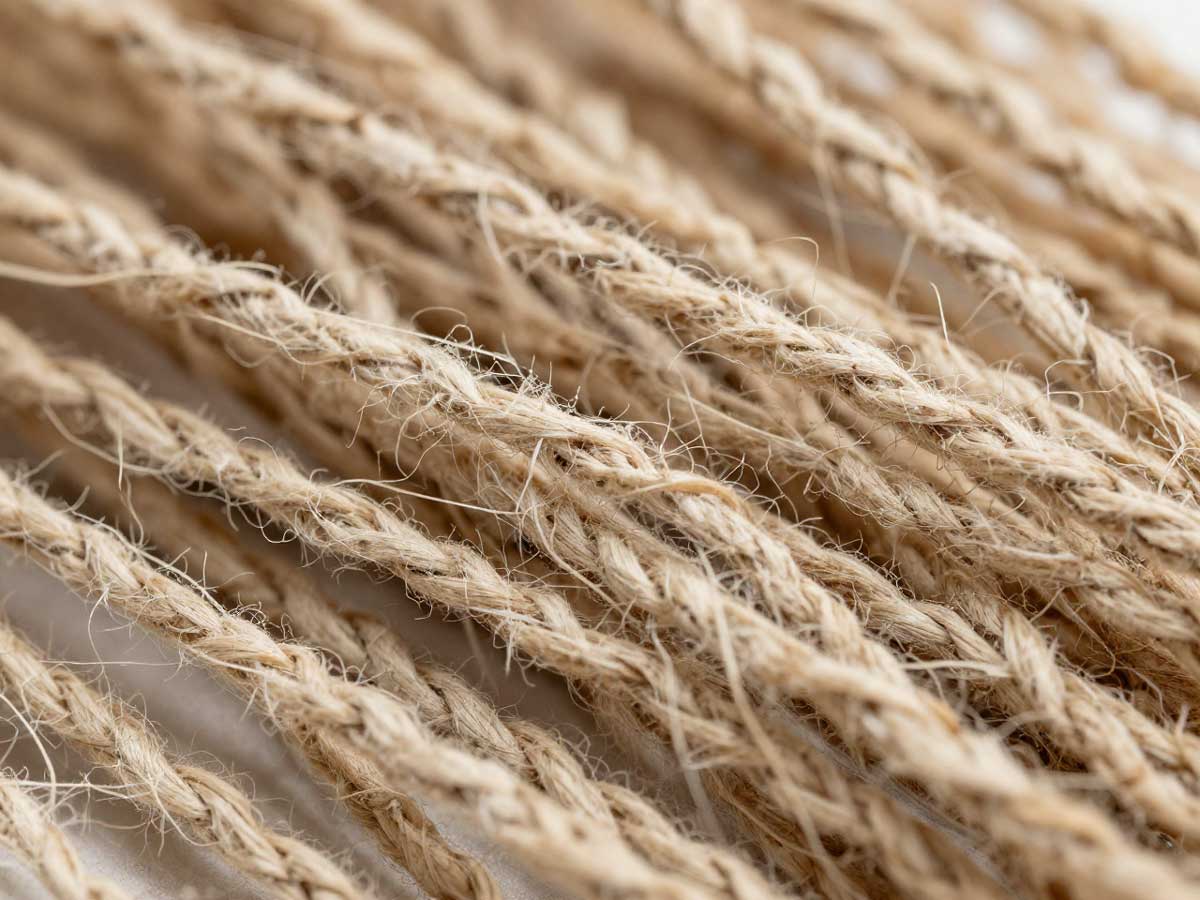
Jute, once hailed as India’s “golden crop,” played a central role in the nation’s economic history due to its wide commercial value. In 1850, India’s exports of manufactured jute products were valued at around Rs 300 million, a remarkable figure for that time. However, over the years, both domestic use and exports of jute declined sharply. The reasons were many: the rise of inexpensive synthetic fibres, lack of technological innovation, inconsistent government support, and limited consumer awareness about sustainability.
Encouragingly, the tide is turning. With growing global demand for eco-friendly materials, jute is regaining its prominence. In 2024-25, India’s exports of jute and allied products touched approximately Rs 33.84 billion, signalling renewed interest and a promising market shift toward sustainable alternatives. Note that the Ministry of Textiles, Government of India, aims to achieve $100 billion in textile exports and carbon neutrality by 2030.
Therefore, transforming jute into engineering-grade fibres can revolutionise not only the technical textile industry but also India’s economy, sustainability initiatives, and global competitiveness. In this article, we have demonstrated how converting jute into high-performance fibres can positively impact India’s economy, promote sustainable living, and support rural development. We have also outlined the technical approaches for achieving this transformation and highlighted the potential applications of these newly developed products across various sectors.
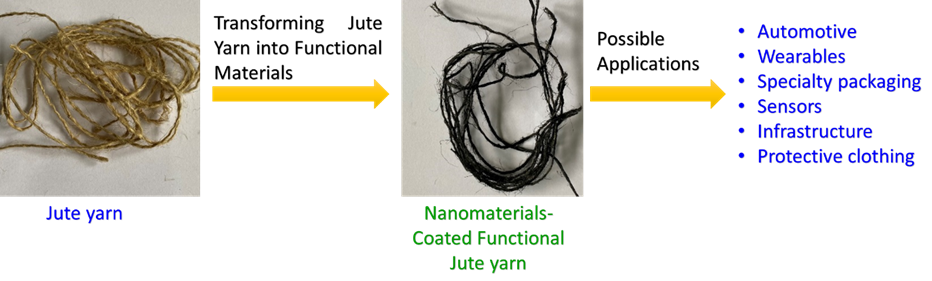
Figure 1: Demonstrating transformation of jute into functional jute by coating functional nanomaterials and its possible applications
Economic potential
The global technical textiles market is expected to grow from $252.8 billion in 2025 to $391.8 billion by 2032, at a growth rate of 6.5 per cent per year. This growth shows the increasing demand for high-performance and application-specific textiles across many industries. As a result, technical textiles are becoming a larger part of the overall textile sector, creating strong demand for sustainable and high-strength fibre materials. In this scenario, improving the physical, chemical, and mechanical properties of jute provides a major opportunity to upgrade it from a traditional natural fibre to an engineering-grade reinforcement material. This approach also supports India’s national priorities, such as import substitution and Atmanirbhar Bharat (self-reliance). Advanced jute-based products can help reduce dependence on imported synthetic fibres, promote sustainable manufacturing, and create high-value export products. Jute products with better strength, lower water absorption, fire resistance, durability, and added functionalities have strong market potential, especially in Europe, the USA, and East Asia, where strict environmental regulations encourage the use of eco-friendly materials. The Ministry of Textiles aims to grow India’s technical textile industry beyond $10 billion by 2030. With focused investment in research, development, and large-scale production, jute can be transformed from a low-value agricultural fibre into a high-value, sustainable export material.
Sustainability and the green transition
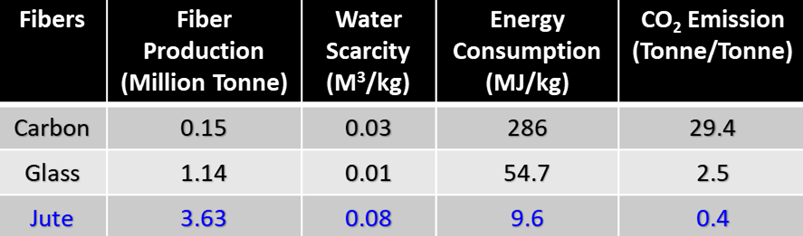
Jute stands out as a biodegradable, renewable, and carbon-neutral natural fibre. Enhancing its performance characteristics will enable the partial or fully replacement of plastic and synthetic materials with eco-friendly alternatives, thereby contributing to India’s circular economy and its commitments under the Paris Agreement on Climate Change. By adopting sustainable advanced jute technologies, India can significantly reduce environmental pollution while promoting green innovation.
Table 1: Comparison of production, energy consumption, water scarcity, and carbon emissions of jute, glass, and carbon fibre.
Social and rural development
India accounts for nearly 50-60 per cent of global jute production, making it one of the country’s most abundant rural resources. More than 4 million people are directly or indirectly employed in the jute sector, including cultivation, processing, and manufacturing. Improving jute’s properties can not only enhance the livelihoods of these workers but also create new employment opportunities in technical textiles, composites, and value-added product development. Such efforts align strongly with Skill India, bridging traditional rural craftsmanship with modern technology.
Government initiatives and policy alignment
The development of high-performance jute fibre-based materials complements several national missions such as ‘Make in India’, ‘National Technical Textiles Mission’ (NTTM), ‘Start-up India’, and the ‘National Mission on Sustainable Agriculture’. By connecting rural resources to high-end industries, including automotive, drones, defence, packaging, and infrastructure, jute can become a vital component of India’s sustainable industrial future. With adequate policy and industry support, India could emerge as a global leader in natural jute fibre-based advanced materials.
How to convert jute into engineering-grade fibres
Unlocking jute’s true potential requires the application of advanced material technologies, including nanotechnology, polymer modification, and plasma treatment:
Nanomaterial treatment: Enhances mechanical strength, imparts flame retardancy, and introduces electrical and thermal conductivity.
Plasma treatment:Alters surface properties to improve adhesion, hydrophobicity, or hydrophilicity depending on specific requirement.
Polymer modification: Surface modification using suitable polymers, for example, silicone-based coatings, can significantly reduce water absorption and improve durability.
These advanced treatments can elevate jute from traditional applications to automotive, drones, defence, mass transport, electronics, and high-performance consumer products.
The initiatives
We have been working extensively on jute-based composite products for diverse applications. We have successfully developed jute composite sockets for prosthetic legs, portable cabins for the Indian Army, and modular toilets. Recently, our focus has shifted to graphene-functionalized jute, aimed at creating high-performance composites with improved electrical conductivity, flame retardancy, and moisture resistance. In addition, we have is developing fully degradable and recyclable jute-based composites, pushing the material closer to a truly sustainable industrial future.
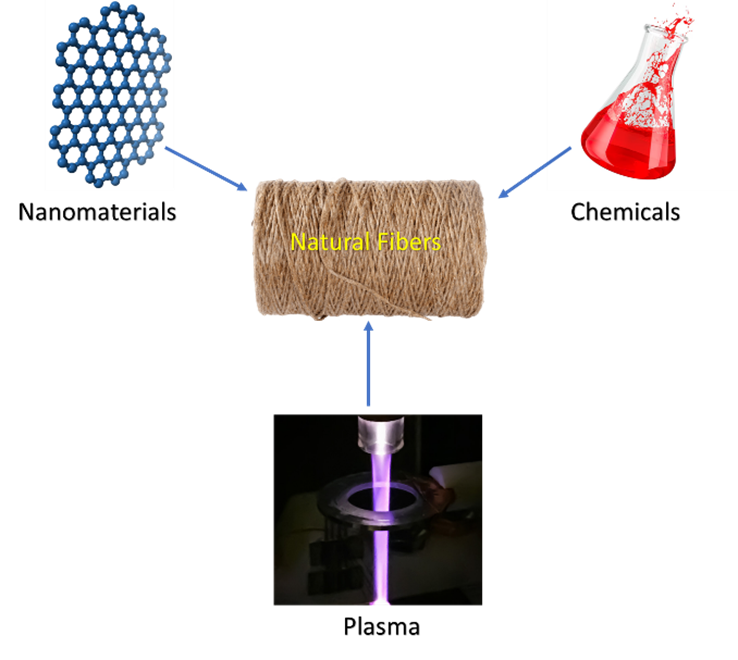
Figure 2: Schematic representation possible ways to transform jute into functional materials
Issues and its mitigation
Raw jute production also requires a sustainable approach. At present, the water requirement for raw jute processing is very high due to the traditional retting method used to extract fibres from the plant, which involves soaking the stems in large volumes of water. This process severely affects aquatic ecosystems. Therefore, raw jute fibre extraction needs scientifically improved methods that significantly reduce water usage. To convert jute into functional and high-performance fibres, a consistent supply of high-quality raw jute is essential. This requires the establishment of a well-organised and efficient supply chain. In addition, a strong R&D ecosystem is needed, with focused efforts on converting jute into scalable, high-performance functional fibres suitable for advanced applications.
Conclusion
Enhancing the performance of jute is not just a scientific pursuit; it is an economic, social, and environmental imperative. With focused R&D and policy support, this single crop has the power to:
- Revive its legacy as India’s “golden fibre,”
- Empower rural communities and generate sustainable livelihoods,
- Strengthen India’s position in global sustainable materials,
- Expand exports of high-value, eco-friendly products
- Advance the nation’s long-term goals of self-reliance, sustainability, and inclusive growth.
By combining research innovation, industrial collaboration, and policy alignment, India can reclaim its leadership in natural fibre technology, turning jute into a cornerstone of the green industrial revolution.
Table 2: Potential products from engineering-grade jute and their applications
| Category | Possible products | Applications |
| Technical textiles | Geotextiles, agro-textiles, medical textiles, filtration fabrics | Soil stabilization, erosion control, crop protection, wound dressings, filtration |
| Jute-Based advanced composites | Automotive panels, dashboards, door trims, roofing sheets, lightweight laminates, sandwich panels, hybrid composites | Automotive interiors, construction materials, low-cost housing, one time use drone structure, shelter, marine applications, prosthetics, sports goods |
| Functionalized jute fabrics | Flame-retardant fabrics, water-repellent textiles, conductive fabrics | Industrial protective clothing, insulation, flexible electronics, smart textiles |
| Sustainable packaging | Biodegradable trays, boxes, films, reinforced paper products | Food packaging, eco-friendly shopping bags, alternatives to single-use plastics |
| Energy & electronics | Conductive fabrics, jute-based supercapacitor electrodes, flexible printed circuits | Energy storage devices, wearable electronics, flexible antennas, IoT applications |
References:
- Chaudhury, N.C. Jute and Substitutes 2000, Biotech Books
- http://jutecomm.gov.in/Exports_of_Jute_Goods.html
- https://www.pib.gov.in/PressReleasePage.aspx?PRID=2052570
- https://indiantextilejournal.com/
- https://www.fortunebusinessinsights.com/technical-textiles-market-102716
- https://www.futuremarketinsights.com/reports/jute-market
- https://www.ibef.org/exports/jute-industry-india
- https://www.ibef.org/exports/jute-industry-india
- M. H. Islam, S. Afroj, N. Karim, Toward Sustainable Composites: Graphene-Modified Jute Fiber Composites with Bio-Based Epoxy Resin, Global Challenges, 2023, 7, 2300111.
- C. Alves, A. Silva, L. Reis, P. Ferrão, M. l Freitas, Sustainable Design of Automotive Components Through Jute Fiber Composites: An Integrated Approach, New Trends and Developments in Automotive Industry, 2011, DOI: 10.5772/12876.
- S. S. Shah, M. N. Shaikh, M. Y. Khan, Md. A. Alfasane, M. M. Rahman, Md. A. Aziz, Present Status and Future Prospects of Jute in Nanotechnology: A Review, The Chemical Records, 2021, 21, 1631-1665.
About the authors:
Partha Bairi, Jyoti Taskar, and Dharmesh Rizwani are from the Center of Excellence for Composites, Ahmedabad Textile Industry’s Research Association (ATIRA) P.O. Ambawadi Vistar, Ahmedabad- 380015, Gujarat, India. Email for correspondence: partha.bairi@atira.in