


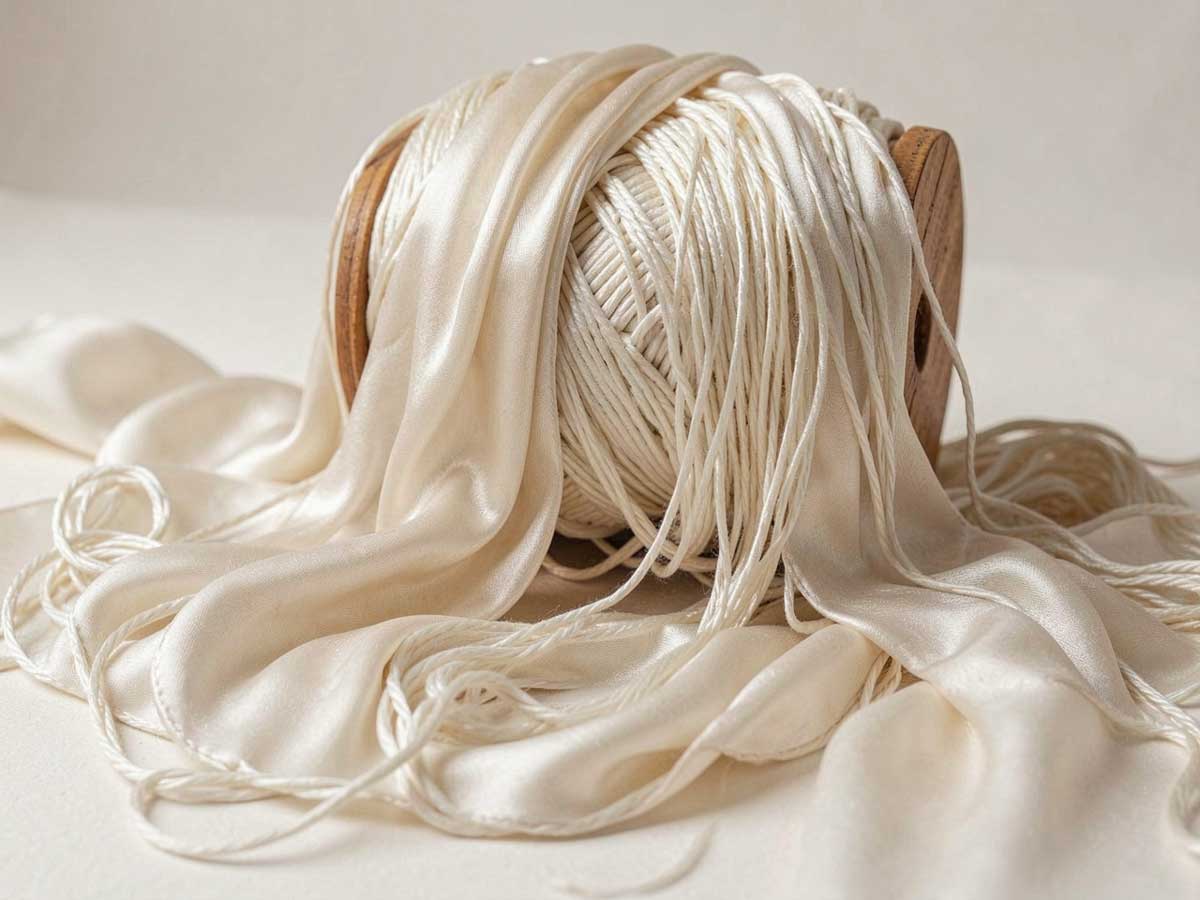
Silk and cotton blended yarns combine the luxurious sheen and smoothness of silk with the breathability and durability of cotton, explains Dr N Gokarneshan and Dr D Anita Rachel.
Silk-cotton blended yarns combine the softness, high luster, and luxurious drape of silk with the breathability, strength, and durability of cotton. This versatile, eco-friendly, and hypoallergenic blend offers superior comfort, moisture-wicking properties, and a soft, comfortable feel, making it ideal for high-end clothing across all seasons.
Key properties of silk-cotton blended yarns
The silk-cotton blend combines the best attributes of both fibres, offering an ideal balance of comfort, aesthetics, performance, and practicality.
- Comfort and breathability: The blend is highly breathable, allowing for air circulation and regulating body temperature. It is comfortable for both summer and winter wear, providing a cooling effect.
- Luxurious appearance and feel: It has a soft, smooth, and luxurious hand-feel, with a sheen provided by the silk, enhancing its aesthetic appeal.
- Strength and durability: Cotton contributes to the structural integrity, making the blend more robust and durable than pure silk.
- Moisture management: The blend exhibits good moisture-absorbing performance (moisture regain can exceed 8.5 per cent), which aids in sweating and keeps the wearer comfortable.
- Versatility and texture: It is lightweight and has a good drape. The blend can be tailored to produce different textures, ranging from smooth to slightly textured, depending on the silk-to-cotton ratio.
- Dye affinity: The yarn has excellent dye absorption and colour retention, allowing for vibrant and deep colours.
- Cost-effectiveness: While retaining luxury appeal, the addition of cotton makes it more affordable compared to 100 per cent silk.
These yarns are frequently used for creating high-end, comfortable clothing, including summer garments, underwear, and refined apparel.
Silk and cotton blended yarns combine the luxurious sheen and smoothness of silk with the breathability and durability of cotton. This blend creates a versatile textile that is more affordable and easier to maintain than pure silk while offering a more elegant drape and softer feel than pure cotton.
Physical and aesthetic properties
The specific characteristics of the yarn often depend on the blend ratio, which typically ranges from 30 per cent to 70 per cent of each fibre.
- Lustrous appearance: Silk’s triangular prism-shaped fibres reflect light, imparting an elegant, soft sheen to the blended yarn that is more subtle than pure silk.
- Softness and texture: The yarn is notably soft and smooth against the skin, making it ideal for garments in direct contact with the body.
- Lightweight with good drape: These yarns are lightweight and possess a fluid drape that allows fabrics to conform well to body contours without being too flimsy.
- Durability and resilience: Cotton adds body and strength to the blend, making the yarn more resistant to wear, pilling, and fibre breakdown than delicate pure silk.
Performance and comfort characteristics
Silk-cotton yarn is valued not only for its aesthetic appeal but also for its superior comfort and performance characteristics.
- Breathability: Both fibres are natural and breathable, allowing for excellent air circulation that helps regulate body temperature in various climates.
- Moisture management: Silk is highly hygroscopic, absorbing up to 30 per cent of its weight in moisture without feeling damp, which helps wick perspiration away from the skin.
- Thermal regulation: The blend acts as a natural insulator, keeping the wearer cool in summer and warm in winter.
- Low static buildup: Unlike synthetic blends, silk-cotton yarns do not typically attract static electricity.
- Hypoallergenic: The yarn is naturally resistant to dust mites and mould, making it suitable for sensitive skin.
Chemical properties and care
Understanding the chemical properties of silk-cotton yarn is crucial for achieving optimal colour performance and fabric durability.
- Dye affinity: Silk has a high affinity for dyes, allowing the blended yarn to achieve deep, vibrant colours that are often more fade-resistant due to the cotton component’s stability.
- Sensitivity: The yarn is sensitive to alkaline substances (like harsh soaps) and chlorine bleach, which can damage the silk protein structure.
- Care requirements: It generally requires gentle handling, such as hand washing or a delicate machine cycle with pH-neutral detergent. Tumble drying should be avoided to prevent shrinkage and heat damage.
About the author:

- Dr N Gokarneshan is a Formerly Professor, Department of Textile Chemistry at SSM College of Engineering, Komarapalayam, Tamil Nadu.
- Dr D Anita Rachel is from the School of Fashion Design, Footwear and Design Institute, Chennai, Tamil Nadu.