

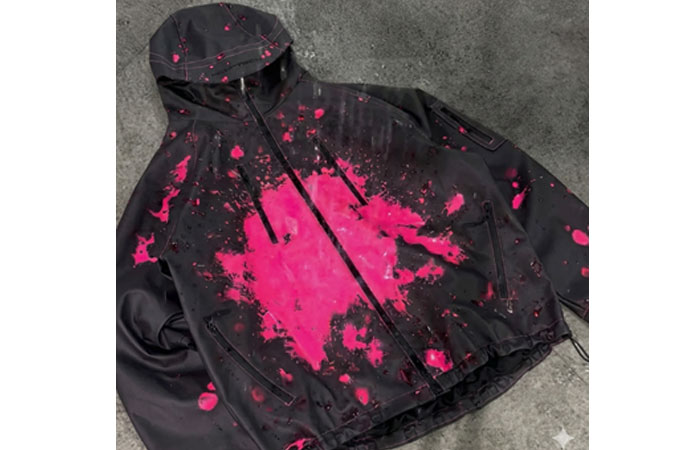
The Rise of Colour-Shifting Fashion
The future of colour-shifting fashion in India will be driven by deeper integration of thermochromic, electrochromic, hydro chromic, photochromic and halochromic pigments with digital manufacturing platforms, informs Dr N Sudhapriya and S Sivakumar.
The integration of smart manufacturing with advanced chromic pigments is redefining the future of functional and fashion textiles. Among various smart material systems, thermochromic, electrochromic, hydrochromic, and halochromic pigments have gained significant attention due to their dynamic colour-response behaviour and compatibility with scalable textile processes.
Smart manufacturing and colour-shifting textiles in India

The pigments enable textiles to respond visibly to environmental stimuli such as temperature, electrical input, UV light, moisture, and pH
India’s textile industry is transitioning from conventional, labour-intensive manufacturing to smart, technology-driven production systems. This shift is essential to remain competitive in a global market that increasingly demands high-performance, sustainable, and customizable products.
Color-shifting textiles, represent a significant advancement in functional fashion. The pigments enable textiles to respond visibly to environmental stimuli such as temperature, electrical input, UV light, moisture, and pH. Their integration into fabrics aligns well with smart manufacturing principles, which emphasise precision control, real-time monitoring, and value-added innovation.
For the Indian textile sector, these pigment technologies offer a pathway to diversify product portfolios, enter premium and technical markets, and strengthen R&D-led manufacturing capabilities.
MARKET DEMAND
Thermochromic textiles
- 2025 estimated revenue: ~$314.5 million
- 2035 projected revenue: ~$552.7 million
- Projected growth: ~5.8% CAGR
- Primary driver: Consumer demand for innovative and interactive fabrics.
Reversible textile colouring (including photochromic)
- 2034 projected value: ~$50 billion
- Key contributors: Thermochromic and photochromic technologies make up a large portion of this demand.
Electrochromic materials
Note: This category includes textiles as well as larger applications like smart windows and displays.
- 2023 market value: ~$2.3 billion
- 2032 projected value: ~$5.2 billion
- Projected growth: ~9.5% CAGR
Hydrochromic apparel
- Market status: A smaller but rapidly growing segment within interactive textiles.
- 2024 estimated value: ~$210–310 million
- 2033 projected value: >$1 billion
- Projected growth: ~16–20% CAGR (high teens)
Halochromic textiles
- Market status: Not yet widely commercialized compared to other chromic types; currently lacks major standalone industry forecasts.
- Emerging applications: Gaining early interest for use in health monitoring, chemical detection apparel, and industrial safety garments (where pH shifts signal contamination or exposure).
Technological trends
From a shop-floor perspective, the success of colour-shifting textiles depends not only on pigment chemistry but also on how reliably these systems can be integrated into existing textile manufacturing lines. Smart manufacturing acts as the enabler that bridges laboratory innovation and commercial-scale production, ensuring consistency, repeatability, and cost control.
Thermochromic textiles
Thermochromic pigments are among the most commercially viable colour-changing systems for textiles due to their relative ease of application. In industrial practice, these pigments are commonly introduced through screen printing, rotary printing, coating, or padding processes using microencapsulated formulations. Thermochromic fabrics exhibit a reversible colour change by undergoing molecular rearrangements in response to variations in temperature. Organic thermochromic colourants are particularly well suited for textile applications because their activation temperatures often align closely with human body temperature, enabling precise visual indication of thermal fluctuations. Thermochromic textiles typically display a colour change or disappearance of colour rather than colour intensification. Owing to this behaviour, such textiles hold strong potential for widespread use in sportswear to monitor body heat, as well as in medical applications where they can serve as non-invasive indicators for detecting abnormal temperature changes in patients.
Photochromic textiles
These textiles gained prominence in the fashion industry during the 1980s. Beyond fashion, they have found applications in areas such as military camouflage and adaptive window coverings that alter colour to regulate light transmission. Although their widespread adoption in textiles has been limited due to the complex chemistry of chromic coatings, these technologies have been more successfully commercialised in other sectors, particularly in eyewear and architectural glazing. In these systems, an external stimulus triggers the development of color within the material.
Electrochromic textiles
Electrochromic pigments represent a more advanced stage of color-shifting technology, requiring close coordination between textile processing and electronic integration. On the shop floor, commercialisation revolves around accurate layer-by-layer construction, including conductive tracks, electrochromic layers, and protective encapsulation.
Smart manufacturing tools such as automated coating, lamination, and precision printing enable controlled deposition of functional layers. Inline electrical testing and sensor-based inspection systems help detect conductivity loss, uneven switching, or delamination at early stages. Although initial investment is higher, electrochromic textiles open opportunities in adaptive apparel, interior textiles, and branded experiential products, where customisation and innovation justify premium pricing. Electrochromic textiles have potential applications in biomedical monitoring, particularly during EEG (Electroencephalogram), EKG/ECG (Electrocardiogram), and EMG (Electromyogram) procedures, where they can respond to and visually represent electrical signals. Based on the specific treatment and construction of the fabric, electrical stimulation can produce visible pulse-like effects across the textile surface. Beyond simple color variation, this technology enables dynamic changes in patterns and designs, allowing garments to visually respond to electrical stimuli in real time.
Hydro chromic textiles
Hydro chromic pigments are particularly attractive for fashion and lifestyle applications due to their immediate and visually engaging response to water or moisture. Industrially, these pigments are applied as surface coatings or prints that remain colourless or opaque until exposed to moisture.
From a production perspective, uniform coating thickness and adhesion are critical to ensure consistent reveal effects. Smart manufacturing supports this through automated coating heads, controlled drying cycles, and inline optical inspection. Indian manufacturers can leverage hydro chromic systems for rainwear, sportswear, children’s apparel, and promotional textiles, where durability requirements are moderate but visual impact is high.
Halochromic textiles
Halochromic textiles are materials that exhibit color changes in response to variations in pH. The dyes employed in these textiles are similar to those used in conventional pH-sensing systems. One promising application is in medical wound care, particularly for burn patients, where the pH of the skin and wound environment changes significantly throughout the healing process. Abnormal pH levels can indicate infection or delayed healing, and a visual color change in the dressing could provide an early, non-invasive warning without the need for specialised equipment. In addition, halochromic textiles may be useful in protective clothing for workers exposed to substances with fluctuating or extreme pH values, offering real-time visual indication of hazardous conditions. Smart process control allows precise regulation of finishing bath chemistry, drying temperatures, and curing times. Data-driven formulation adjustments help balance responsiveness with durability.
Impact on the textile industry
Automated printing and coating lines improve throughput while maintaining consistent chromic performance across production batches. Thermochromic, electrochromic, hydro chromic, photochromic and halochromic textiles would enable Indian manufacturers to move beyond conventional fashion into smart apparel, sportswear, medical textiles, and responsive interior products. These segments offer higher margins and stronger global demand. Smart manufacturing minimises water, chemical, and energy consumption through controlled application and reduced trial-and-error. The development of low-toxicity and bio-based chromic systems further supports sustainability and regulatory compliance. The adoption of chromic pigment technologies shifts workforce requirements toward skilled roles in textile chemistry, electronics integration, automation, and data analysis. Continuous training and industry–academia collaboration are critical to address this transition.
Challenges and opportunities
The main challenges include limited long-term durability data for chromic pigments under repeated washing and environmental exposure, high cost of electrochromic systems due to conductive materials and power integration, need for standardised testing protocols for color-change performance, skill gaps in handling multifunctional textile systems. The opportunities are: 1) Strong R&D infrastructure and pilot-scale facilities in India. 2) Government support for technical textiles and smart manufacturing initiatives. 3) Growing consumer interest in interactive and functional fashion. 4) Export potential for high-value chromic textile products.
Smart manufacturing-driven chromic textiles
Overall, smart manufacturing transforms chromic pigments from niche innovations into scalable textile solutions. By embedding automation, real-time monitoring, and quality control into everyday operations, Indian textile manufacturers can commercialise colour-shifting fabrics with confidence and consistency.
The future of colour-shifting fashion in India will be driven by deeper integration of thermochromic, electrochromic, hydro chromic, photochromic and halochromic pigments with digital manufacturing platforms. Emerging trends include hybrid chromic systems, AI-assisted formulation design, digitally controlled colour-response tuning, and circular production models.
In the long term, smart manufacturing will empower scalable, reliable, and sustainable production of chromic textiles, positioning India as a global innovation hub for responsive and intelligent fabrics. These pigment technologies will not only redefine fashion aesthetics but also expand the functional role of textiles across multiple sectors.
References:
- Liu, Q.; Gao, S.; Wang, G. Development of Multi-Colored Reversible Thermochromic Phase Change Materials with Different Color Formers. J. Energy Storage 2025, 134, 118274.
- Li, P.; Sun, Z.; Wang, R.; Gong, Y.; Zhou, Y. Flexible Thermochromic Fabrics Enabling Dynamic Colored Display. Front. Optoelectron. 2022, 15 (1), 40.
- Zhang, H.; Fan, J.; Cheng, H.; Yu, D.; Wang, W. High Optical Contrast, Dual Responsive, Wearable Photochromic Fibers for Smart Textile Engineering. Surf. Interfaces 2024, 51, 104795.
- Hu, X.; Lu, X.; Qu, J. Revolutionizing Wearable Displays with Photochromic Fibers: Shining as You Smile. Matter 2024, 7 (3), 749–751.
- Wang, B.; Zhang, W.; Zhao, F.; Yu, W. W.; Elezzabi, A. Y. An Overview of Recent Progress in the Development of Flexible Electrochromic Devices. Nano Mater. Sci. 2023, 5 (4), 369–391.
- Zhang, Y.; Luo, Y.; Wang, M.; Xing, T.; He, A. Advances in Colored Carbon-Based Fiber Materials and Their Emerging Applications. Sus Ma 2024, 4 (6), e243.
- Mohr, G. J.; Kassal, P.; Žuvić, I.; Krawczyk, K. K.; Steinberg, M. D.; Murković Steinberg, I. Design of Halochromic Cellulosic Materials and Smart Textiles for Continuous Wearable Optical Monitoring of Epidermal pH. Microchim. Acta 2025, 192 (7), 405.
- Gauche, H.; Oliveira, F. R.; Merlini, C.; Hiller, A. P.; Souto, A. P. G. V.; Cabral, I. D.; Steffens, F. Screen Printing of Cotton Fabric with Hydrochromic Paste: Evaluation of Color Uniformity, Reversibility and Fastness Properties. J. Nat. Fibers 2022, 19 (7), 2694–2705.
About the Authors

Dr N Sudhapriya is working as a Senior Scientific Officer in the Textile Chemistry Division, SITRA, and has over 8 years of experience in the textile processing field. She has published 10 research papers in reputed international journals and has filed one patent. She has successfully completed three government-sponsored projects and two industry-sponsored projects.

S Sivakumar is a Principal Scientific Officer and Head of the Textile Chemistry Division, SITRA, with over 25 years of experience in textile processing. He has successfully completed seven government-sponsored projects and four industry-sponsored projects. He has published four research articles and has filed one patent
