


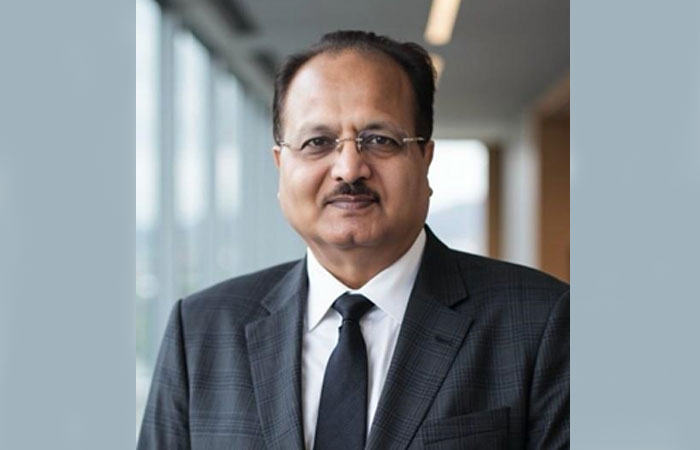
India’s polyester yarn sector is navigating policy shifts, global competition and changing demand dynamics. Madhu Sudhan Bhageria, in this interview with Divya Shetty, discusses Filatex India’s growth journey, capacity expansion, policy challenges, trade opportunities, sustainability initiatives and future outlook, offering insights into industry trends, margins, technology adoption and emerging global opportunities.
Can you tell us about Filatex India’s journey and growth over the years?
We began with a plant in Noida manufacturing monofilaments used for industrial applications such as toothbrushes, whistles and similar products. In 1996, we established a plant in Silvassa to produce conventional yarn for fabrics. Initially, the plant used chips to manufacture yarn.
In 2012, we set up another unit as part of backward integration and started producing our own chips through polymerisation, moving from chips-based production to sourcing raw materials like PTA and MEG. This significantly enhanced our capacity.
Our capacity increased from about 45,000 tonnes to nearly one lakh tonnes per annum, and we have since focused on growth through direct spinning. Today, our capacity exceeds four lakh tonnes, and we are adding further capacity by September, taking us close to 4.5 lakh tonnes annually.
We manufacture various types of polyester yarn in different lustres, including dope-dyed yarns in multiple colours. Currently, we are among the top four players in India with a market share of around 7–7.5 per cent.
What are the key applications of your yarn products?
Our yarn is used across a wide range of applications. It goes into fabrics for home textiles, women’s wear, men’s wear and children’s clothing. Additionally, some of our products are used in technical textiles. Essentially, polyester yarn forms the base of most fabric applications across segments.
The Indian textile industry has experienced volatility recently. How do you see the demand situation and future outlook?
The main challenge is not demand but government policy inconsistency. Until about two-and-a-half years ago, there was no BIS requirement, and large-scale imports from China depressed margins because Chinese manufacturers often operate under different financial structures and were dumping products.
When BIS norms were introduced, imports declined and domestic performance improved. However, the reopening of BIS in November allowed Chinese goods to re-enter the market, again creating pressure.
Another issue is raw material pricing. China produces surplus raw materials like PTA and MEG domestically, while India faces shortages. This leads to higher costs for Indian manufacturers. The duty structure is also unfavourable—there is a 5 per cent duty on both raw materials and finished products, which provides no protection to domestic producers.
There are several input costs and taxes that cannot be offset in the domestic market. For exports, the government provides RoDTEP benefits of about 1.4 per cent, indicating recognition of unrebated duties in the system.
That said, demand is expected to improve due to rising global consumption and increasing economic activity. New domestic raw material capacities are scheduled to commence this year and next year, which should strengthen supply and improve competitiveness. Trade agreements, including potential US arrangements, could also reduce costs and enhance market access.
How do global trade agreements such as India–EU and India–US deals affect the industry?
Trade agreements will significantly improve India’s competitive position. In the European market, India will gain a duty advantage over China. Currently, countries like Bangladesh and Vietnam enjoy certain duty benefits, but these advantages are expected to diminish over time.
If duties on Indian products in Europe become zero, we will gain a 4–12 per cent advantage depending on the product. This is a substantial benefit in a competitive market.
Similarly, in the US market, India already enjoys a duty advantage over China. China faces duties of around 34 per cent, while India faces about 18 per cent, giving us a clear edge of nearly 16 per cent. India currently supplies only about 5 per cent of US textile requirements, while China supplies 25–48 per cent. This creates a major opportunity for Indian exporters.
Overall, these trade agreements are expected to boost demand, increase margins and support growth across the value chain—from yarn to fabrics and garments.
How do inventory trends in apparel and home textiles impact yarn demand and pricing?
In our sector, demand remains stable overall. Seasonal variations exist—for example, home textiles may experience a temporary slowdown in February and March—but this is usually offset by demand from other segments such as garments. Supply can be shifted between segments, balancing demand across the year.
Automation and digitalisation are becoming important in manufacturing. How is your company adopting these technologies?
Our plants are already highly automated. We continue to invest in smart manufacturing technologies to improve efficiency and productivity. Recently, we have invested in automated packing and docking systems, which are expected to be implemented by June or July. We remain aligned with the latest technological developments in the industry.
Are there any technological innovations or new initiatives from your company that could shape the future of the industry?
While there is no single revolutionary technology transforming the yarn industry, we are working on a unique initiative—converting polyester textile waste into chips. This project, expected to be operational by September, is distinctive and not widely implemented globally.
There is currently only one similar plant in China, and we hold a patent for our process. By converting polyester textile waste back into chips, we can produce yarn again, creating a circular production model. This initiative aligns with sustainability goals and offers a long-term growth opportunity.
We have already tied up with a major brand and are in discussions with several others, though we cannot disclose details at this stage.
How has the company performed financially, and what is your outlook?
The company performed well last year, and we expect this year to be even better. However, as we are approaching a board meeting, I cannot disclose specific financial figures at this time.
What are your future plans and message for the industry?
We are currently executing three to four major projects that will be completed by September, including the textile-to-chips facility. Once these initiatives are operational, they will support our long-term growth and sustainability objectives.
For the industry, the focus should be on enhancing competitiveness, improving raw material availability and leveraging global trade opportunities. As global demand continues to rise due to population growth and economic development, the textile sector will remain a growing industry. Stable policies and cost competitiveness will be key to unlocking its full potential.