


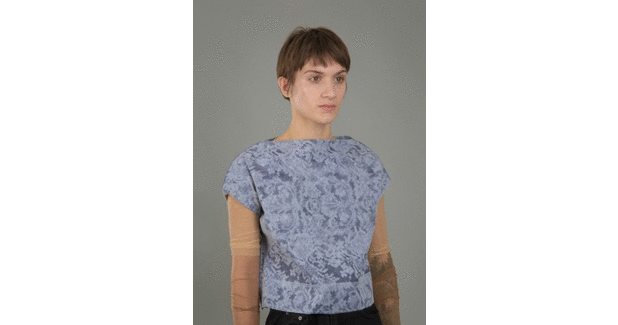
The exhibition Disrupting Patterns: Designing for Circular Speeds opened up at University of the Arts London. The exhibition is the results of a two-year research project called Circular Design Speeds aiming at pushing the limits of ‘fast’ and ‘slow’ fashion by testing new concepts for sustainable design in an industry setting. On display were exploratory prototypes, as well as commercial garments produced by industry partner Filippa K using existing value chains. In addition, research results on innovative materials, consumer acceptance, composting studies and Life Cycle Assessments were presented. The aim of this project is to implement research results in a real fashion industry context, focusing on speed of use and maximising fabric value retention in products.
The Service Shirt developed by Professor Rebecca Earley is designed to last for over 50 years. The concept garment explores the multiple complexities, challenges and opportunities associated with design for circular business models in extended use contexts. The Service Shirt was designed as a ‘deliberate extreme’ to have a total lifecycle of 50 years. This lifecycle includes in-house and external remanufacturing processes, as well as various use cycles – often moving between single ownership and rental and sharing contexts. It becomes the lining for a jacket and then crafted in to fashion accessories, before finally being chemically regenerated in the year 2068.
On the opposite side of the spectrum the Fast-Forward concept, developed by Prof Kay Politowicz and Dr Kate Goldsworthy, explores alternative modes of production and use for a sustainable ‘fast-fashion’ application. Advantages with regards to climate impact are enabled through lighter material choices, nonwoven fabric production, no launder, clear routes to recovery and redistributed manufacturing systems. A sliding scale of ‘speed’ from ultra-fast forward through to a more widely accepted length of use, with adaptations to production processes and end of life, is presented. The prototypes are made from a new bio-based nonwoven material co-developed with Dr Hjalmar Granberg at RISE Research Institute of Sweden & University of the Arts London. The composition of the paper is a mix of cellulose pulp and bio-based PLA fibre, making the garment 100 per cent biodegradable or recyclable in existing paper recycling systems.
Working closely with industry partner Filippa K made commercial testing possible. By implementing research into existing value chains, Filippa K was able to produce a coat that is 100 per cent recycled and recyclable, as well as a concept dress that is 100 per cent bio-based and biodegradable. The garments are a part of Filippa K’s Front Runner series and were available in select stores very recently. With a focus on products’ length of use and maximizing fabric value retention, Filippa K are dedicated to becoming fully circular by 2030.