


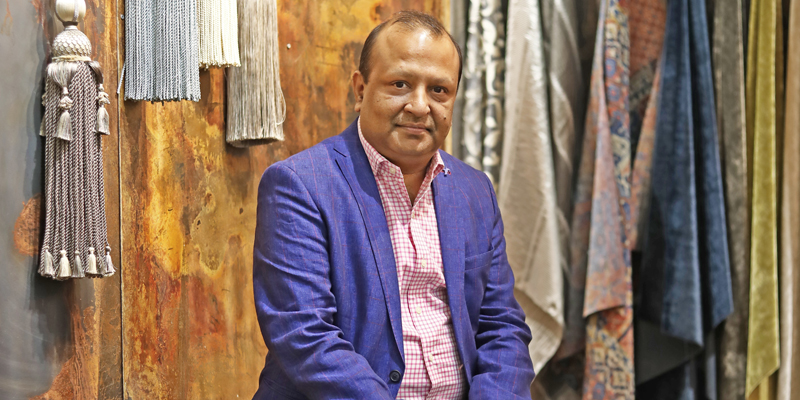
The Indian textile industry stands at a defining crossroads — balancing its legacy as one of the world’s largest textile producers with the urgent need to modernise, diversify, and climb the global value chain. As a major contributor to exports, employment, and manufacturing output, the sector remains central to India’s economic ambitions. Yet, challenges such as high input tariffs, infrastructure gaps, and skill shortages continue to constrain competitiveness. Rohit Khemka, Founder, RR Décor, in this conversation with Divya Shetty, explore how the industry can align with the goals of Make in India 2.0, tap into high-value segments like technical and sustainable textiles, and secure its place in the global market.
How do you assess the current state of the Indian textile industry in terms of growth, competitiveness, and global positioning?
The Indian textile industry today is a mix of robust strengths and persistent structural gaps. India remains one of the world’s leading textile exporters and the sector is a major employer and foreign-exchange earner, with textiles & apparel contributing a significant share of national exports. At the same time, global competitors who combine low input tariffs, faster duty-free market access and highly automated value chains have put pressure on India’s price competitiveness in labour-intensive subsegments. The opportunity lies in moving up the value chain technical textiles, design-led home textiles and sustainable premium segments where India’s design heritage and scale can be leveraged.
What role can the textile sector play in achieving the objectives of Make in India 2.0, and where do you see the biggest opportunities?
Textiles can be a core pillar of Make in India 2.0 by delivering employment, regional manufacturing clusters and export diversification.
Key opportunities are:
- Scaling technical and performance textiles for industrial and medical use,
- Upgrading apparel and home-textile manufacturing toward ‘design + sustainability’ that commands premium pricing, and
- Digitising factories and supply chains to improve lead times and traceability. These moves would attract investment, strengthen exports, and help India capture higher-value nodes globally.
What are the key challenges that the industry must overcome to align with the vision of Make in India 2.0?
Three systemic challenges stand out:
- Input cost & tariff asymmetries — high duties on certain raw inputs raise costs versus competitors;
- Infrastructure & technology gaps — many units still need capital to modernise for automation, waste-water treatment and compliance;
- Skill and formalisation — shifting large informal value chains into compliant, skilled manufacturing is essential for quality, sustainability and export standards. Addressing these will require coordinated policy, access to long-term capital and targeted skilling.
How have tariff structures impacted India’s textile exports and competitiveness in international markets?
Tariff policy has been a double-edged sword. Higher duties on finished imports have protected domestic mills, but elevated tariffs on some raw materials and intermediates have increased input costs for fabricators and converters making certain Indian products less competitive than low-tariff rivals. Recent international tariff developments (including higher duties faced by Indian exporters in some markets) have also created short-term disruption and underline the need for diplomacy and diversification of markets. A nuanced tariff stance that protects strategic domestic capability while avoiding punitive input tariffs will help competitiveness.
What implications does the current GST framework have on textile manufacturers, especially SMEs and exporters?
GST simplified multiple indirect levies and improved input credit flows for many formal players, which benefits organised manufacturers and exporters. However, smaller manufacturers and informal units face compliance burdens, cash-flow pressure from frequent filings, and complexity around classification and rate changes. For exporters, while refund mechanisms exist, procedural delays can strain working capital. Simplified compliance pathways, faster export refunds and tailored support for MSMEs would reduce friction and help more units formalise and scale.
What policy or regulatory changes would you recommend to strengthen the industry’s growth under Make in India 2.0?
- Rationalise input tariffs to reduce cost asymmetries on critical intermediates while protecting strategic domestic capabilities.
- Faster export facilitation — streamlined refund processes and simpler documentation for small exporters.
- Access to patient capital — concessional loans or linked capex incentives for factory modernisation, energy efficiency and effluent management.
- Skill pipelines & cluster development — support for regional textile parks with plug-and-play infrastructure and training centres.
- Sustainability & design incentives — subsidies or tax breaks for water-saving dyes, circular initiatives and investments in design/tech R&D to move up the value chain.
These changes would make Indian textiles more competitive, more sustainable and better aligned with Make in India 2.0 objectives.