Close Menu
Indian Textile Journal
  • Home
  • Textile Machinery
    • Allied Equipment and Accessories
    • Automation
    • Dyeing, Processing & Finishing
    • Knitting
    • Printing
    • Spinning
    • Weaving
  • Tech Textiles
  • Sustainability
  • Resources
    • Trade Fair
    • Events
    • Videos
  • Interview & Opinion
  • Subscribe Now
  • Advertise
  • Digital
  • Apparels & Garments
  • Fibres & Raw Materials
  • Home Textiles
  • Industry Update
Facebook X (Twitter) YouTube LinkedIn
Indian Textile Journal
Epson
  • Home
  • Textile Machinery
    • Allied Equipment and Accessories
    • Automation
    • Dyeing, Processing & Finishing
    • Knitting
    • Printing
    • Spinning
    • Weaving
  • Tech Textiles
  • Sustainability
  • Resources
    • Trade Fair
    • Events
    • Videos
  • Interview & Opinion
  • Subscribe Now
  • Advertise
  • Digital
  • Apparels & Garments
  • Fibres & Raw Materials
  • Home Textiles
  • Industry Update
Indian Textile Journal
Home » Rising demand for high visibility apparel
Industry Update

Rising demand for high visibility apparel

By April 27, 20172 Mins Read
Share Facebook Twitter LinkedIn WhatsApp Copy Link
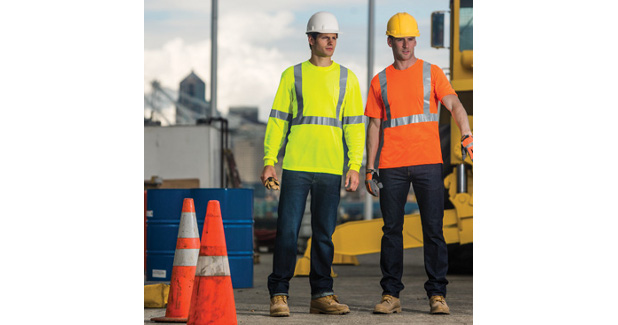
High visibility apparel plays a critical role in making the jobs of those who work in hazardous environments safer. Indeed, high visibility apparel is a key category of the industrial protective clothing market, a sector which is expected to achieve significant growth between 2016 and 2021 as safety awareness increases and industrialisation proceeds in developing countries, according to a Report of Textile Intelligence.
High visibility apparel is also being used increasingly to minimise risks by members of the public who use the roads, including vehicle drivers and cyclists. Wearers of safety apparel are able to choose from a variety of high visibility garments, including those which incorporate fluorescent materials and/or retroreflective materials.
Additionally, advances in wearable technology have facilitated the development of garments which incorporate light emitting diodes (LEDs). Furthermore, while safety is considered to be of the highest importance in the design of high visibility protective apparel, style and comfort are also key. Indeed, several high visibility garments are designed so that they facilitate performance properties such as moisture wicking, or are styled in a way which is similar to conventional casual apparel. However, the use of high visibility materials is by no means restricted to safety apparel as retroreflective materials are being used increasingly to add attractive design details to casual apparel.
Previous ArticleIndonesia’s textile export hits $2 bn
Next Article Industry 4.0, a challenge for Vietnam textiles

Related Posts

Mafatlal Industries expands D2C footprint with launch of ‘Mafatlal Home Fashion’

October 13, 2026

CMAI’s statement on the deferment of MDR on UPI merchant payments

October 13, 2026

CARE Ratings upgrades Mafatlal Industries to ‘CARE A-‘ with stable outlook

October 12, 2026
Recent Posts
  • RSWM cuts scope 1 emissions by 40.5% in new FY2025–26 sustainability report
  • FET highlights innovation and award-winning gel spinning tech at Dornbirn GFC
  • Discover Jeanologia’s live digital-to-production denim workflow at IGATEX Pakistan 2026
  • Mafatlal Industries expands D2C footprint with launch of ‘Mafatlal Home Fashion’
  • CMAI’s statement on the deferment of MDR on UPI merchant payments
  • Kusumgar signs long-term aerospace supply deal with Safran
  • EU chemical restrictions raise compliance bar for apparel exporters
  • Adidas, H&M and Inditex join coalition to cut textile waste
Facebook X (Twitter) YouTube LinkedIn
  • About us
  • Contact us
  • Privacy Policy
  • Terms and Conditions

SISTER PUBLICATIONS

Construction World Equipment India Industrial Product Finder Infrastructure Today

© 2026 Indian Textile Journal. All Rights Reserved.

Type above and press Enter to search. Press Esc to cancel.