


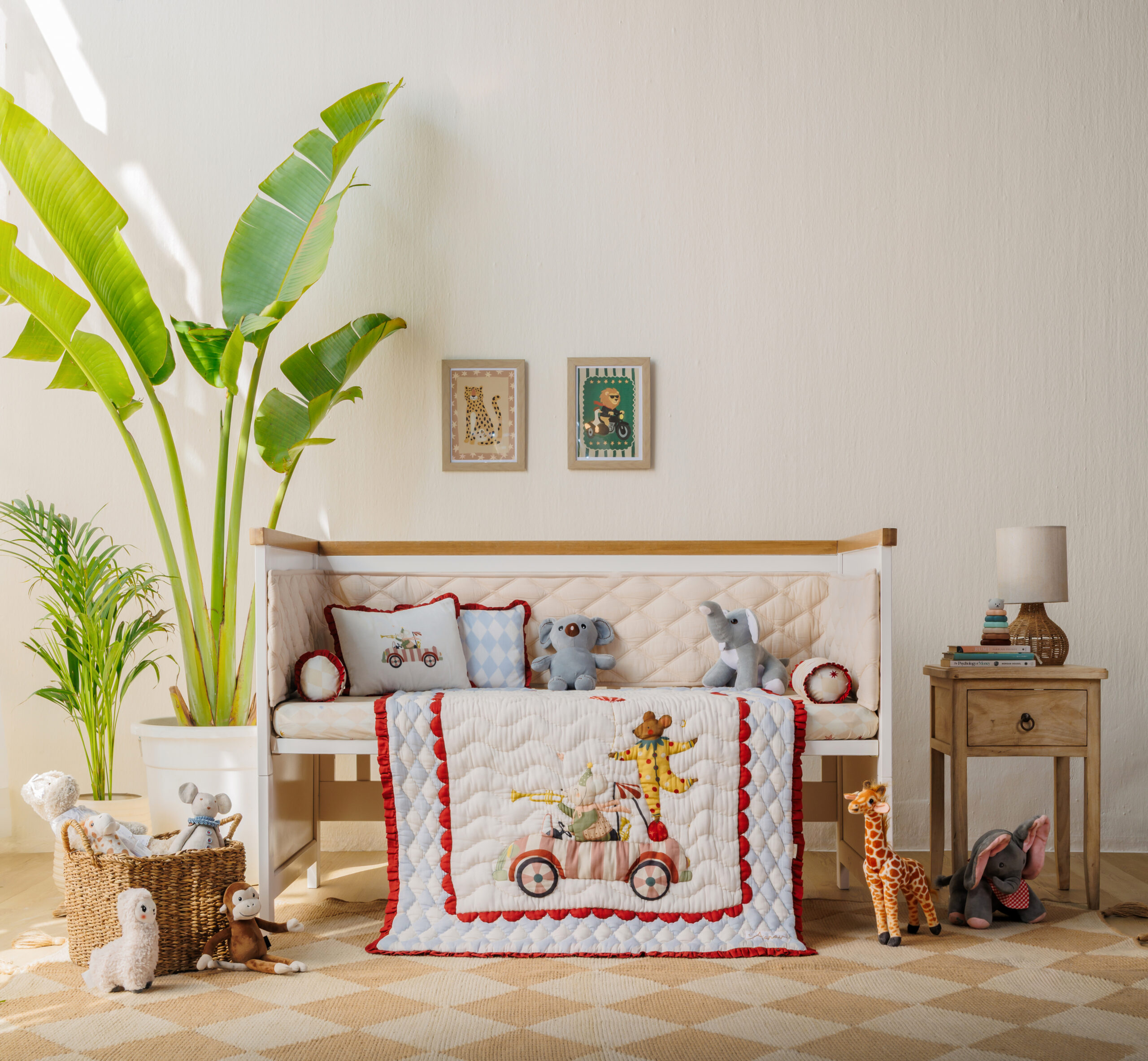
Convertible cribs, heirloom-quality storage, handcrafted rugs, and durable organic cotton textiles reduce waste while creating a more meaningful relationship with the objects that surround us, explains Sanchay Dhingra.
The nursery is unlike any other room in the home. It is the first space a baby inhabits, long before they understand colour, objects, or language. Yet every element within it quietly shapes their earliest experiences. The quality of light that enters through a window. The softness of the bedding against their skin, the textures they reach for, and the sounds that settle into the room.
For a growing number of parents, these considerations are giving rise to the conscious nursery, a space designed with equal attention to comfort, material integrity, longevity, and environmental responsibility. Rather than focusing on decorative themes or fleeting trends, the conscious nursery begins with a simple question: what surrounds a child during the first years of life?
Beyond pretty spaces
The nursery has long been treated as a room of visual delight, filled with playful motifs, whimsical colours, and charming accessories. Today, the conversation is becoming more nuanced.
Parents are paying closer attention to what lies beneath the surface. The materials used in furniture, the fibres woven into textiles, the finishes applied to walls, and the origins of everyday objects are becoming just as important as how a room looks. A conscious nursery is built around thoughtful decisions. Furniture crafted from responsibly sourced timber. Natural paints with low emissions. Handmade accessories created by artisan communities. Textiles made from fibres that are kinder to both babies and the environment.
Why organic cotton
Among all the materials that fill a nursery, none comes into closer contact with a baby than fabric. From swaddles and crib sheets to blankets, clothing, nursing cushions, and soft toys, textiles become part of a child’s daily life from the moment they are born.
This is why organic cotton has become central to the conscious nursery movement. Cultivated without synthetic pesticides and processed with fewer harsh chemicals, organic cotton offers a cleaner alternative for the products babies interact with most. Its natural breathability helps regulate temperature, while its softness makes it particularly suitable for delicate skin.
But its appeal extends beyond comfort. Organic cotton reflects a larger philosophy of choosing fewer, better things. Pieces designed to be washed repeatedly, handed down to younger siblings, and treasured long after infancy has passed.
Building a nursery that grows
Perhaps the most defining characteristic of a conscious nursery is longevity. Rather than filling a room with temporary purchases, parents are increasingly investing in adaptable pieces that evolve with changing needs. Convertible cribs, heirloom-quality storage, handcrafted rugs, and durable organic cotton textiles reduce waste while creating a more meaningful relationship with the objects that surround us.
The result is a nursery that feels less disposable and more enduring. There is beauty in a blanket that accompanies a child through their earliest years. In a rocking chair that later becomes a reading corner. In storage baskets that continue to serve a purpose long after toys have been replaced by books.
The most compelling conscious nurseries often draw inspiration from the natural world. Soft earth tones replace overly saturated palettes. Wooden toys sit alongside woven textures. Living plants, natural fibres, and handcrafted details introduce warmth and authenticity.
At its core, the conscious nursery is not defined by a particular aesthetic, but is defined by intention. It is the understanding that a child’s first environment deserves the same thoughtfulness we bring to every other aspect of their wellbeing. That the fabrics touching their skin, the furniture surrounding them, and the materials shaping their earliest world matter.
About the author:
Sanchay Dhingra is one of the Founders and Creative Directors of MiRooh, a luxury textile and home décor brand inspired by India’s rich craft heritage. Established in 2021, MiRooh was born from their shared vision to celebrate traditional Indian artistry while reimagining it for contemporary living. Driven by a deep appreciation for heritage craftsmanship, MiRooh has been built around the belief that traditional techniques are living expressions of culture that deserve a place in modern homes.