


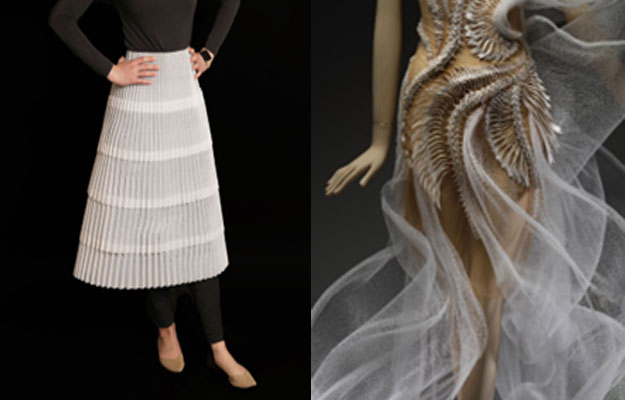
Dr Kislaya Choudhary says, the inherent additive nature of 3D printing makes it one of the most promising technologies for solving the textile industry’s most pressing environmental challenges.
The textile industry, long defined by its reliance on analogue processes of cutting, sewing, knitting, and weaving, is currently undergoing a methodological transformation driven by digital fabrication. At the vanguard of this shift is 3D printing, a process that constructs physical forms through the successive layering of material, translating digital geometry directly into tangible matter. The narrative of 3D printing in textiles is not merely a story of technological adoption, but a story of aesthetic liberation, moving from the production of rigid, non-wearable objects to the realisation of intricate, flexible, and functional textile structures.
The genesis of computational fabrication
The foundational principles of 3D printing were established in the 1980s, driven primarily by engineering requirements for rapid prototyping. Early processes like Stereolithography (SLA) focused on precision and resolution, yielding materials that, while complex in form, were intrinsically rigid. When applied to garments, these early attempts—often realised in dense photopolymers or powdered Nylon via Selective Laser Sintering (SLS)—resulted in pieces best described as wearable sculptures. These conceptual works, while validating the potential of digital craftsmanship, failed to meet the fundamental functional criteria of textiles: namely, flexibility, drape, and breathability. The inability to articulate material movement meant that the technology remained confined to the realm of conceptual design rather than practical apparel.
Material and design: The dual breakthrough
The transformation of additive manufacturing from a prototyping tool to a textile technology required a dual, symbiotic evolution in both the material palette and the computational design methodology.
Material Innovation: The inflexibility of early polymers represented the most significant design constraint. The crucial breakthrough came with the successful deployment of highly flexible elastomeric filaments, principally Thermoplastic Polyurethane (TPU). TPU is known for its elasticity, durability, and robust layer adhesion. Its compatibility with accessible Material Extrusion (MEX) technology allowed designers to introduce haptic qualities (the sense of touch and feel). Furthermore, material science continues to advance with an increasing focus on sustainable polymers, including bio-based variants, directly integrating environmental responsibility into the material creation.
Design methodology: Designers fundamentally shifted their approach from designing solid surfaces to designing structural mechanics. Instead of relying on the material’s innate flexibility, they employed computational geometry and parametric modelling to architecturally construct the textile’s flexibility. This involved creating structures composed of thousands of individually fabricated, interlocking geometric units—often referred to as linkage structures or 3D printed chainmail. This design paradigm, known as material-by-design (Melnikova et al., 2022), allows the designer to define the texture, stiffness, and porosity at a micro-level, creating a quasi-woven aesthetic that mimics the movement and drape of conventional fabric through digital assembly rather than fibre entanglement. This fusion of material science and geometric control has cemented 3D printing’s position as a potent tool for contemporary textile design.
Design process adapted by leading designers worldwide (2020-2025)
Leading global designers and research studios are primarily focused on structural innovation, treating the entire garment as a single, complex, digitally woven sculpture. Their design processes are heavily iterative, relying on advanced simulation and high-resolution fabrication techniques.
Case Study: Iris van Herpen – Parametric Sculpturalism
Dutch designer Iris van Herpen remains the most influential figure in demonstrating the high-art potential of additive manufacturing. Her collaborations with generative architects and software developers, are defined by their biomorphic geometries and structural complexity.
Design Process and Techniques: Van Herpen’s methodology begins with digital body mapping to achieve a second-skin fit. The core creative stage is parametric generation, where algorithms are used to simulate natural forms (e.g., water, muscle fibres) and translate them into densely articulated, repeating structures. These digital files are then realised using high-resolution technologies like Stereolithography (SLA) or Selective Laser Sintering (SLS) (Wang & Sun, 2018).
Material and design focus: While she initially favoured rigid photopolymers for their detailing capability, recent collections demonstrate a sophisticated use of multi-material approaches. She employs stiff resins for structural support and incorporates flexible Nylon (PA) and elastomeric sections for areas requiring movement and articulation. Her work is a study in material tectonics, where the material’s placement and the link’s geometry, not the printing process alone, dictate the garment’s fluid movement. The result is an ethereal, yet structurally sound, garment that redefines the relationship between technology and haute couture.
Case Study: MIT Media Lab’s DefeXtiles – Process innovation and aesthetic
The DefeXtiles project from the MIT Media Lab (Forman et al., 2020) provides an important contrast, demonstrating how process manipulation can yield complex textile aesthetics using accessible Fused Deposition Modelling (FDM) technology.
Design process and techniques: The design is conceptualised around exploiting a controlled ‘defect’ in the FDM process: under-extrusion. The digital model is engineered to instruct the printer to print thin pillars with a large air gap between them.
Material and design focus: Instead of printing solid layers, the under-extrusion technique is deployed to lay fine, thread-like strands of material between the anchors. This creates an extremely thin, porous, and highly flexible mesh structure that resembles tulle or lace. This method primarily uses flexible filaments like TPU or conductive polymers. The design methodology here is a deliberate exploration of the aesthetic of lightness and permeability, proving that sophisticated textile results can be achieved by digitally controlling basic machine parameters, rather than solely relying on proprietary high-cost materials or equipment. The resulting textile offers inherent porosity and minimal, drape.
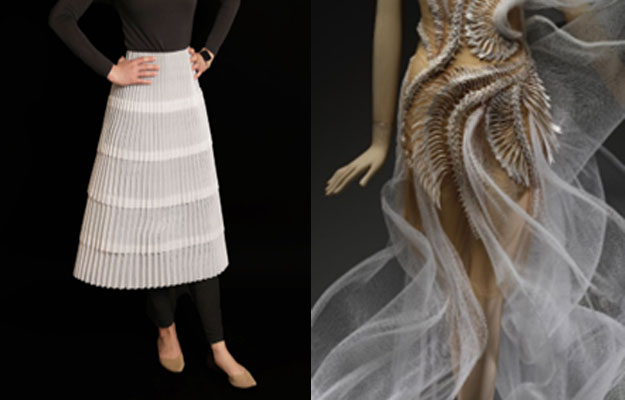
Figure 1: Structural 3D printed Design
Structural chainmail: Modular tessellation
A parallel innovation trend is the development of modular, chainmail-inspired textiles. This approach is crucial for achieving high flexibility and customisation.
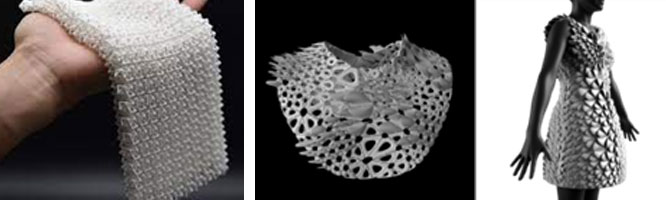
Figure 2A, 2B, 2C (Left to right): Interlined structural 3D Printed Designs
Material and Design Focus: The design process involves creating a single, simple, geometric link (a circle, hexagon, or trapezoid) that is computationally tessellated across a two-dimensional surface. This tessellated pattern is then printed in a single build using a technique like SLS Nylon (PA), which allows the powdered material to support the structure without the need for removable supports. The individual links are then liberated during the de-powdering stage, resulting in a ready-to-wear, non-stitched fabric (Takahashi et al., 2020). This modularity is a critical design-for-disassembly strategy, enabling easy repair and circularity.
Design process adapted by Indian designers (2020-2025)
The application of 3D printing in the Indian design context demonstrates a unique focus on hybrid craft, where the technology serves as an advanced tool for augmenting traditional textile heritage rather than replacing the base fabric entirely. The design process often integrates computational geometry with deeply rooted cultural forms.
Case study: Hemani Kumar and culturally integrated embellishment
Emerging Indian designers, such as Hemani Kumar, have effectively harnessed AM to modernise traditional garments like the sari, showcasing a pragmatic and culturally sensitive approach (Stratasys, 2023).
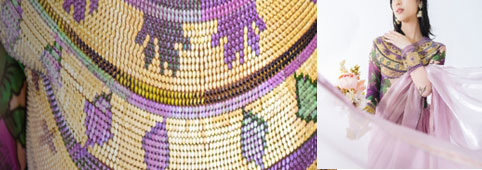
Figure 3: Direct to textile 3D Printed design:
- Design process and techniques: This methodology centres on direct-to-textile printing, a key differentiator from the structural approach. The process begins with the selection of traditional motifs (e.g., paisley, floral geometric patterns derived from historical architecture or embroidery) which are then translated into three-dimensional digital files.
- Computational motif translation: Motifs are converted into lightweight, structural patterns (lattices, low-relief sculptural forms) using generative design tools.
- Fabrication integration: A key technique involves using advanced multi-material PolyJet printing (such as the Stratasys TechStyle system) to directly deposit flexible liquid photopolymer resin onto the base fabric (silk, cotton, or lace).
- Material and design focus: The material is a specific flexible resin polymer engineered for adherence and drape, often allowing for multi-colour and gradient printing in a single pass. This process eliminates the waste and inconsistency associated with traditional hand-embellishment methods like sequinning or beading. The design goal is not to create a structural garment, but to achieve unprecedented tactile and visual depth through layered embellishment that respects the base fabric’s fluidity. This results in a seamless integration of futuristic structure with traditional textile movement, exemplifying a true hybrid aesthetic.
Comparative Analysis: Material, Creative Use, and Functional Outcomes
The comparative analysis of the global and Indian design pipelines reveals two powerful, divergent approaches to the adoption of 3D printed textiles. The contrast lies in whether the printing defines the entire structure or merely enhances the existing structure.
Table 1: Comparative analysis: Material, creative use, and functional outcomes
| Feature | Global structural innovation | Indian subcontinent integrated embellishment |
| Material use | Homogenous Construction. Uses high-performance materials (Nylon PA, rigid/flexible Resins, TPU) to constitute 100% of the textile structure. | Heterogeneous Application. Flexible resins/TPU are deposited onto conventional textiles (silk, cotton, mesh) in specific, localised areas. |
| Design process | Generative Geometry. Relies on purely computational/parametric modelling to define the structure’s mechanical properties (drape, flexibility). | Hybrid Digital Translation. Computational tools are used to translate traditional 2D cultural motifs into complex 3D topographical textures and overlays. |
| End use | Conceptual Haute Couture, performance wear, orthopaedic/medical garments, research prototypes, full accessories. | High-end garment embellishment (saris, gowns), cultural modernisation, modular closures, footwear components. |
| Creative usage | Focus on Structural Aesthetic and Biomimicry. Aims to create impossible forms that defy traditional sewing methods (e.g., skeletal frameworks). | Focus on Textural Depth and Cultural Synthesis. Aims to create multi-dimensional motifs that replace labour-intensive hand-crafting (e.g., beadwork, embroidery). |
| Functional usage | Achieves flexibility via interlocking mechanics (chainmail) or localised material variation (multi-material print). Zero reliance on traditional seams. | Achieves mass customisation and local structural support without compromising the base fabric’s inherent movement and drape. |
| Techniques | SLS (Powder), SLA (Resin), MEX/FDM (Filament), Multi-Jet Fusion (MJF). | PolyJet (Direct-to-Textile), MEX/FDM (for modular accessories). |
Conclusion: Material, design, and future directions
The integration of 3D printing into the textile world is more than a technological upgrade; it represents a fundamental redesign of the entire production ecosystem. The success of Hybrid Craft is predicated on the foundational role of material science, the ingenuity of the designer’s contribution, and the resulting opportunities for sustainable future directions.
Material’s critical role
The development of elastomers, particularly TPU, was the essential turning point, allowing designers to move past rigid prototypes and begin engineering true structural drapery. The future of material is now oriented toward functionality and circularity. Ongoing research is exploring multi-material printing to embed different functional properties—such as rigid components for tension and flexible segments for articulation—within a single print job. More critically, the increasing viability of bio-based and recycled filaments is proving that this digital manufacturing process is not only high-tech but also intrinsically aligned with the sustainable circular economy model.
Designer contribution and evolving process
Contemporary designers operate as computational sculptors, utilising code to define material behaviour rather than relying solely on physical manipulation. Their key contribution lies in mastering the parametric design process to create non-standard geometries, whether they be the intricate linkages of the global structural movement or the refined, high-relief motifs of the culturally integrated approach. This digital fluency enables total control over the aesthetic and mechanical brief, facilitating precise mass customisation based on digital body data. The design process has thus evolved into a digital feedback loop involving simulation, algorithmic generation, and localised, on-demand fabrication.
Sustainability and future directions
The inherent additive nature of 3D printing makes it one of the most promising technologies for solving the textile industry’s most pressing environmental challenges. By enabling zero-waste fabrication—eliminating the fabric remnants associated with traditional cutting—and facilitating on-demand, localised production, it drastically reduces global supply chain emissions and mitigates overproduction waste. Furthermore, the modularity of many 3D printed textile designs naturally promotes Design for Disassembly and Recyclability.
The following areas may be highlighted as future pathways for development:
- Adaptive and responsive textiles: Utilising shape-memory polymers and conductive materials to create smart textiles that can dynamically change their structure, colour, or thermal properties in response to environmental stimuli.
- Decentralised manufacturing models: The democratisation of affordable FDM and MEX technologies will continue, allowing designers, and eventually consumers, to print customised components or entire garments locally. This decentralised model offers the ultimate pathway toward a sustainable, efficient, and highly personalised retail experience.
Therefore, we may summarise that, the Hybrid Craft of 3D printed textiles is driven by material innovation and computational patterns. This synergy represents a convergence of technology and cultural aesthetics, promoting a future path toward a digitally integrated future for fashion.
References
- Chen, J., Hu, D., Yin, Y., Chen, Z., & Chen, J. (2021). Fabricating e-skin for tactile sensing through triboelectric effects via 3D printing. Advanced Functional Materials, 31(10), 2008432.
- Forman, J., Dogan, M. D., Forsythe, H., & Ishii, H. (2020). DefeXtiles: 3D Printing Quasi-Woven Fabric via Under-Extrusion. Proceedings of the 33rd Annual ACM Symposium on User Interface Software and Technology (UIST ’20), 1222–1233.
- Gibson, I., Rosen, D., & Stucker, B. (2015). Additive manufacturing technologies: 3D printing, rapid prototyping, and direct digital manufacturing. Springer.
- Melnikova, R., Melnikov, A., & Berezina, E. (2022). Review on Development and Application of 3D-Printing Technology in Textile and Fashion Design. Fibers and Polymers, 12(2), 267.
- Stratasys. (2023). Bridging Ancient Indian Culture With 3D Printing at FIT.
- Takahashi, T., Kim, N., & Umehara, T. (2020). 3D Printed Fabric: Techniques for Design and 3D Weaving Programmable Textiles. Journal of Engineering Fibers and Fabrics, 15(4), 1-12.
- Taylor & Francis Online. (2022). Textile additive manufacturing: An overview.
- Wang, X., & Sun, X. (2018). 3D Printing in Fashion and Textiles: Techniques, Applications, and Future Trends. Textile Progress, 50(1-2), 1-65.
- Zeng, Y., & Li, S. (2023). The role of thermoplastic polyurethane in additive manufacturing for flexible biomedical applications. Composites Part B: Engineering, 260, 110756.
- Figure 1: Structural 3D printed Design: https://designawards.core77.com/Strategy-Research/106663/DefeXtiles-3D-Printed-Textiles.html
- Figure 2A, 2B, 2C (Left to right): Interlined structural 3D Printed Designs, https://www.voxelmatters.com/3d-printed-chain-mail-inspired-material-transforms-from-flexible-to-rigid/ and https://n-e-r-v-o-u-s.com/blog/?p=7162
- Figure 3, Direct to textile 3D Printed design: https://www.stratasys.com/en/resources/case-studies/traditionally-modern-designs/
Author Profile:

Dr Kislaya Choudhary is a creative professional and researcher with 25 years of experience at the intersection of textile design and sustainability. She is currently a Professor at the National Institute of Fashion Technology (NIFT), Mumbai, where she served as Chairperson of the Textile Design Department (2022–2024). Co Author in Book on Element of Textile Design (Text Book, Practical Manual) for Central Board of Secondary Education– XI standard, Published by The Secretary, CBSE, Shiksha Kendra, Delhi (2013).