



For over three decades, Jeanologia has spearheaded a revolution in garment finishing by replacing resource-heavy, polluting processes with disruptive technologies like laser, ozone, and nanobubbles. Carmen Silla, Marketing Director at Jeanologia, in this interview with Divya Shetty, shares how their connected ecosystem, digital tools, and impact measurement are redefining the future of global textile manufacturing.
Jeanologia has been known for transforming garment finishing through sustainable technologies. How are your solutions serving the textile dyeing, processing and finishing industry today?
For more than 30 years, Jeanologia has been transforming the way jeans are produced through disruptive technologies and new operational models. When we started, garment finishing was one of the most polluting stages of textile manufacturing. Today, Laser replaces manual abrasion and potassium permanganate spraying, G2 Ozone has shifted the industry from water wash to air wash, and e-Flow nanobubbles have redefined chemical application with a fraction of the water. This transformation has helped make denim one of the leading examples of sustainable innovation in the textile industry.
Today, we are bringing this expertise to the broader textile dyeing, processing and finishing industry. We believe there is still enormous potential to rethink how colour is applied, transformed and managed throughout the manufacturing process. With ColorBox, we offer a new approach to garment colouring that improves precision, reproducibility and environmental performance. Once colour is applied, G2 Ozone allows manufacturers to naturally age and modify it without relying on water-intensive or aggressive chemical processes.
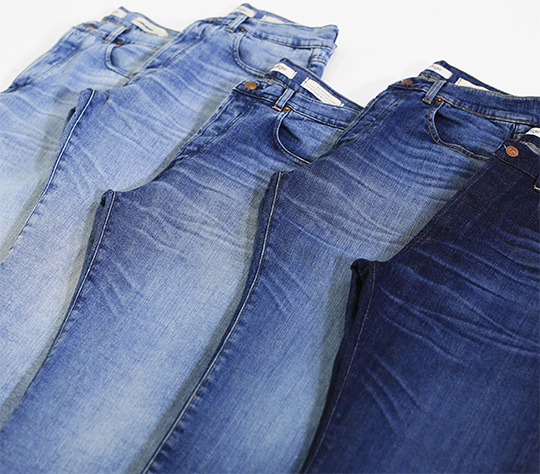
More importantly, our technologies are designed to work as a connected ecosystem. Combined with EIM, our environmental impact measurement methodology, they enable manufacturers not only to reduce water, energy and chemical consumption, but also to measure, optimise and continuously improve their processes. That is how we see the future of textile processing: cleaner, digital, measurable and economically viable.
The textile industry is under strong pressure to reduce water, energy and chemical consumption. How do Jeanologia’s laser, ozone and e-Flow technologies help mills move towards cleaner production?
Brands today face a dual challenge: producing more sustainably while continuing to create authentic, desirable products. At Jeanologia, we believe sustainability only succeeds when it enhances the product, not when it compromises it. After all, we are in the fashion industry, and the garment must always come first.
We work closely with brands and their suppliers, acting as a bridge to help them replace traditional resource-intensive processes with cleaner, more efficient technologies.
Laser replaces manual abrasion techniques such as hand sanding and potassium permanganate spraying, creating authentic, natural-looking vintage effects with complete precision and consistency.
G2 Ozone replaces conventional bleaching and stone washing, shifting the industry from water wash to air wash. It naturally ages the garment, delivering rich, authentic character while dramatically reducing water, chemicals and processing time.
e-Flow uses nanobubbles as a new carrier for chemistry, applying products with exceptional precision while minimising water and chemical consumption. H2Zero completes the cycle by recycling and reusing up to 95 per cent of the remaining process water.
Together, these technologies enable brands and their suppliers to create garments that are more authentic, more sustainable and more profitable. Because today, the way a garment is produced is part of its DNA. Consumers no longer judge a product only by how it looks, but also by how it was made.
Your e-Flow technology uses nanobubbles to carry chemicals with minimal water and zero discharge. How is this changing the way finishing chemicals are applied to garments?
Traditionally, water has been the carrier used to transport finishing chemicals into garments. With e-Flow, we completely redefine this concept. Instead of relying on large volumes of water, nanobubbles become the new carrier, delivering the required chemistry precisely and uniformly across the garment.
This fundamentally changes the way finishing chemicals are applied. By delivering only the amount of chemistry that is actually needed, e-Flow significantly reduces water and chemical consumption while eliminating wastewater discharge during the application process. Depending on the application, the savings can be substantial. For example, in softening processes, e-Flow can reduce both water and chemical consumption by up to 80 per cent, while achieving excellent softness and uniformity.
Beyond its environmental benefits, e-Flow also improves process control, repeatability and product consistency. It enables manufacturers to apply softeners, resins, colour enhancers and other finishing treatments more efficiently, achieving authentic, high-quality results with fewer resources.
e-Flow is another step towards our Mission Zero vision: dehydrating and detoxifying the textile industry by minimising the use of water and chemicals while maximising efficiency, quality and process control.
Jeanologia’s ColorBox garment dyeing system focuses on low-impact dyeing and colour reproducibility. How does this help manufacturers improve consistency, flexibility and right-first-time production?
Garment dyeing is facing multiple challenges today. Manufacturers must reduce water, energy, salts and chemical consumption while responding to shorter lead times, smaller production runs and increasing demands for colour consistency and reproducibility.
At Jeanologia, we believe innovation alone is not enough. We don’t simply supply machines; we help manufacturers implement new production processes. By combining technology, digital solutions, technical support and process expertise, we help our customers achieve better product quality with lower production and environmental costs.
ColorBox has been developed around the concept of Right First Time. Its complete product range, from laboratory equipment to industrial production, ensures true Lab-to-Bulk and Bulk-to-Bulk reproducibility. Colours approved during development can be accurately reproduced in production, reducing colour variations, reprocessing and lead times.
In addition, the complete ColorBox family gives manufacturers the flexibility to work with everything from laboratory samples and small collections to full-scale production using the same process philosophy. The result is a faster, more flexible and more sustainable dyeing operation with higher productivity, lower resource consumption and consistent product quality.
Denim and garment finishing have traditionally depended on water-intensive washing, chemicals and manual processes. How is Jeanologia helping brands and manufacturers replace these with safer, automated and more sustainable alternatives?
At Jeanologia, we believe the future of garment finishing is not about replacing individual processes, but about transforming the entire product development and manufacturing workflow.
The transformation starts during product development. Fabric, colour and finishing should be conceived as a single product, not as independent stages. The product should be designed digitally before it is produced physically.
To make this possible, Jeanologia has developed eDesigner, our Digital Product Development platform, where brands and their suppliers can create, visualise and validate finishes digitally, reducing physical samples, shortening development times and improving collaboration across the supply chain. Together with Billy, our AI developed specifically for garment finishing, designers can transform creative ideas into production-ready laser designs in minutes, connecting inspiration directly with manufacturing.
Production is then executed through our connected ecosystem of technologies, including Laser, G2 Ozone, e-Flow and H2Zero, replacing traditional manual, water-intensive and chemical-based processes with safer, automated and more sustainable alternatives.
Finally, EIM (Environmental Impact Measurement) enables brands and manufacturers to measure the environmental impact of every process using real production data, supporting continuous improvement and more informed decision-making.
Jeanologia doesn’t simply supply technologies. We help brands and their manufacturing partners implement a new operational model where digital product development, intelligent manufacturing and environmental measurement work together. Our goal is to help the industry create authentic, beautiful products while aligning creativity, productivity and sustainability.
How does your EIM software help textile manufacturers measure and improve the environmental impact of their finishing processes in terms of water, energy, chemicals and worker safety?
You can’t improve what you don’t measure. At Jeanologia, we believe environmental impact should be managed with the same precision as quality, cost or productivity. That’s why we developed EIM (Environmental Impact Measurement), a standardised methodology that helps brands and manufacturers measure, compare, communicate and continuously improve the environmental performance of their garment finishing processes.
Based on primary, traceable and verifiable production data, EIM evaluates four key impact areas: water consumption, energy use, chemical impact and worker safety. It transforms complex production information into clear, comparable indicators and classifies both processes and garments as Low, Medium or High Impact, making environmental performance easy to understand and manage.
More importantly, EIM provides a common language across the supply chain. Brands and their manufacturing partners work with the same methodology, benchmarks and performance indicators, enabling them to identify improvement opportunities, compare results and make decisions based on real production data rather than assumptions.
EIM is much more than a software platform; it is the foundation for continuous improvement. By turning production data into actionable insights, it helps the industry reduce environmental impact, optimize processes and demonstrate measurable progress towards more responsible and transparent manufacturing.
As markets like India expand in denim, apparel, exports and value-added textiles, what role can Jeanologia play in helping processors adopt sustainable, digital and scalable finishing technologies?
India is one of the most dynamic and strategic textile markets in the world. As the industry continues to grow, the opportunity is no longer just to increase production capacity, but to lead through innovation, sustainability and digital transformation.
Jeanologia has been working alongside Indian brands and manufacturers for more than two decades, helping them adopt new technologies and production models that improve both environmental and operational performance. We don’t simply provide equipment; we support implementation, training and process optimisation, helping customers accelerate the transition towards more efficient, sustainable and competitive manufacturing.
Our strength lies in offering an integrated ecosystem that connects Digital Product Development, sustainable production technologies and environmental impact measurement. This enables brands and their manufacturing partners to reduce time to market, improve product quality, optimise resources and make decisions based on real production data.
India has all the ingredients to become a global benchmark for sustainable textile manufacturing: strong industrial capabilities, technical expertise and an increasingly innovation-driven mindset. At Jeanologia, we want to be a long-term technology partner in that journey, helping the industry align creativity, productivity and sustainability while creating better products with lower environmental impact.
Link to download a selection of images, here.