


Customers are particularly demanding if the textile has direct contact with skin. Since 1992, OEKO-TEX® has offered textile testing for harmful substances using independent laboratory tests. Yet customer consciousness towards textiles is constantly expanding and nowadays other questions are increasingly influencing purchasing decisions: Was this bedding produced under socially responsible and safe conditions? Were these towels produced by an environmentally friendly company?
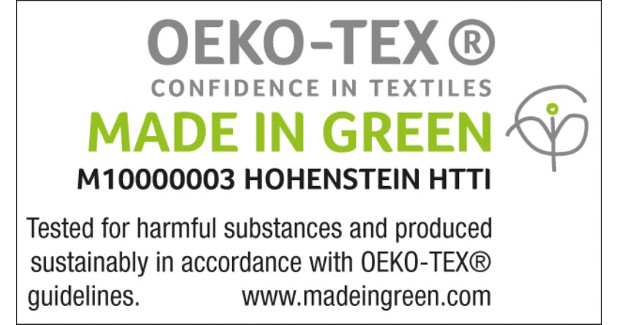
The MADE IN GREEN label answers all the customer’s queries with a clear and simple “yesâ€Â. It is only issued for textile products that have been tested for harmful substances according to STANDARD 100 by OEKO-TEX® and that also originate from sustainable production facilities following the requirements of the STeP by OEKO-TEX® certification (STeP stands for “Sustainable Textile Productionâ€Â). “If customers consider the MADE IN GREEN LABEL, they have the opportunity to make a sustainable purchase decision for themselves, fellow human beings and the environment†explains Georg Dieners, General Secretary of the OEKO-TEX® Association.
Although the label was only introduced in 2015, numerous home textiles are now labelled with MADE IN GREEN, the clear commitment to improving product safety and ecological and social production conditions. This includes mattress toppers and incontinence support, hand towels, bedding and pillows from the companies Amidex, Dibella, Loftex, Setex, and Adam Matheis GmbH und Co. KG with their brand Schlafgut (Sleep Well), just to name a few.
The MADE IN GREEN label offers consumers a level of transparency that was previously unattainable. Each label has a unique product ID or QR code. With this, customers can trace the production of the respective product directly in the shop via their smartphone. A brief scan of the QR code provides answers, among others, to questions such as: In which production facility along the textile chain was this textile produced? In which countries did production take place? This creates trust and offers customers an additional opportunity to inform themselves directly about products and compare them to one another when buying textiles. The MADE IN GREEN label, introduced in spring 2015, is therefore a compelling sales argument, particularly for brands and retailers with an affiliated supply chain that market to health conscious and responsibly minded customers.
To simplify the selection of MADE IN GREEN labelled products for retailers and companies, OEKO-TEX® provides the OEKO-TEX® Buying Guide free of charge at www.oeko-tex.com/products.