Close Menu
Indian Textile Journal
  • Home
  • Textile Machinery
    • Allied Equipment and Accessories
    • Automation
    • Dyeing, Processing & Finishing
    • Knitting
    • Printing
    • Spinning
    • Weaving
  • Tech Textiles
  • Sustainability
  • Resources
    • Trade Fair
    • Events
    • Videos
  • Interview & Opinion
  • Subscribe Now
  • Advertise
  • Digital
  • Apparels & Garments
  • Fibres & Raw Materials
  • Home Textiles
  • Industry Update
Facebook X (Twitter) YouTube LinkedIn
Indian Textile Journal
Epson
  • Home
  • Textile Machinery
    • Allied Equipment and Accessories
    • Automation
    • Dyeing, Processing & Finishing
    • Knitting
    • Printing
    • Spinning
    • Weaving
  • Tech Textiles
  • Sustainability
  • Resources
    • Trade Fair
    • Events
    • Videos
  • Interview & Opinion
  • Subscribe Now
  • Advertise
  • Digital
  • Apparels & Garments
  • Fibres & Raw Materials
  • Home Textiles
  • Industry Update
Indian Textile Journal
Home » Labour caveat for textile sector
Industry Update

Labour caveat for textile sector

By August 19, 20162 Mins Read
Share Facebook Twitter LinkedIn WhatsApp Copy Link
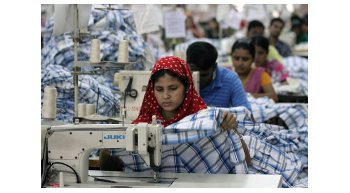
Paving way for the introduction of fixed-term employment in the textile and apparels sector, the Labour Ministry has notified changes in the rules of the Industrial Dispute Act, 1947. On August 4, 2016 the Ministry notified the changes in rules under which a fixed term workman will be considered at par with permanent workman in terms of working hours, wages, allowances and other statutory dues. These rules will be effective from the date of notification.
‘He shall also be eligible for all statutory benefits available to a permanent workman proportionately according to the period of service rendered by him even though his period of employment does not extend to the qualifying period of employment required in the statute,’ the notification reads. However, badli or fixed term employment workman in apparel manufacturing sector shall not be entitled to any notice or pay in lieu thereof, if his services are terminated.
One may remember that on June 22 last, the Union cabinet had approved special package for employment generation and promotion of exports in textile and apparel sector that included reforms in the Employee Provident Fund Scheme, increase in overtime cap, introducing fixed-term employment, additional incentives for the garment sector besides enhancing the duty drawback coverage.
Previous ArticleIndia seeks new export markets for wool
Next Article Jakob Müller acquires Benninger AG

Related Posts

Textile Champions Amid Tariff Challenge

September 25, 2026

Pearl Global industries scales up Bangladesh operations with new manufacturing and laundry plant

September 24, 2026

TMMA(I) calls for technology-led competitiveness in textile machinery

September 21, 2026
Recent Posts
  • Sivaramakrishnan Ganapathi: Sustainability and environmental stewardship are embedded within us
  • Heberlein to showcase Air-Saving APh and APe series at ITMA Asia + CITME 2026
  • How fabrics and furnishings are shaping festive interiors
  • Role of finite element methods in textile reinforced composites
  • Harshil Nuwal: We want to become a one-stop solution for brands
  • India’s next infrastructure advantage will be built into the materials we choose
  • Rajeev Gupta: Diversification of global supply chains present great opportunity for India
  • Amoli Shah: We have steadily increased our market share in India and overseas
Facebook X (Twitter) YouTube LinkedIn
  • About us
  • Contact us
  • Privacy Policy
  • Terms and Conditions

SISTER PUBLICATIONS

Construction World Equipment India Industrial Product Finder Infrastructure Today

© 2026 Indian Textile Journal. All Rights Reserved.

Type above and press Enter to search. Press Esc to cancel.