Close Menu
Indian Textile Journal
  • Home
  • Market and Economy
    • Apparels & Garments
    • Fibres & Raw Materials
    • Home Textiles
    • Industry Update
  • Textile Machinery
    • Allied Equipment and Accessories
    • Automation
    • Dyeing, Processing & Finishing
    • Knitting
    • Printing
    • Spinning
    • Weaving
  • Tech Textiles
  • Sustainability
  • Resources
    • Trade Fair
    • Events
    • Videos
  • Interview & Opinion
  • Subscribe Now
  • Advertise
  • Digital
Facebook X (Twitter) YouTube LinkedIn
Indian Textile Journal
Epson
  • Home
  • Market and Economy
    • Apparels & Garments
    • Fibres & Raw Materials
    • Home Textiles
    • Industry Update
  • Textile Machinery
    • Allied Equipment and Accessories
    • Automation
    • Dyeing, Processing & Finishing
    • Knitting
    • Printing
    • Spinning
    • Weaving
  • Tech Textiles
  • Sustainability
  • Resources
    • Trade Fair
    • Events
    • Videos
  • Interview & Opinion
  • Subscribe Now
  • Advertise
  • Digital
Indian Textile Journal
Home » ITA showcases cost-efficient hydrogen tanks at JEC
Fibres & Raw Materials

ITA showcases cost-efficient hydrogen tanks at JEC

Divya SBy Divya SMarch 4, 20261 Min Read
Share Facebook Twitter LinkedIn WhatsApp Copy Link

Sustainable multifilament winding cuts carbon fibre use.

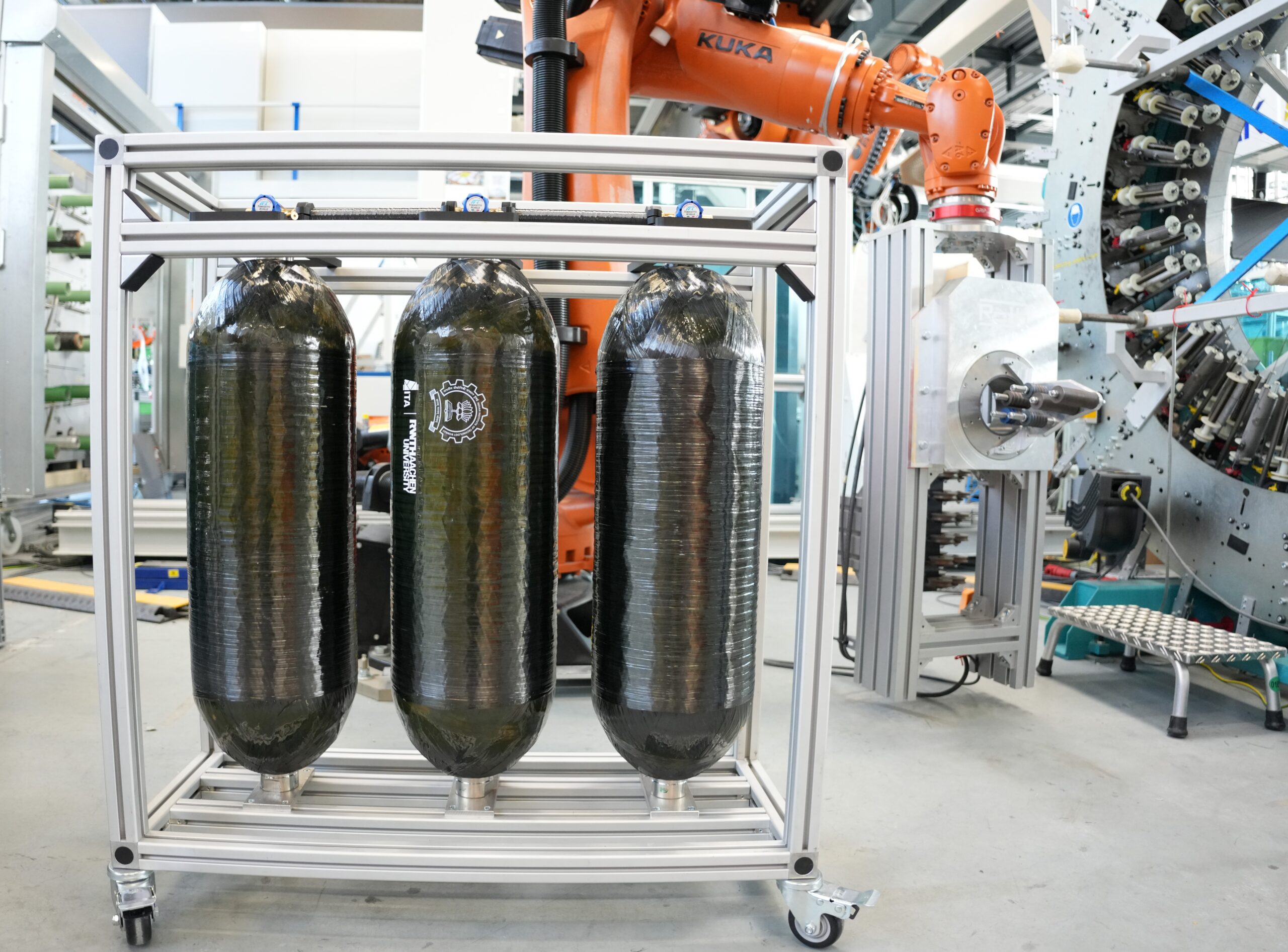
At the prestigious JEC World, the Institut für Textiltechnik (ITA) of RWTH Aachen University unveiled advanced hydrogen pressure tanks produced using multifilament winding technology. The innovation was presented at the NRW joint booth in Hall 5, Stand G65, drawing attention for its cost and sustainability advantages.

The tanks are manufactured using TowPreg-based winding, a process that enables highly targeted fibre placement and minimises quality variations. Initial estimates suggest the method reduces carbon fibre consumption by at least 10 per cent compared to conventional wet winding. Given that carbon fibres are among the most expensive components in pressure vessel production, this reduction significantly enhances cost efficiency.

Beyond material savings, the process lowers cleaning costs, generates less waste and operates with minimal solvent vapours, making it more environmentally friendly.

Designed for lightweight and secure high-pressure storage, the hydrogen tanks are suitable for applications across buses, lorries, ships and portable gas transport systems, supporting the transition to cleaner mobility solutions.

Previous ArticleMadame unveils AW’26 line at Gurugram preview
Next Article India apparel retail sees shift in growth playbook

Related Posts

NITMA welcomes cotton import duty waiver

June 2, 2026

Cotton imports exempted from customs duty

June 2, 2026

CAI estimates cotton crop at 334 lakh bales

May 28, 2026
Recent Posts
  • World Environment Day 2026 – 5 wardrobe choices combining style and sustainability
  • MiRooh unveils cosmic candy bedroom collection
  • CMAI hosts AI Masterclass to guide clothing businesses into the digital era
  • PDS earns Great Place to Work recognition in 10 countries
  • NITMA welcomes cotton import duty waiver
  • Cotton imports exempted from customs duty
  • Trident Group and ICAR-NINFET explore tie-up for natural fibre home textiles
  • Bharat Tex 2026 mobile app launched
Facebook X (Twitter) YouTube LinkedIn
  • About us
  • Contact us
  • Privacy Policy
  • Terms and Conditions

SISTER PUBLICATIONS

Construction World Equipment India Industrial Product Finder Infrastructure Today

© 2026 Indian Textile Journal. All Rights Reserved.

Type above and press Enter to search. Press Esc to cancel.