Close Menu
Indian Textile Journal
  • Home
  • Textile Machinery
    • Allied Equipment and Accessories
    • Automation
    • Dyeing, Processing & Finishing
    • Knitting
    • Printing
    • Spinning
    • Weaving
  • Tech Textiles
  • Sustainability
  • Resources
    • Trade Fair
    • Events
    • Videos
  • Interview & Opinion
  • Subscribe Now
  • Advertise
  • Digital
  • Apparels & Garments
  • Fibres & Raw Materials
  • Home Textiles
  • Industry Update
Facebook X (Twitter) YouTube LinkedIn
Indian Textile Journal
Epson
  • Home
  • Textile Machinery
    • Allied Equipment and Accessories
    • Automation
    • Dyeing, Processing & Finishing
    • Knitting
    • Printing
    • Spinning
    • Weaving
  • Tech Textiles
  • Sustainability
  • Resources
    • Trade Fair
    • Events
    • Videos
  • Interview & Opinion
  • Subscribe Now
  • Advertise
  • Digital
  • Apparels & Garments
  • Fibres & Raw Materials
  • Home Textiles
  • Industry Update
Indian Textile Journal
Home » India’s first Bt cotton developed
Industry Update

India’s first Bt cotton developed

By March 17, 20172 Mins Read
Share Facebook Twitter LinkedIn WhatsApp Copy Link
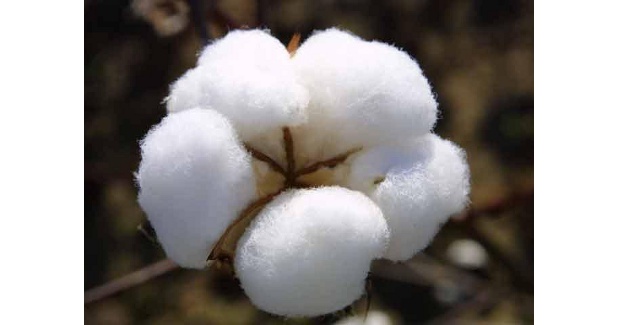
Punjab Agricultural University in Ludhiana has announced that it has developed country’s first genetically-modified (Bt) varieties of cotton — the seeds of which could be reused by farmers, resulting in saving the repeated cost they have to bear every season.  Indian Council of Agricultural Research (ICAR) has identified three Bt cotton varieties — namely PAU Bt 1, F1861 and RS 2013 — for cultivation in states of Punjab, Haryana and Rajasthan. The notification of release regarding these varieties could be out by as early as next month after ICAR’s scheduled meeting. Meanwhile, the process for multiplying the seeds would be started, it is learnt.
PAU Bt 1 and F 1861 were developed by PAU, whereas, RS 2013 was developed at Rajasthan Agricultural University (RAU), Bikaner. While the PAU Bt 1 was completely developed at Punjab Agricultural University, the F 1861 and RS 2013 varieties were converted to Bt version by Central Institute for Cotton Research (CICR), Nagpur. All the three varieties carry ”cry1Ac” gene imparting resistance against bollworm complex. 
With the cultivation of these varieties, it is learnt the cotton farmers will not have to purchase the costly Bt cotton hybrid seed every year. The farmers can keep their own harvest for next sowing season. Bt cotton hybrids became popular due to ‘Bt technology’ which imparts resistance to bollworms, which are a major cause of yield loss in cotton. With the adoption of these new Bt varieties by the farmers, a major shift is likely to take place in cotton cultivation in northern States. 
Cotton is the only genetically-modified seed that is legally allowed in India. Punjab alone needs around 20-25 lakh packets of Bt cotton seed for sowing of crop which roughly amounts to around Rs 225 crore. The price of seed of these Bt cotton varieties shall much lower as compared to current market price of Bt cotton hybrids seed, and thus, there is a scope to reduce the cost of cultivation and increase the savings of the farmers, according to PAU sources.
Previous ArticleFinancial aid for handloom weavers
Next Article Surge in surgical apparel market

Related Posts

Mona Neubaur visits Textilfabrik 7.0 to experience smart and clean textile innovations

September 3, 2026

India and EU textile industries explore future partnerships

September 3, 2026

Beyond the Curve redefines inclusive style for modern curvy consumers

September 1, 2026
Recent Posts
  • CAI and NCDEX join hands to build an Atmanirbhar cotton futures market
  • Mona Neubaur visits Textilfabrik 7.0 to experience smart and clean textile innovations
  • Karl Mayer unveils innovations for warp knit, warp prep, and technical textiles at ITMA Asia and Changzhou
  • India and EU textile industries explore future partnerships
  • From products to solutions: Key takeaways from the TAI seminar on technical textiles
  • Vero Moda brings a century of Marilyn Monroe to India in a special capsule collection via Myntra
  • Beyond the Curve redefines inclusive style for modern curvy consumers
  • Vipul Organics’ ADIMEM Technologies acquires advanced membrane manufacturing platform from Aquaporin, Denmark
Facebook X (Twitter) YouTube LinkedIn
  • About us
  • Contact us
  • Privacy Policy
  • Terms and Conditions

SISTER PUBLICATIONS

Construction World Equipment India Industrial Product Finder Infrastructure Today

© 2026 Indian Textile Journal. All Rights Reserved.

Type above and press Enter to search. Press Esc to cancel.