


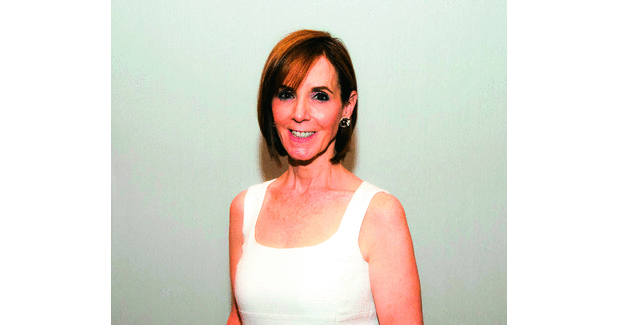
Maura J Regan, President of LIMA, speaks on where does textile figure in global licensing in terms of share.
In global licensing, what is the major role of LIMA, and what is modus operandi in doing licensing business?
LIMA is a mission-based non-profit organisation committed to helping empower our members to drive commerce while moving the industry forward. We provide community, leadership, best practices, education and training to elevate and professionalise the industry worldwide.
Where does textile industry figure in global licensing in terms of share, importance and turnover?
The apparel category represents the leading revenue share of the global licensing industry in retail sales. In 2017, it was 15 per cent of global retail sales of all licensed merchandise. Fashion accessories is third behind toys coming in at 11 per cent. These statistics illustrate the clear importance of the textile industry to the global licensed merchandise marketplace.
Where does India stand in global textile lensing? Which are the other major areas of licensing for India?
India is at an exciting juncture given the shift in the retail landscape over the past year and a half. In terms of licensed textiles and/or apparel, we see this growing rapidly due to local demand and the new shape of retail. That said, India still remains an important market for manufacturing which strengthens the domestic opportunities, driven largely by speed to market, i.e., access and pricing.
Which are the countries involved in textile/garment lensing with India? Can you give briefly a successful licensing deal with India in textile licensing? The licensing would be between individual companies rather than countries.
Over the last 30 years, the licensing business has evolved and grown by leaps and bounds to transcend geographical boundaries aided by the giant leaps in media and technology. So while the parent company may be located in its home country, its licensing partners are spread across the globe.
According to the LIMA report 2017, India is among the top 25 countries globally and apparel (fashion accessories) licensing is third in terms of revenue at $44 million. A great example of an Indian apparel/textile company is BioWorld, which represents some of the biggest brands in the world like Lucas Film, Warner Bros. DC, Marvel, Nickelodeon and the like. The Indian appetite for branded wear is growing YOY, although India is still to over come certain infrastructural and policy related issues. The licensing community and LIMA are happy to help in whatever way we can.
What are the key benefits of licensing? Do the benefits percolate to the lowest strata, that is consumers?
The key benefits of licensing should be looked at from three perspectives:
Benefit to the IP or brand owner: opportunity to extend the reach of their brand into new product categories with minimal investment, protect their trademark and guard against piracy and infringements. Also creates new and measurable marketing opportunities. Benefit to the licensee or manufacturer: Opportunity to gain market share with minimal investment on their part to develop and market a brand that has already been established. Benefit to the consumer: provides engagement around a brand they already like, allows them to readily make purchase choices in a retail marketplace that has at times overwhelming choices.
Licensing can be misused by way of fake licenses. Yes or no. If yes, what is the level of misuse globally and which countries are the major flouters?
Licensing is an important tool to combat piracy on a global basis. The level of piracy shifts from country to country and by category. As such it is a global concern.
Is LIMA involved in checking such misuse, and how does it go about such abuse?
LIMA is not involved with enforcing. We convene organizations that are on the front line and can help establish best practices.