



A customer ordering a pair of trousers online may see a simple checkout page, but fulfilling that order can involve several decisions behind the scenes. Where is the product stored? Is the correct size available? Should the order be fulfilled from a warehouse, store or another location? Which courier should handle it? Can it be delivered within the promised timeframe? For fashion and textile businesses selling through websites, marketplaces and physical stores, answering these questions efficiently has become central to their logistics operations.
This complexity is reflected in the growth of India’s e-commerce logistics market. According to Mordor Intelligence, the market was valued at $6.65 billion in 2025 and is projected to reach $11.14 billion by 2031, growing at a CAGR of 8.98 per cent. Fashion and lifestyle accounted for 25.58 per cent of the market in 2025, making it the largest product category. As online commerce expands, fulfilment is moving beyond basic warehousing and dispatch towards connected systems that bring inventory, orders, warehouses, marketplaces and delivery networks together.
Inventory visibility is becoming critical
For fashion and textiles, inventory visibility is particularly important because a product is rarely a single SKU. The same design may be available across multiple sizes, colours and locations, while demand can vary by geography and season. A lack of accurate inventory visibility can result in stock-outs, delayed fulfilment or orders being allocated from locations that are too far from the customer.
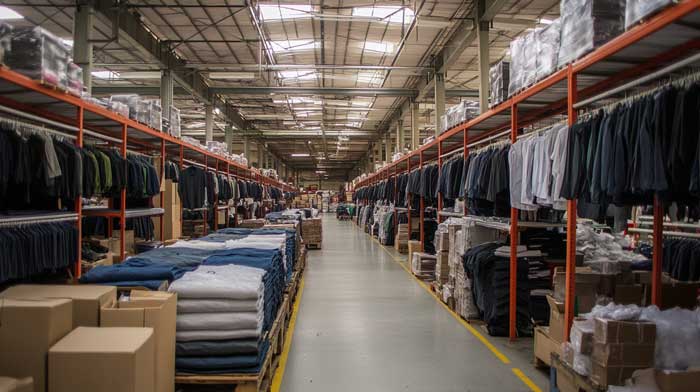
Technology-enabled fulfilment can provide a more connected view of inventory across warehouses and sales channels. Distributed fulfilment networks can replicate inventory across multiple locations and support order allocation based on stock availability and customer location. This can help brands offer same-day, next-day or day-definite delivery options where the network supports them. The objective is not simply to hold more stock, but to make existing inventory more accessible and usable across channels.
Speed needs infrastructure behind it
Faster delivery expectations have also changed what brands need from their fulfilment infrastructure. A website may promise next-day delivery, but meeting that promise depends on what happens after checkout. Inventory needs to be available, orders need to be processed quickly, products need to be packed correctly, and shipments need to be handed over to the right delivery partner within the required window.
Modern fulfilment centres are therefore designed around throughput as well as storage. Available fulfilment solutions can process more than 10,000 orders a day per centre and are designed to accommodate significantly higher volumes during promotional periods. Some operations can handle up to five times their regular volume during special events. For fashion and lifestyle brands, this ability to absorb peaks can be particularly valuable during festive sales, end-of-season promotions and major online shopping events.
Textile logistics needs greater flexibility
The textile and apparel industry brings its own logistical complexity. According to the Ministry of Textiles, India was the sixth-largest exporter of textiles and apparel globally in 2023. Textiles and apparel accounted for 8.21 per cent of India’s total exports in 2023–24, while the sector provided direct employment to around 45 million people. The scale of the sector means that logistics has to support everything from large B2B movements to individual e-commerce orders.
For online fashion in particular, fulfilment also involves activities beyond standard picking and packing. Value-added services can include quality checks for apparel, footwear and accessories, kitting and bundling, customised packaging, MRP labelling and non-technical refurbishment. These services can be carried out within the fulfilment environment, helping brands prepare products for different sales channels without creating separate operational processes.
Where 3PL fits into the changing model
Third-party logistics providers are becoming an important part of this transition because they can combine physical infrastructure with technology-enabled fulfilment. Instead of investing independently in warehouses, order-processing systems, shipping integrations and returns infrastructure, brands can use an external logistics network that already provides these capabilities. This can be particularly relevant for growing e-commerce businesses that need to expand their fulfilment footprint without committing significant capital to building multiple facilities.
The role of 3PL, however, is evolving beyond transportation and storage. Modern providers can support D2C and B2B fulfilment, deliveries to retailers, wholesalers, dark stores, marketplaces and modern trade, along with packaging, shipping and returns. They can also provide branded tracking pages and post-shipment communication through SMS, E-mail and WhatsApp. In this model, the 3PL becomes a technology-enabled extension of the brand’s supply chain rather than simply an outsourced warehouse.
Returns are part of the technology equation
The fulfilment process does not end with delivery, particularly in fashion. Size and fit issues, changing customer preferences and other factors can result in returns. This creates a reverse flow of products that needs to be managed alongside outbound shipments. If returns are processed slowly, inventory can remain unavailable for sale even when demand exists for the product.
Technology-enabled fulfilment can connect returns and Return to Origin (RTO) processing with warehouse and inventory systems. Current fulfilment offerings include return and RTO management, allowing returned products to move back through the fulfilment process and, where appropriate, re-enter available inventory. Building reverse logistics into the wider fulfilment model can therefore help brands manage the complete order lifecycle rather than viewing delivery as the endpoint.
Building the next generation of fulfilment
The future of e-commerce logistics will be shaped by how effectively physical infrastructure and digital systems work together. Inventory visibility, marketplace integrations, automated order processing, warehousing, shipping management, customer tracking and reverse logistics are increasingly being integrated into a connected fulfilment ecosystem. This is particularly important as brands expand across D2C websites, marketplaces, retail stores and B2B channels, creating more complex fulfilment requirements. As e-commerce and textile businesses scale, fulfilment will play a greater role in shaping the customer experience. Businesses that combine accurate inventory, agile infrastructure, connected technology and flexible logistics partnerships will be better positioned to respond to changing delivery expectations, manage growing order volumes and maintain operational efficiency.
About the author:
Ajay Rao is the Founder of Emiza. He has over 20 years of experience in supply chain transformation and leads Emiza — a tech-driven 3PL serving 150+ D2C and enterprise brands through 27 fulfilment centres across 14 cities. His work spans warehousing optimisation, last-mile efficiency, NDR/RTO reduction and integrated B2B–B2C fulfilment models, giving him a strong ground-level view of how 2025 reshaped India’s logistics ecosystem.