


The R 37’s highly efficient drive system contributes to a remarkable 25 per cent reduction in energy consumption compared to the competitor solution.
Usha Yarns, a leader in the production of recycled yarn in India, is strengthening its commitment to sustainability with the Rieter semi-automated rotor spinning machine R 37. The remarkable benefits of the company’s current R 37 machines convinced Usha yarns to place a repeat order for six additional machines. As a frontrunner in recycled yarn production, Usha Yarns is the first spinner globally to receive the Com4recycling-rotor license.
Usha Yarns decided to install the semi-automated rotor spinning machine R 37 in its spinning mill. Extensive trials at the Rieter spinning center validated the machine’s efficiency and enabled the optimum selection of technological components tailored for recycling applications, such as an optimised rotor design and fibre channel. The R 37 – the perfect fit for processing raw material with a high short-fibre content – proved to be a game-changer.
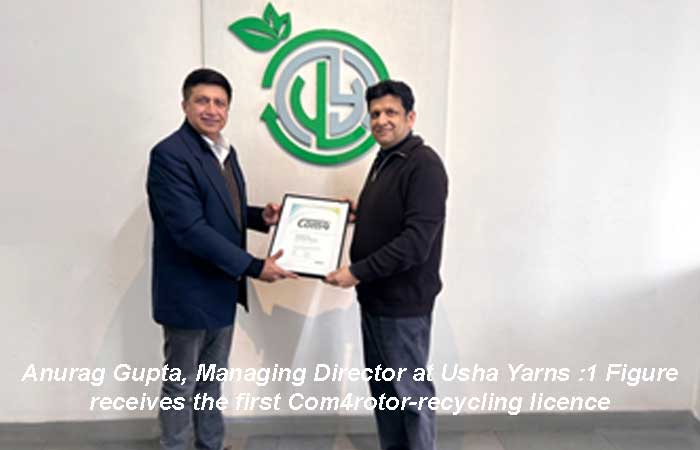
Usha Yarns needed some tailored changes to further sharpen its recycling process. Anurag Gupta, Managing Director at Usha Yarns, states, “We opted for the Rieter rotor spinning machine R 37 including a selection of technological components tailored to our needs.†Rieter approached the necessary adjustments with untiring efforts. The result is “a machine that proved to be robust, energy-efficient, and capable of delivering both high-quality output and increased productivity,†says Gupta. Usha Yarns is the first spinning mill globally to receive the Com4recycling- rotor license from Rieter. Gupta is very proud of this distinction: “This underlines our commitment to sustainable and high-performance recycled yarn production.†(Figure 1)
Higher productivity and consistent quality
The exceptional spinning stability of the R 37 led to a 10 per cent increase in production volume compared to the competitor solution at Usha Yarns, which was achieved through high-speed operation. The optimised fibre flow ensures outstanding spinning stability even at elevated production speeds.
The redesigned spinning box with its exchangeable trash channels gives Usha Yarns the option of improved trash extraction and offers flexibility in the choice of raw material. The ideal handling of fibers results in consistent CV per cent and imperfection values, and reduces ends-down rates, particularly when processing recycled material blends. The integration of the AMIspin-Pro piecing technology raised the bar for piecing quality and its success rates.
Reduced energy consumption and high flexibility
The R 37’s highly efficient drive system contributes to a remarkable 25 per cent reduction in energy consumption compared to the competitor solution. The unique Quality Spinning-In process optimises the machine startup, ensuring a rapid startup with minimal operating time and minimised energy consumption.
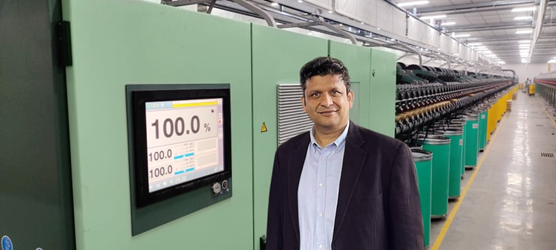
Figure 2: At Usha Yarns, the R 37 delivers high-quality output and increased productivity.
Beyond productivity and quality enhancements, the R 37 introduces a new level of flexibility with fully independent machine sides. This enables the simultaneous spinning of two lots. Two separate package conveyor belts enhance operational efficiency and guarantee maximum protection against package mix-up.
Join the Com4 family
Customers who produce yarn on Rieter end spinning machines can obtain a Com4 license. Com4 is a worldwide registered trademark. The advantages of Com4 yarns become evident during the yarn manufacturing process, in further processing and in the end product, e.g. through high processing speeds and less fiber fly as well as through excellent pilling values and high wearing comfort. Rieter machines also consume little energy per kilogram of yarn, which gives customers a competitive advantage. Licensees benefit from the latest technological insights on the Com4 yarns of the four spinning systems ‒ from the yarn properties, advantages in downstream processing through to the end product. Com4 licenses are also available for recycled yarns in conjunction with a Global Recycling Standard (GRS) certification. This allows customers – like Usha Yarns – to stay at the forefront of the recycling market.
About Rieter
Rieter is the world’s leading supplier of systems for manufacturing yarn from staple fibers in spinning mills. Based in Winterthur (Switzerland), the company develops and manufactures machinery, systems and components used to convert natural and
man-made fibres and their blends into yarns in the most cost-efficient manner. Cutting-edge spinning technology from Rieter contributes to sustainability in the textile value chain by minimizing the use of resources. Rieter has been in business for more than 225 years, has 18 production locations in ten countries and employs a global workforce of around 5100, about 16 per cent of whom are based in Switzerland.