


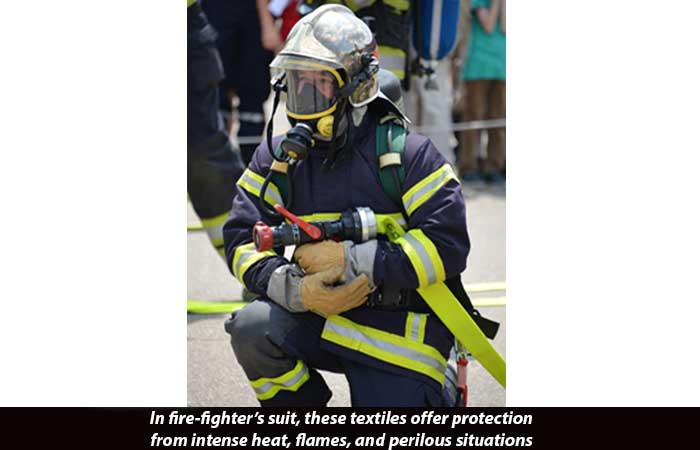
Protective textiles must meet stringent regulatory requirements and standards (ISO and Indian standards) to ensure they provide the intended level of protection, opines, Dr Nandan Kumar.
Protective textiles, often referred to as ‘Protech,’ are a specialised category of technical textiles designed to safeguard against a wide range of hazards including thermal, mechanical, electrostatic, and even threats such as physical, chemical, biological, radiological, and environmental dangers. These textiles are indispensable in firefighting and emergency services, offering protection from intense heat, flames, and perilous situations. In military and law enforcement contexts, they are crucial for ballistic and chemical protection, alongside shielding against various environmental hazards. For individuals in industrial and chemical processing fields, protective textiles are a barrier against mechanical risks (such as abrasion, cut, slash, tear, puncture, impact, high pressure water jets to name a few), toxic substances, and extreme temperatures (hot and cold protection). Moreover, in sports and recreational activities, they offer protection to athletes and enthusiasts from injuries (e.g. cut-resistant socks for ice hockey, abrasion resistant denim for high speed bikers) and harsh environmental conditions, highlighting their broad applicability across diverse domains.
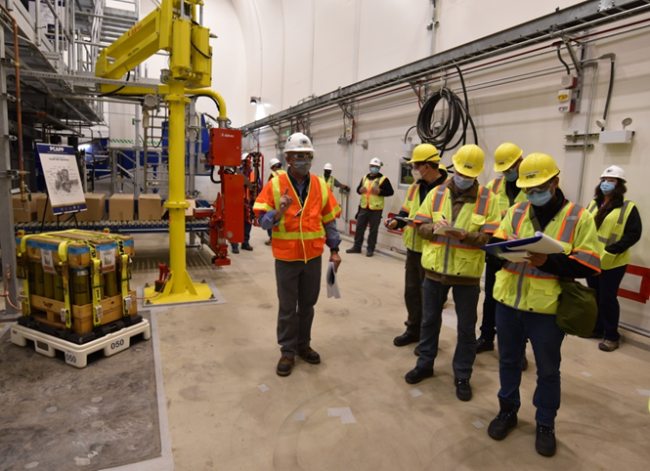
For people working in industrial and chemical processing units, protective textiles acts as a barrier against mechanical risks.
Aligned with the success of the ‘Make in India’ initiative and our ambition to be a leader in manufacturing, we have witnessed a significant increase in demand for protective textiles in the domestic market, which is expected to grow exponentially. Furthermore, there is significant export potential for these textiles or garments (e.g. firefighter’s suit, proximity suit, impact resistant high temperature resistant gloves) manufactured from these textiles for global markets.
The development of protective textiles is a sophisticated process that involves the integration of material science, textile engineering, and safety standards to meet the specific needs of diverse industries. It’s essential for these products to undergo testing that meets or exceeds ISO standards to ensure their effectiveness and safety. This would include understanding advanced high-performance fibres (such as meta-aramid, para-aramid, UHMWPE, PBO, or blends with other fibres like nylon, cotton, and viscose) and the process of converting them into yarn, fabric, and finished products such as gloves, sleeves, and single or multilayered workwear. Almost a decade ago, the demand for protective textiles was primarily based on blend composition, i.e. clients would specify blends such as 93 per cent meta-aramid, 5 per cent para-aramid, and 2 per cent antistatic fibres at a certain GSM and colour. However, the current requirements are based on test standards. For example, a client query might specify that the workwear must pass the HRC level 2 Arc flash test according to ASTMF2675/F2675M-23. This means that a supplier should not only understand the test standard but also have access to a laboratory capable of testing samples once they are ready. Additionally, a supplier should possess expertise in advanced fibres and their blends, as well as in spinning, dyeing (if required), weaving, finishing, and garmenting. These capabilities should be available either in-house or through reliable partners. This situation makes it particularly advantageous for larger composite mills in India. However, it can pose challenges for companies that focus exclusively on yarns, fabrics, or garments at individual stages of production.
In summary, for India to become a leader in protective textiles, a deep knowledge of the materials, technologies, and regulations involved in the production of protective textiles is essential for driving this industry forward. Furthermore, the following points can be considered when formulating policies for the development of protective textiles in India:
- Development of Indian High Performance Fibres: Although advanced fibres such as meta-aramid, PBI, UHMWPE, para-aramid, and pre-oxidised acrylic fibres have already been developed at a laboratory scale in India, it is crucial to devise a strategy for scaling up production to conduct bulk trials. This can only be achieved through collaboration between industry and academic professionals to develop a ‘pilot’ plant for further advancement;
- Development of Library of High Performance Fibres: A library of ‘High Performance Fibres’ should be established, housing fibres from various global brands. This will facilitate researchers across India in conducting trials related to spinning, weaving, dyeing, finishing, and coating to understand high performance fibres in detail. This study will not only help prevent the importation of sub-standard products into India but will also train our laboratories to test and validate blend compositions, especially when high-performance fibres are blended with cotton, nylon, and other fibres. This library would enable smaller companies to obtain fibres in smaller quantities for sample development, thereby addressing the ‘Minimum Order Quantity’ issue, which is a major hurdle in the development of technical textiles in India;
- Innovation and technology: The development of protective textiles involves ‘modified’ traditional and advanced technologies with use of high-performance materials, including coating, lamination, and three-dimensional weaving/knitting. Understanding these technologies is key to pushing the boundaries of what protective textiles can achieve, such as creating lighter, more flexible, and more durable protective textiles;
- Regulatory and standards compliance: Protective textiles must meet stringent regulatory requirements and standards (ISO and Indian standards) to ensure they provide the intended level of protection. Manufacturers and designers must be well-versed in these regulations, which vary by country and application, to ensure their products are compliant as per Indian and international standards;
- Sustainability and recycling: As the industry evolves, there is a growing emphasis on producing protective textiles which are sustainable and can be recycled at the end-of-life cycle. Understanding the lifecycle of these textiles, including raw material sourcing, manufacturing processes, and end-of-life disposal, is crucial to minimising their environmental impact.
About the author:
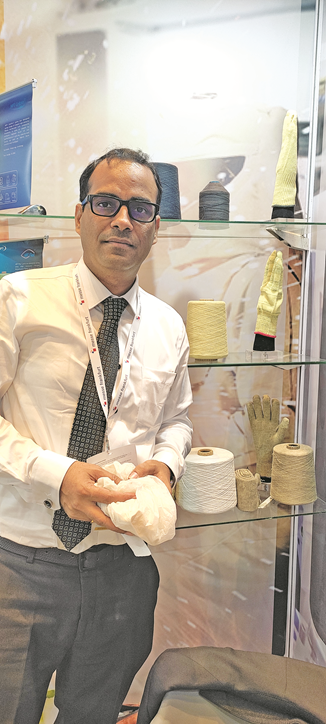
Dr Nandan Kumar, Managing Director, High Performance Textiles (HPT), has over 14 years of experience in the field of technical textiles. He holds a PhD and an MSc in Advanced Textile and Performance Clothing from the University of Leeds, UK, where he gained extensive knowledge and skills in textile engineering, design, and testing. At HPT, he oversees the manufacturing of technical composite yarns that offer protection against thermal and mechanical hazards for various applications, such as gloves, workwear, suits, and insulation.