


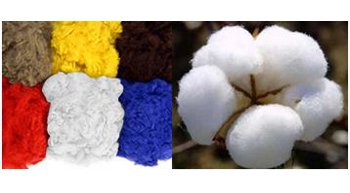
Globally, cotton prices fell towards the end of 2015 but started stabilising as the New Year progressed. But the polyester prices kept on falling following the slump in the petrochemical prices.
According to an ICIS Analysis, petrochemical and polymer prices fell sharply in January in the major producing and consuming regions helping drive the ICIS Petrochemical Index (IPEX) down by 2.0% in the month. Price falls were seen across the board as the oil price fell further and the demand outlook remained clouded by global economic uncertainty. Financial and commodity market nervousness at the start of the year was fully reflected in the petrochemicals and polymers picture.
US polymer, aromatics and even methanol prices were lower in the month. Ethylene, propylene, aromatics and polymer prices were sharply lower in northeast Asia ? although butadiene prices were higher over the course of the month. The Asia markets usually provide a good bellwether for the health of the sector with prices moving rapidly in relation to the global picture as well as to more local supply and demand issues.
The global IPEX has dropped sharply since July 2015 and been on a downward trend since the oil price started to fall in the second half of 2014. Petrochemical and polymer prices rallied from March 2015 but this only persisted until June.
Price falls in January 2016 took the IPEX to a low point not seen since the middle of 2009 when the sector was on a path to price recovery following the 2008 financial crisis. Low petrochemical and polymer prices currently, however, have to be seen against the backdrop of lower oil-related feedstock costs for some suppliers and low natural gas liquids prices in the US.
The US IPEX in January was down 1.6% at 209.1 but is likely to be set lower at a later date as important contract settlements for January are agreed. The northeast Asia IPEX was down 1.9 per cent month to month at 181.1 and at this stage does not include paraxylene or styrene numbers, which have yet to settle. The Europe Index was down 2.8 per cent at 233.1 while the global index value was 199.5.
When cotton prices dropped at the start of 2014/15, the gap between international cotton prices, as represented by the Cotlook A index, and polyester prices in China, which accounts for 72 per cent of world polyester production, narrowed significantly and greatly improved the competitiveness of cotton.
However,this only lasted for a few months as polyester prices continued to drop while cotton prices stabilized. In2015/16, that gap has continued to widen, with polyester prices falling from 52 cts/lb in August 2015 to 43cts/lb in January 2016, averaging 48 cents/lb during the first half of 2015/16. During the same period, theCotlook A Index has averaged 70 cents/lb, ranging from a high of 74 cents/lb to a low of 66 cents/lb. The ongoing drop in polyester prices cuts into cotton?s market share, particularly in China where polyester hasbeen favored over cotton in recent seasons. Cotton consumption in China is forecast down 5% to 7.1 million tons in 2015/16, though it still remains the world?s largest consumer of cotton. World cotton consumption in2015/16 is projected down 1 per cent to 24.1 million tons. India?s consumption is expected to increase by 2 per cent to5.5 million tons in 2015/16 while Pakistan?s decreases by 12 per cent to 2.2 million tons. Consumption in Turkey,the fourth largest, will likely remain stable at 1.5 million tons, while consumption in Vietnam and Bangladesha re expected to grow by 22 per cent to 1.1 million tons and 13 per cent to 1.1 million tons, respectively.
Given the fall in consumption and lower domestic cotton prices, China?s imports are expected to fall by 40 per cent to 1.08 million tons. However, if the pace of its imports remains steady, then Vietnam may overtake Chinaas the largest importer of cotton in 2015/16. Cotton imports by Vietna