


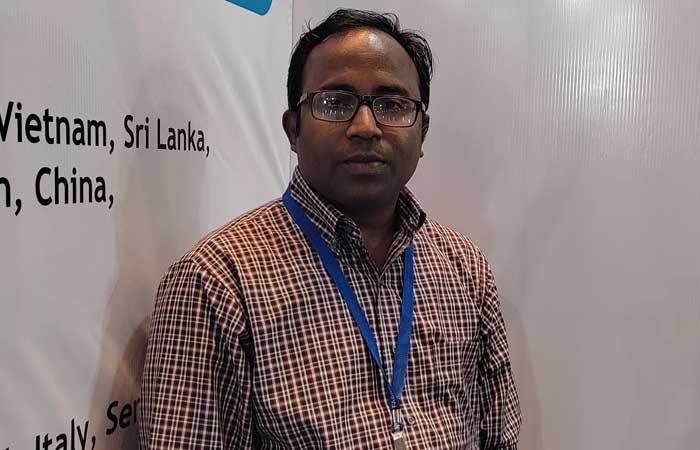
Bluwin is a high-impact climate solution provider whose mission is to contribute to a better world and better quality of life by providing solutions which reduce the adverse effects of the fashion, textile, and footwear industries on our planet and the climate. Sambhaji Chopdekar, Senior Consultant, BluWin, in this conversation with Divya Shetty, shares how company is promoting the water conservation practices within the textile industry.
What is the significance of implementing wastewater treatment facilities within the textile manufacturing process?
While carrying out audits of the textile and leather mills, we realised that large quantities of water are used, considerable amounts of which turn into wastewater. On one hand, those mills strive to treat the wastewater and convert it into a high-grade one, on the other hand, by observing them, we find out that they lack expertise and knowledge. Investments might prove to be a limitation for some companies, while others may be lacking in awareness of the technologies necessary for efficient wastewater treatment.
Its importance lies in the fact that this knowledge gap should be addressed and more advanced technologies used to convert waste water to a high quality water is of both humanity and the environment well-being issue. This is where our educational outreach is aimed. The most importance thing about Zero Discharge of Hazardous Chemicals (ZDHC) program is that it entails constant monitoring of water quality in order to maintain its general use. Nevertheless, issues still remain, potentially brought about by the lack of investment or the low level of possession and expertise.
How does BluWin help the textile companies treat their wastewater?
We typically serve as third-party auditors to top brands like Inditex. As auditors, we ask questions like if they have effluent treatment plants (ETPs) when we go and visit factories, such as textile or leather ones. Thus, when a business is holding an ETP we inspect water treatment procedures. A compulsory visit to the wastewater treatment plant makes it easier for us to know the on-going treatment stages. Furthermore, monthly pre-analysis and post-analysis reports are also demanded for wastewater.
Through our monitoring, mill operators are observed maintain the law range that the respective states and pollution boards have prescribed. Brands also insist that the MRSL is followed to limit those chemicals found to be risky. At times, mills declare their unwillingness to perform unless it is generically required, referring to lack of up-pressure. Still, fitted by a marketer, it turns out to be compulsory.
MRSL chooses particular chemicals as hazardous because they are non-degradable or biodegradable. The chemicals are mostly from the dyes or auxiliaries, the mill may not know otherwise and they get into the water which has huge environmental implications. Our function encompasses mill education about MRSL red flag chemical groups and reference document supply. Organisations such as the Zero Discharge of Hazardous Chemicals (ZDHC) demand that the dyes and other auxiliary chemicals must be free of harmful compounds. The widespread knowledge does not necessarily guarantee that all companies follow these norms. Therefore mandatory implementation is the only possible option because otherwise most companies will only comply when these practices become law and only in relation to specific brands. This is a cumulative obstacle we face in our endeavours.