


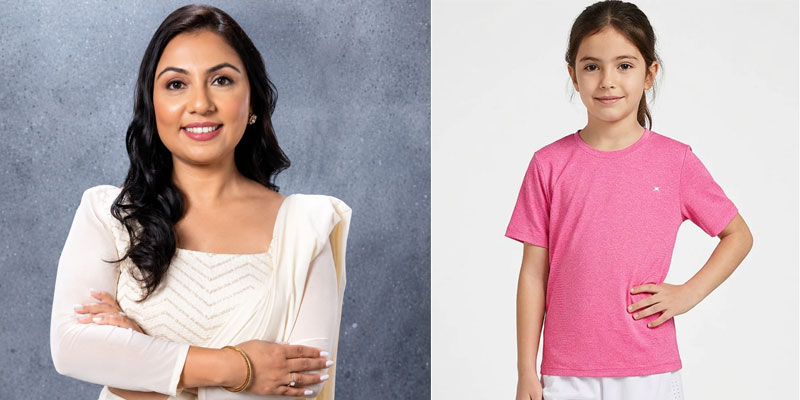
Kids’ activewear is no longer merely a niche within children’s clothing. It represents a broader transformation in the design and buying process of children’s clothes, states Archana Khosla Burman.
Children today are more active in different ways. A typical day now consists of school, gym practice, dance classes, swimming, cycling, and playing for many children, including participation in organised games. The changing habits of children are also reflected in the time they spend on various activities and games. However, the traditional way children’s clothing is positioned remains unchanged and focuses on the age of a child and the necessity of a garment for a particular occasion. Parents’ need for functional and flexible clothing for active children opens up new opportunities for children’s wear.
Children are more active, but kidswear hasn’t kept up
Over the years, there have been immense changes in children’s clothing. There are clothes designed for school, parties, family trips, and holidays. However, there is also a need for clothes that can perform well in different situations. A child goes to school in the morning, participates in football practice, and plays outside in the evening in the same piece of clothing. It seems unrealistic to expect the same outfit to be comfortable during all these activities, but its design should simply be improved. Traditional children’s clothing can look alright but does not fulfil the requirement of mobility. Rigid fabrics, tight waistbands, lots of decorations, inconvenient seams, or poor cutting will always pose a problem during active activities such as running or jumping. Activewear solves this problem as it is designed to give people freedom of movement. Stretchable materials let kids bend and move easily, while lightweight fabrics make clothes feel less bulky.
Kids activewear is not just smaller adult activewear
One of the major transformations in this field is understanding that children have different clothing needs from adults. In fact, children are constantly growing and changing, so their shapes and ways of moving are evolving. They also move much more than adults do. Activewear must allow for much more diverse movements. Design aspects are therefore important. For example, elastic waistbands could be more comfortable to wear and adjust. Flat seams or well-placed seams could prevent irritation. Stretchy materials can provide more freedom of movement, whereas panels may add flexibility exactly where it is needed most. Safety and practicality are important as well. For instance, drawstrings, accessories, and unnecessary decorations do not work for small children. Reflective details could also be helpful for children who cycle or walk during low-light times of the day. Finally, sizing needs to be reconsidered as well. There is no point in wearing a bigger-sized item to achieve extra space for growth.
Comfort is becoming a performance feature
For kids, comfort is more than just a good sensation. Comfort also influences how well they can engage in a particular activity. A child who constantly fidgets with the waistband, adjusts their T-shirt, or complains about an irritating fabric is less likely to concentrate on the task at hand. Thus, comfort becomes a part of performance. The materials used are also important, as they contribute to winning the entire battle. Lightweight and breathable fabrics help kids feel better even when they are sweating. Stretching properties are critical too, especially in leggings, shorts, and sports tops, where freedom of movement matters. The sensation of the item against the skin is also crucial. For kids, it can be important that there are no annoying tags or protruding seams. Kid-friendly features like soft waistbands and tagless labels matter a lot as well.
Durability is a major part of functional fashion
If parents know anything when it comes to clothes for children, it is that clothing needs to endure wear and tear. Knees find themselves touching the playground ground, T-shirts get stained with food, and shorts get dragged through the grass. All clothes are washed multiple times and sometimes need to survive the process of being passed on from an older sibling to a younger one. Thus, durability has become one of the main aspects of functional fashion. An item that looks good upon the first wear and loses its form after the first wash does not make a lot of sense. Parents are now much better at analysing the quality of fabric, stitching, colour retention, and the structure of clothes before buying. In the case of activewear, durability can also mean reinforced sections of clothing, stretch-keeping fabrics, and materials that do not fade too quickly. Another benefit is that easy-care materials come in really handy for children’s clothes, which are washed far more often than clothes for special occasions. No wonder practicality and sustainability can intersect in this case.
Parents Are becoming more conscious buyers
Even though children are the ones who wear active clothing, parents are the ones who buy it. This means that parents’ needs to have a real impact on this product category. Parents have much more information about materials, production, sustainability, and quality than ever before. They start to raise such practical questions as, “Does the fabric breathe?” “Will it stand up to washing?” “Is it comfortable enough to wear for long?” “Can my child wear it for different activities?” and “Is it produced in a responsible way?” At the same time, price does matter. Children grow out of clothing very quickly. Hence, value means not only low pricing. Parents want to buy products that can justify their cost through comfort, quality, and the ability to be worn repeatedly. There is also a growing interest in the multifunctionality of clothing. A well-designed pair of joggers that can be used for school sports, travelling, and everyday activities offers much more value than something designed for one-time use. This change causes brands to rethink the aesthetic aspect of clothing. Colour, patterns, and fun images remain relevant, but they have to be accompanied by functional elements.
The future is function-first, but still fun
Children’s clothing can’t be driven by performance alone, forgetting the child who is going to wear it. Children want their clothes to be bright, have character, and be fun. In most cases, a seven-year-old boy, when choosing between two types of shorts, won’t think about the material used. What he is concerned with is his favourite colour or an interesting graphic on his shorts. The future of children’s sportswear lies in bringing together two sides of the coin: on the one hand, the technical functionality of activewear; on the other, playful designs. Bright colours, original patterns, colour-blocking, and sporty silhouettes would attract kids’ attention. In addition to that, brands would have an opportunity to emphasise technical features in a way that does not make the clothes look too technical. Personalisation will also be significant. There are kids with different interests and activity levels, so there is no reason to create just one type of children’s activewear. Thus, there may be clothes designed for football, dance, cycling, outdoor activities, and everyday athleisure.
Kids’ activewear is no longer merely a niche within children’s clothing. It represents a broader transformation in the design and buying process of children’s clothes. As children live more active and diverse lives, their clothing needs to provide freedom of movement, comfort, durability, and versatility while maintaining the fun element characteristic of children’s clothing. For brands, this means that they can start all over again when it comes to kids’ fashion. The new generation of activewear will not only make sports clothes smaller, but it will also create clothing tailored to what kids really do, putting the focus on functionality and personality in design.
About the author:
Archana Khosla Burman is the Co-Founder of ZONE, India’s first premium activewear brand designed exclusively for children aged 7–14 years. She co-founded the brand to address a long-standing gap in the children’s apparel market by creating performance-driven activewear that combines comfort, functionality, durability, and style for active kids. Alongside her entrepreneurial journey, Archana is a corporate lawyer, mentor, and strategic advisor with over 20 years of experience. She began her career with AZB & Partners and Economic Laws Practice (ELP) before co-founding VERTICES PARTNERS in 2016, now one of India’s leading law firms with offices in Mumbai, Gurugram, and Bengaluru. A first-generation lawyer and TEDx speaker, she specialises in Corporate Commercial Law, Venture Capital, and Private Equity, advising entrepreneurs, investors, and high-growth businesses. She has been recognised in the Forbes Legal Power List, Asia Legal Business 40 Under 40, and AIWMI’s Top Under 40 Alternative Investment Professionals in India.