


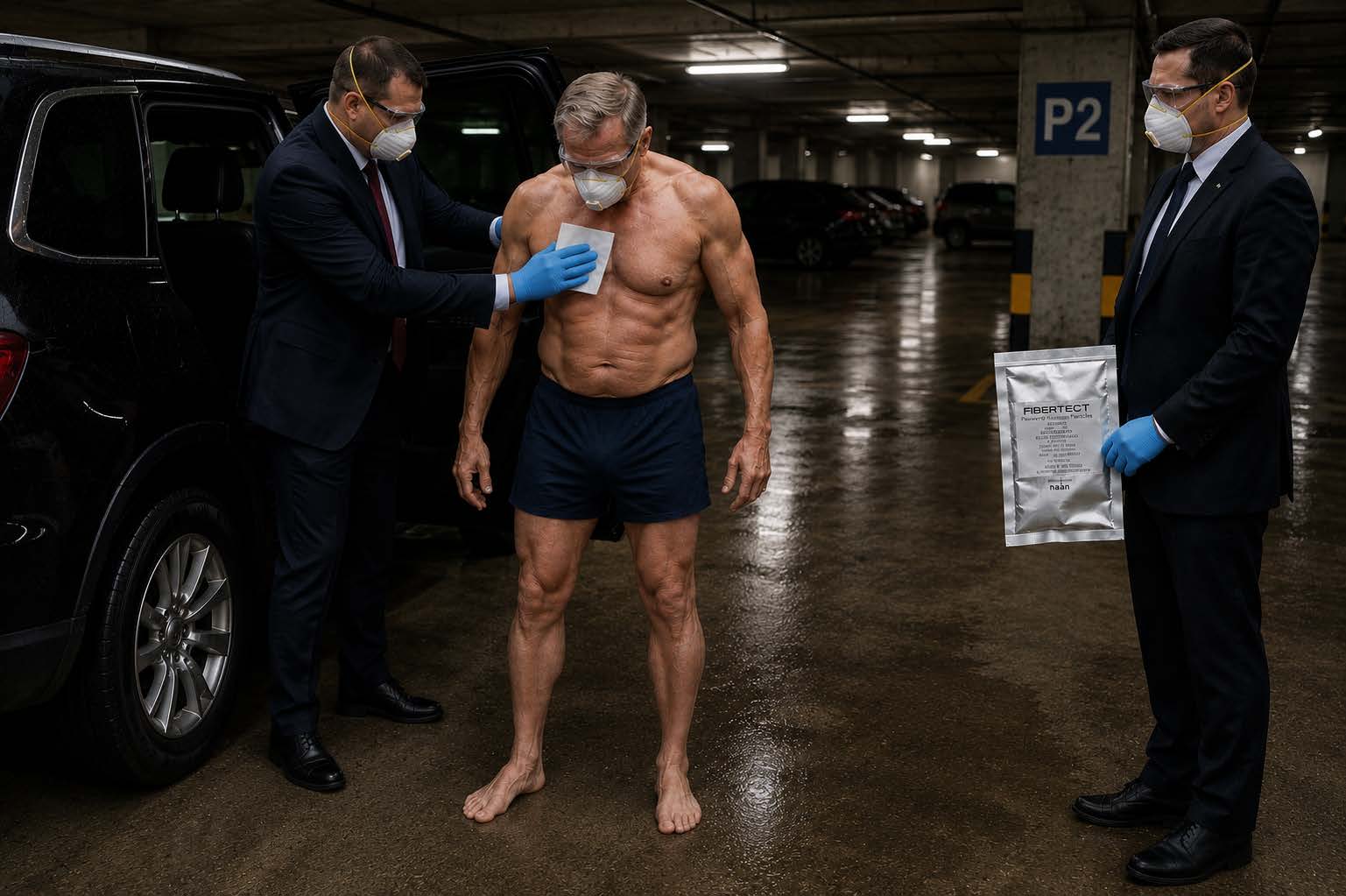
In addition to being the countermeasure technology during the first five minutes of the incident, dry wipe can be used on sensitive equipment such as radar and other electronics, writes Dr Seshadri Ramkumar.
Nonwoven wipes become a valuable tool to fight toxic threats.
September 11 marks 25th anniversary of cold-blooded terrorist attacks on American soil. We pay tributes to those who were victims and offer respects to first responders who put their lives on the first line of defense on September 11, 2001. It is a sad reality that threats persist in many parts of the world. There is need to develop multifunctional countermeasure products to protect lives. Textile structures are front and center in offering first line of protection against high-speed projectiles, fire hazards, chemical and biological threats.
Nonwoven wipe, “FiberTect,” has become a default protection tool against chemical and toxic particle threats. Thanks to the efforts of Fredericksburg, VA-based First Line Technology (FLT), dry decontamination is gaining momentum as an immediate decontamination protocol after an incident.
Kevin Flood retired as a Special Agent with Drug Enforcement Administration with 26-years of experience, who is now a training specialist at FLT highlighted latest developments in the decontamination process to protect VIPs, civilians and first responders in an online event on September 09, 2026.
“First 5-minutes after a threat incident is critical to save lives,” stated Kevin Flood. Once the contaminated personnel are removed from the scene, after removing clothes in isolated area, dry decontamination using tested wipes such as FiberTect must be carried out. Decontamination process must happen quickly and must be finished in 2 minutes. Dry decontamination can also be carried out “on the go” when the victim is transported to the hospital.
Dry decontamination both in technical and logical aspects is better than wet decontamination immediately after the incident. In the case of personnel decontamination, immediate decon using absorbent-adsorbent wipe is preferred as the dry wipe will not chemically react with human body leading to safe and effective decontamination. Wet decontamination with water may in fact push toxic agents through skin leading to complications. “In most cases dry decon is go to technology,” stated Kevin Flood.
In tests undertaken by many agencies, FiberTect wipe showed 90-95% wiping efficiency, while paper towels are not effective. Depending on the threat incident, “Hybrid” process involving dry and wet countermeasure products can be used effectively. First Line Technology offers hybrid process with the help of FiberTect wipes and Dahlgren Decon formulation. The decontamination process has become highly efficient with the use of dry wipe as primary decon followed by wet/reactive decon depending on the need.
The process involves three steps: 1) Blotting the agent with FiberTect dry wipe; 2) Applying wet formulation and 3) Removing excess agent using dry wipe.
In addition to being the countermeasure technology during the first five minutes of the incident, dry wipe can be used on sensitive equipment such as radar and other electronics. In the case of sensitive equipment decon, reactive agents may have some challenges.
Kevin Flood recommended step by step time sensitive actions: 1) Recognizing threat; 2) Isolating the victim; 3) Dry decontamination; 4) Transporting victims for medical care and 5) Conducting recovery operations.
Dry decontamination has been proven to be highly effective, with a shelf life of 15 years and can be used in subzero temperatures such as in Alaska.
FiberTect wipe has been found effective not only to address chemical threats such as sulfur mustard, but it can also wipe away toxic fine particles such as synthetic opioids.
FiberTect evolved out of funding from the United States of Defense based on the invention at Texas Tech University and has been taken to multiple markets by First Line Technology. It is a model for translational research involving academia and industry.
About the author:
Dr Seshadri Ramkumar is a Professor, Nonwovens & Advanced Materials Laboratory in Texas Tech University, Lubbock, TX, USA.